Get started

Topic

The best 64 Scientific Thinking summaries

Scientific thinking is the habit of questioning assumptions, weighing evidence and testing ideas before trusting them, and it serves anyone in the region who has to make sense of fast change in work, technology, the economy and the environment. The books gathered here range from practical method guides on problem solving and experimentation to wide-ranging works on how civilizations, minds, markets and the natural world actually work. With these ideas, you can reason more clearly, test your plans on a small scale before committing, and judge claims by their evidence rather than by how loudly they are made.

1The Book of Why

The Book of Why

Judea Pearl and Dana MacKenzie

Decode why things happen by moving beyond correlation to causal thinking that transforms science, technology, and decision-making.

21 min

Listen to the intro

1:11

What is The Book of Why about?

The Book of Why (2018) explains the new science of cause and effect. Judea Pearl and Dana MacKenzie show why data alone cannot tell us why things happen, and introduce the ladder of causation, which moves from seeing patterns to testing interventions and imagining what would have happened otherwise. The book reveals how causal thinking is changing medicine, economics, and artificial intelligence.

Who should read The Book of Why?

  • Data scientists who want to move beyond correlation
  • Researchers in medicine or economics who test interventions
  • Anyone curious how AI could understand causes
2Then I Am Myself the World

Then I Am Myself the World

Christof Koch

Explore consciousness as a fundamental feature of the universe through neuroscience, panpsychism, and profound questions about experience and connection.

15 min

Listen to the intro

1:31

What is Then I Am Myself the World about?

Then I Am Myself the World (2024) explores one of the deepest questions in science: what consciousness is and where it comes from. Neuroscientist Christof Koch explains integrated information theory, which links consciousness to the way a system integrates information, and considers what this means for animals, machines, and people near the end of life. He also reflects on his own experiences and how they shaped his thinking.

Who should read Then I Am Myself the World?

  • Readers curious about the origins of consciousness
  • Students of neuroscience, psychology or philosophy of mind
  • Anyone wondering whether animals or machines can be conscious
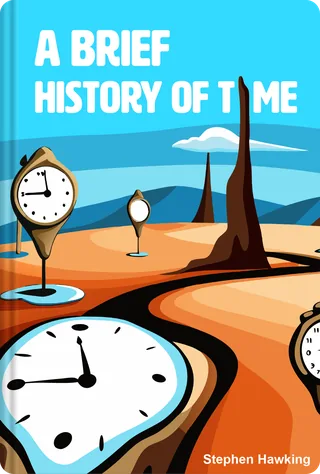
3A Brief History of Time

A Brief History of Time

Stephen Hawking

Journey from the Big Bang to black holes and uncover how space, time, and physics shape the universe.

20 min

Listen to the intro

1:21

What is A Brief History of Time about?

A Brief History of Time (1988) explains the biggest questions about the universe in language that general readers can follow. Stephen Hawking explores the Big Bang, black holes, the nature of time, and the search for a theory that unites all of physics. The book became one of the best-selling science books in history and inspired millions of people to take an interest in cosmology.

Who should read A Brief History of Time?

  • Curious readers who wonder how the universe began
  • Students wanting a clear introduction to modern physics
  • Anyone fascinated by black holes and the nature of time
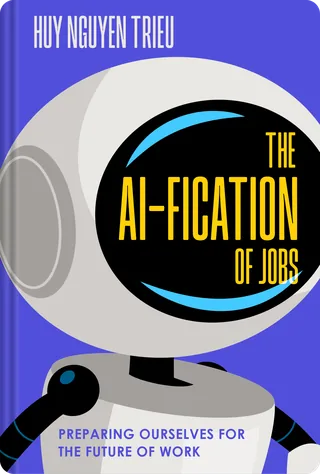
4The AI-fication of Jobs

The AI-fication of Jobs

Huy Nguyen Trieu

Prepare for an AI-driven future by understanding how careers are changing, which skills will matter, and how to adapt and stay ahead.

17 min

Listen to the intro

0:49

What is The AI-fication of Jobs about?

The AI-fication of Jobs (2024) examines how artificial intelligence is changing tasks, professions, and the skills people need to remain effective in the workplace. Huy Nguyen Trieu describes possible outcomes ranging from professionals becoming more productive with AI to the displacement or redesign of certain roles. The book offers a framework for understanding these changes and encourages individuals, organisations, and governments to invest in practical AI knowledge, continuous learning, and responsible adaptation.

Who should read The AI-fication of Jobs?

  • Professionals worried about AI reshaping their careers
  • Leaders preparing their teams for an AI-driven workplace
  • Students choosing skills that will stay relevant
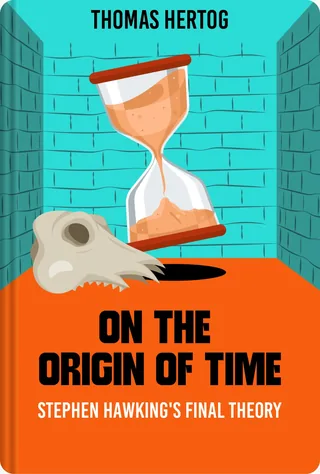
5On the Origin of Time

On the Origin of Time

Thomas Hertog

Explore Stephen Hawking’s final theory that the laws of physics evolved with the universe, transforming how we understand its origins.

16 min

Listen to the intro

1:05

What is On the Origin of Time about?

On the Origin of Time (2023) tells the story of Stephen Hawking’s final theory about the beginning of the universe. Thomas Hertog, his close collaborator for twenty years, explains how they came to believe that the laws of physics themselves may have evolved in the early universe, much as living things evolve. The book offers a fresh way to think about why the universe seems so well suited for life.

Who should read On the Origin of Time?

  • Science enthusiasts curious about how the universe began
  • Fans of Stephen Hawking seeking his final ideas
  • Students exploring cosmology and the laws of physics
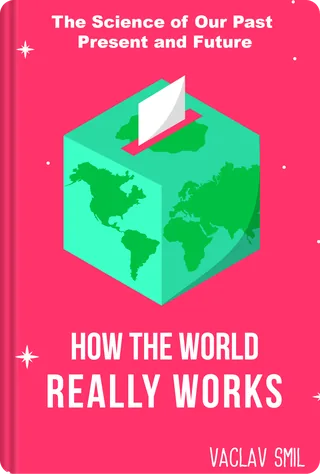
6How the World Really Works

How the World Really Works

Vaclav Smil

Understand the systems sustaining modern civilisation, from energy and food to materials and supply chains, through evidence rather than ideology.

21 min

Listen to the intro

1:35

What is How the World Really Works about?

How the World Really Works (2022) explains the basic realities behind modern life that most people take for granted. Vaclav Smil describes how energy, food production, and key materials such as steel, cement, plastics, and ammonia make our world possible, and how globalisation, risks, and the environment are connected. With facts and numbers, he offers a clear, realistic view of the challenges ahead.

Who should read How the World Really Works?

  • Readers who want facts behind energy and food debates
  • Professionals working in energy, industry or supply chains
  • Students curious about how modern civilization actually runs
7Think Like a Rocket Scientist

Think Like a Rocket Scientist

Ozan Varol

Think like a rocket scientist by questioning assumptions, reasoning from first principles, and testing ideas to achieve breakthrough results.

16 min

Listen to the intro

1:02

What is Think Like a Rocket Scientist about?

Think Like a Rocket Scientist (2020) shows how the thinking strategies of rocket scientists can help anyone solve problems and make bold progress. Ozan Varol explains principles such as reasoning from first principles, embracing uncertainty, running thought experiments, testing ideas, and learning from failure. With stories from space missions and everyday life, the book encourages readers to think more creatively and courageously.

Who should read Think Like a Rocket Scientist?

  • Entrepreneurs tackling problems that seem impossible to solve
  • Professionals who want to challenge assumptions at work
  • Anyone afraid of failure who wants bolder thinking
8The Anthropocene Reviewed

The Anthropocene Reviewed

John Green

Rediscover the extraordinary within ordinary life through personal reflections that blend science, emotion, and the complexity of being human.

17 min

Listen to the intro

1:56

What is The Anthropocene Reviewed about?

The Anthropocene Reviewed (2021) is a collection of personal essays in which John Green rates different aspects of life on our human-shaped planet on a five-star scale. He writes about subjects as varied as sunsets, the internet, air conditioning, Canada geese, and the song You’ll Never Walk Alone, mixing history, science, and personal memories. The result is a warm, funny, and thoughtful reflection on being human.

Who should read The Anthropocene Reviewed?

  • Readers who enjoy reflective personal essays
  • Anyone seeking wonder in everyday life
  • Curious minds drawn to science and history
9Why Can’t the World’s Greatest Minds Solve the Mystery of Consciousness?

Why Can’t the World’s Greatest Minds Solve the Mystery of Consciousness?

Oliver Burkeman

Confront the enduring mystery of consciousness and the debate over whether subjective experience can ever be explained by the brain alone.

18 min

Listen to the intro

1:32

What is Why Can’t the World’s Greatest Minds Solve the Mystery of Consciousness? about?

Why Can’t the World’s Greatest Minds Solve the Mystery of Consciousness? (2015) examines one of the most difficult questions in philosophy and neuroscience: how physical activity in the brain produces the private experience of thoughts, feelings, colours, sounds, and self-awareness. Oliver Burkeman introduces the debate between researchers who believe consciousness can eventually be explained through brain science and thinkers who argue that subjective experience requires a broader explanation. The essay makes a complex intellectual debate accessible while showing why consciousness remains difficult to define, study, and fully understand.

Who should read Why Can’t the World’s Greatest Minds Solve the Mystery of Consciousness??

  • Curious minds wondering how the brain creates experience
  • Students of philosophy, psychology or neuroscience
  • Anyone who enjoys big questions explained in plain language
10Buddha’s Brain

Buddha’s Brain

Rick Hanson

Train your brain for greater calm, happiness, and resilience with practical techniques that strengthen positive patterns and reduce stress.

17 min

Listen to the intro

1:41

What is Buddha’s Brain about?

Buddha’s Brain (2009) explores how neuroscience and contemplative practices can help people develop calm, resilience, and emotional balance. It offers practical exercises for strengthening positive mental habits and responding to daily challenges with greater awareness.

Who should read Buddha’s Brain?

  • Anyone struggling with stress and daily challenges
  • Readers curious about neuroscience and emotional balance
  • People seeking practical habits for calm and resilience
11Cosmos

Cosmos

Carl Sagan

Journey through the cosmos to explore the origins of life, humanity’s place in the universe, and the profound connections shaping existence.

18 min

Listen to the intro

1:22

What is Cosmos about?

Cosmos (1980) takes readers on an inspiring journey through the universe and the history of science. Carl Sagan explores the birth of stars and galaxies, the origins of life on Earth, and the great thinkers who helped humanity understand its place in the cosmos. Written alongside his famous television series, the book celebrates curiosity and wonder and remains one of the most popular science books ever published.

Who should read Cosmos?

  • Stargazers curious about how stars and galaxies form
  • Students who want an inspiring introduction to science
  • Anyone fascinated by the great thinkers of scientific history
12How We Learn

How We Learn

Stanislas Dehaene

Learn faster by understanding how attention, memory, and mastery work together to help your brain absorb and retain knowledge.

20 min

Listen to the intro

1:10

What is How We Learn about?

How We Learn (2020) explains what brain science reveals about learning and how we can use it to learn better. Stanislas Dehaene describes the four pillars of learning: attention, active engagement, error feedback, and consolidation through sleep. He shows why the human brain is such a powerful learning machine and offers practical lessons for students, parents, and teachers.

Who should read How We Learn?

  • Students who want to study smarter and remember more
  • Teachers looking to apply brain science in the classroom
  • Parents who want to support their children's learning
13Rewired

Rewired

Eric Lamarre, Kate Smaje and Rodney Zemmel

Rewire your organisation for the digital and AI age with McKinsey's six capabilities, from a business-led roadmap and the right talent to usable data and adoption that sticks.

16 min

Listen to the intro

1:46

What is Rewired about?

Rewired (2023) is a practical guide to digital and AI transformation for large organisations. Drawing on McKinsey’s experience with hundreds of companies, Eric Lamarre, Kate Smaje and Rodney Zemmel explain the six key capabilities for success: a clear business-led roadmap, the right talent, a flexible operating model, modern technology, data that is easy to use, and effective adoption across the organisation.

Who should read Rewired?

  • Executives leading digital or AI transformation in large organizations
  • Managers whose digital initiatives stall before delivering real value
  • Technology and data leaders aligning their work with business goals
14Blockchain Revolution

Blockchain Revolution

Don Tapscott and Alex Tapscott

Imagine a more transparent digital world where blockchain removes intermediaries, restores trust, and gives people control over data and value.

16 min

Listen to the intro

1:30

What is Blockchain Revolution about?

Blockchain Revolution (2016) explains how blockchain, the technology behind digital currencies such as Bitcoin, could transform finance, business, and government. Don Tapscott and Alex Tapscott describe blockchain as a secure, shared record of transactions that could reduce the need for intermediaries, protect personal data, and make systems more transparent. The book also discusses the risks and obstacles that the technology must overcome.

Who should read Blockchain Revolution?

  • Business leaders exploring how new technology reshapes industries
  • Government officials seeking more transparent public systems
  • Anyone curious about the technology behind digital currencies
15Scary Smart

Scary Smart

Mo Gawdat

Confront how rapidly advancing AI could redefine humanity’s future and why shaping it ethically is a responsibility shared by us all.

16 min

Listen to the intro

1:45

What is Scary Smart about?

Scary Smart (2021) examines the future of artificial intelligence and the role each of us plays in shaping it. Mo Gawdat argues that AI will soon become far more intelligent than humans, and that machines will learn their values by watching how people behave. He calls on readers to model kindness, fairness, and responsibility, so that the intelligent machines of the future work for the good of humanity.

Who should read Scary Smart?

  • Anyone curious about where artificial intelligence is heading
  • Parents and educators shaping values in a digital age
  • Tech professionals concerned about the ethics of AI
16Source Code

Source Code

Bill Gates

Follow Bill Gates from a curious Seattle childhood through Harvard to founding Microsoft, in his own account of the people and risks that shaped him.

17 min

Listen to the intro

0:49

What is Source Code about?

Source Code (2025) is Bill Gates’s memoir of his early years, from his childhood in Seattle and his endless curiosity to his first experiences with computers and his time at Harvard. It follows the friendships, risks, and hard work that led him and Paul Allen to found Microsoft in 1975. The book offers an honest, personal look at how family, education, and passion shaped one of the world’s best-known entrepreneurs.

Who should read Source Code?

  • Aspiring entrepreneurs curious how Microsoft really began
  • Parents wondering how to nurture a curious child
  • Anyone who loves memoirs of tech pioneers
17How to Solve It

How to Solve It

George Pólya

Solve problems with greater clarity and confidence using a timeless method for understanding challenges, creating smart plans, and thinking creatively.

18 min

Listen to the intro

1:42

What is How to Solve It about?

How to Solve It (1945) is a classic guide to solving problems in mathematics and beyond. George Pólya presents a simple four-step method: understand the problem, devise a plan, carry out the plan, and look back to check and learn. With practical questions and techniques such as working backward and solving simpler related problems, the book has helped generations of students and teachers think more clearly.

Who should read How to Solve It?

  • Students who struggle with math or logic problems
  • Teachers who want to build stronger thinking skills
  • Anyone who wants a clear method for tackling problems
18Livewired

Livewired

David Eagleman

Harness your brain’s lifelong ability to adapt, learn new skills, and reshape itself through experience.

18 min

Listen to the intro

1:22

What is Livewired about?

Livewired (2020) explains how the brain constantly rewires itself in response to experience. David Eagleman shows that the brain is not fixed hardware but a living, changing system that adapts to new senses, lost abilities, and new technologies. With fascinating examples, such as people learning to sense the world in new ways, the book reveals how flexible our minds are and what this means for learning and the future.

Who should read Livewired?

  • Lifelong learners curious about how the brain adapts
  • Anyone recovering from injury or adjusting to lost abilities
  • Tech enthusiasts interested in the future of human senses
19Testing Business Ideas

Testing Business Ideas

David J. Bland and Alexander Osterwalder

Reduce business risk by testing assumptions, running over 40 practical experiments, and using real customer evidence to validate ideas.

18 min

Listen to the intro

1:35

What is Testing Business Ideas about?

Testing Business Ideas (2019) is a practical guide to reducing the risk of new business ideas by testing them before investing heavily. David J. Bland and Alexander Osterwalder show how to identify the assumptions behind an idea and present forty-four experiments for testing whether customers want it, whether it can be built, and whether it can be profitable. The book is designed for entrepreneurs, innovators, and teams in organisations of all sizes.

Who should read Testing Business Ideas?

  • Entrepreneurs validating a new idea before investing
  • Innovation teams inside companies of any size
  • Product managers who want real customer evidence
20Making Sense of Chaos

Making Sense of Chaos

J Doyne Farmer

Discover how complexity science reveals patterns within chaos, helping us understand economies, technology, and an unpredictable future.

18 min

Listen to the intro

1:25

What is Making Sense of Chaos about?

Making Sense of Chaos (2024) argues that traditional economics often fails to predict crises because it assumes the economy is stable and predictable. J Doyne Farmer introduces complexity economics, which uses computer simulations of many interacting individuals and businesses to model how real economies behave. He shows how this approach can help us understand financial crashes, climate policy, and economic change.

Who should read Making Sense of Chaos?

  • Economists frustrated by models that miss real crises
  • Policymakers shaping responses to financial and climate risks
  • Anyone curious how simulations reveal patterns in chaos

Related topics

Questions about Scientific Thinking

What is a good book to start with on scientific thinking?

Think Like a Rocket Scientist is a welcoming starting point, showing how to question assumptions, reason from first principles and test ideas in everyday decisions. For a classic step-by-step method, How to Solve It lays out a clear way to understand a problem, make a plan and check your answer.

What will I learn from scientific thinking books?

You will learn how to frame questions, gather evidence and run simple experiments, whether on a business idea as in Testing Business Ideas or on your own focus and learning as in Smarter Tomorrow. Broader works like How the World Really Works and Guns, Germs and Steel show how evidence-based reasoning explains energy, food, history and the rise of civilizations.

Who are these summaries for?

They suit students, professionals, entrepreneurs and curious readers who want to think more carefully and make better-grounded decisions. No scientific background is needed, since each summary explains its core ideas in plain language.

Get the key ideas from the world's best books in about 15 minutes

Free account · One free summary every day