Get started

Topic

The best 52 Innovation & Invention summaries

Innovation and invention explores how new ideas move from curiosity to working products, companies and technologies, a question that matters to readers in a region investing heavily in digital transformation, new industries and the skills of its young people. The books here range from stories of inventors and companies such as Edison, Tesla and Amazon to practical guides on testing business ideas, classic studies of disruption, and wide-angle histories of how technology and information shaped civilizations. Readers can use these ideas to question assumptions, run small experiments before committing resources, spot change early, and pair human judgement with artificial intelligence in their work and careers.

1Human/Machine

Human/Machine

Daniel Newman and Olivier Blanchard

Combine AI and automation with human creativity and strategy to drive innovation, strengthen business, and navigate digital transformation.

18 min

Listen to the intro

1:35

What is Human/Machine about?

Human/Machine (2019) explores how people and intelligent technologies can work together rather than compete. Daniel Newman and Olivier Blanchard explain how artificial intelligence, automation, and smart devices are changing business and daily life, and argue that the future belongs to organisations that combine human creativity and judgement with the speed and precision of machines.

Who should read Human/Machine?

  • Business leaders planning their company's digital transformation
  • Professionals worried that automation might replace their jobs
  • Anyone curious how AI is reshaping work and life
2Scary Smart

Scary Smart

Mo Gawdat

Confront how rapidly advancing AI could redefine humanity’s future and why shaping it ethically is a responsibility shared by us all.

16 min

Listen to the intro

1:45

What is Scary Smart about?

Scary Smart (2021) examines the future of artificial intelligence and the role each of us plays in shaping it. Mo Gawdat argues that AI will soon become far more intelligent than humans, and that machines will learn their values by watching how people behave. He calls on readers to model kindness, fairness, and responsibility, so that the intelligent machines of the future work for the good of humanity.

Who should read Scary Smart?

  • Anyone curious about where artificial intelligence is heading
  • Parents and educators shaping values in a digital age
  • Tech professionals concerned about the ethics of AI
3The Innovator’s Dilemma

The Innovator’s Dilemma

Clayton Christensen

Understand why successful companies miss disruptive innovation and how leaders can recognise transformative change before competitors redefine the market.

16 min

Listen to the intro

1:33

What is The Innovator’s Dilemma about?

The Innovator’s Dilemma (1997) explains why successful, well-managed companies often fail when new technologies emerge. Clayton Christensen shows that by focusing on their best customers and highest profits, leading firms can overlook simpler, cheaper innovations that start small and later take over the market. His theory of disruptive innovation became one of the most influential ideas in business.

Who should read The Innovator’s Dilemma?

  • Executives leading established companies through technological change
  • Entrepreneurs building simpler, cheaper alternatives to market leaders
  • Strategists who want to spot disruption early
4AI for Business Leaders

AI for Business Leaders

Michael Ramsay

Apply AI confidently to drive growth and innovation while navigating its practical, ethical, and strategic challenges.

21 min

Listen to the intro

1:47

What is AI for Business Leaders about?

AI for Business Leaders (2024) introduces artificial intelligence from the perspective of managers and organisational decision makers. It explains how leaders can identify useful applications, evaluate opportunities and limitations, prepare their teams, and adopt new tools responsibly while keeping business goals at the centre of the process.

Who should read AI for Business Leaders?

  • Executives planning to adopt AI across their organization
  • Managers preparing their teams for new AI tools
  • Entrepreneurs seeking responsible ways to drive growth with AI
5Supremacy

Supremacy

Parmy Olson

Enter the global race for AI supremacy, where nations and corporations compete to control power, security, and the next era of innovation.

18 min

Listen to the intro

1:40

What is Supremacy about?

Supremacy (2024) tells the story of the global race for supremacy in artificial intelligence. Parmy Olson follows two leading figures, Sam Altman of OpenAI and Demis Hassabis of DeepMind, and shows how their ambitions became tied to technology giants such as Microsoft and Google. The book examines the promise of AI and the risks of concentrating such powerful technology in a few hands.

Who should read Supremacy?

  • Tech professionals tracking the race to build advanced AI
  • Policymakers concerned about power concentrated in Big Tech
  • Anyone curious about the people behind OpenAI and DeepMind
6Green Illusions

Green Illusions

Ozzie Zehner

Question whether green technology alone can solve the environmental crisis—and confront the deeper impact of overconsumption.

21 min

Listen to the intro

1:03

What is Green Illusions about?

Green Illusions (2012) challenges the popular belief that solar panels, wind turbines, biofuels, and electric cars alone can solve our environmental problems. Ozzie Zehner shows the hidden costs and limits of these technologies and argues that reducing consumption, better city design, and wiser choices matter more than simply producing more clean energy. The book offers a thought-provoking look at what real sustainability requires.

Who should read Green Illusions?

  • Environmentalists who question clean energy's promises
  • Urban planners rethinking how cities shape consumption
  • Anyone wanting to live more sustainably and simply
7Competing In The Age Of AI

Competing In The Age Of AI

Marco Iansiti and Karim Lakhani

Learn how AI-driven companies scale faster, innovate smarter, and redefine strategy to compete in a world shaped by data and algorithms.

17 min

Listen to the intro

2:05

What is Competing In The Age Of AI about?

Competing In The Age Of AI (2020) explains how artificial intelligence is changing the way companies are built and compete. Marco Iansiti and Karim Lakhani show how firms such as Amazon and Ant Group use data, algorithms, and networks as the core of their operations, allowing them to grow in ways traditional companies cannot. The book offers guidance for leaders who want to transform their organisations.

Who should read Competing In The Age Of AI?

  • Executives leading digital transformation in traditional companies
  • Entrepreneurs building data-driven businesses designed to scale fast
  • Anyone curious how AI reshapes business competition
8Read Write Own

Read Write Own

Chris Dixon

Explore a decentralised internet where blockchains return ownership to creators, reduce Big Tech’s control, and unlock innovation and economic freedom.

18 min

Listen to the intro

1:23

What is Read Write Own about?

Read Write Own (2024) explains how the internet has evolved and where it may go next. Chris Dixon describes three eras: the read era of early websites, the write era of social media dominated by large platforms, and a possible own era in which blockchain networks let users share ownership and control. The book argues that new network designs could give creators and users a fairer share of the value they create.

Who should read Read Write Own?

  • Content creators wanting fairer ownership of their work
  • Entrepreneurs exploring blockchain-based business models
  • Anyone curious about the internet's next era
9The Master Algorithm

The Master Algorithm

Pedro Domingos

Explore the search for a universal learning algorithm and how machine learning is transforming science, business, and everyday life.

20 min

Listen to the intro

1:16

What is The Master Algorithm about?

The Master Algorithm (2015) explains how machine learning works and why it is transforming business, science, and daily life. Pedro Domingos describes five major schools of thought in machine learning, each inspired by a different field such as neuroscience, evolution, statistics, logic, and analogy. He argues that combining them could produce a single master algorithm able to learn almost anything from data.

Who should read The Master Algorithm?

  • Professionals curious about how machine learning actually works
  • Business leaders exploring how data can drive decisions
  • Students considering a career in artificial intelligence
10Impromptu

Impromptu

Reid Hoffman with GPT-4

Partner with AI to overcome creative blocks, generate original ideas, and turn imagination into rapid prototypes and stronger creative work.

18 min

Listen to the intro

1:13

What is Impromptu about?

Impromptu (2023) explores how artificial intelligence can amplify human abilities rather than replace them. Reid Hoffman wrote the book in conversation with the AI model GPT-4, testing its strengths and weaknesses in areas such as education, business, creativity, journalism, and justice. The book offers an optimistic but thoughtful look at how people can use AI as a powerful partner.

Who should read Impromptu?

  • Creators stuck in a rut and seeking fresh ideas
  • Professionals curious how AI can amplify their work
  • Educators and journalists weighing AI's promise and limits
11How the World Really Works

How the World Really Works

Vaclav Smil

Understand the systems sustaining modern civilisation, from energy and food to materials and supply chains, through evidence rather than ideology.

21 min

Listen to the intro

1:35

What is How the World Really Works about?

How the World Really Works (2022) explains the basic realities behind modern life that most people take for granted. Vaclav Smil describes how energy, food production, and key materials such as steel, cement, plastics, and ammonia make our world possible, and how globalisation, risks, and the environment are connected. With facts and numbers, he offers a clear, realistic view of the challenges ahead.

Who should read How the World Really Works?

  • Readers who want facts behind energy and food debates
  • Professionals working in energy, industry or supply chains
  • Students curious about how modern civilization actually runs
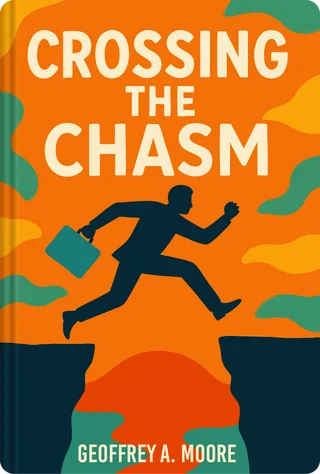
12Crossing the Chasm

Crossing the Chasm

Geoffrey Moore

Take innovative products mainstream by mastering the positioning, timing, and customer insight needed to cross the adoption gap.

14 min

Listen to the intro

1:13

What is Crossing the Chasm about?

Crossing the Chasm (1991) explains why many innovative technology products win early enthusiasts but fail to reach mainstream customers. Geoffrey Moore describes the gap, or chasm, between early adopters and the pragmatic majority, and shows how companies can cross it by focusing on one target market, delivering a complete solution, and building strong positioning. It remains a classic guide for startups and product teams.

Who should read Crossing the Chasm?

  • Startup founders scaling beyond their first enthusiastic customers
  • Product managers preparing a technology product for mainstream markets
  • Marketers who want sharper positioning for innovative products
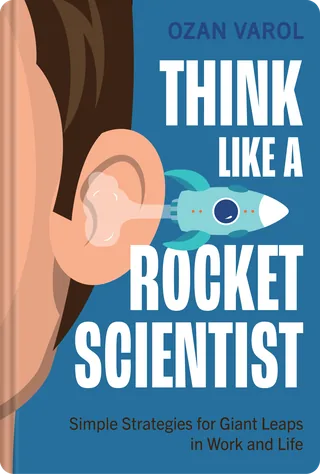
13Think Like a Rocket Scientist

Think Like a Rocket Scientist

Ozan Varol

Think like a rocket scientist by questioning assumptions, reasoning from first principles, and testing ideas to achieve breakthrough results.

16 min

Listen to the intro

1:02

What is Think Like a Rocket Scientist about?

Think Like a Rocket Scientist (2020) shows how the thinking strategies of rocket scientists can help anyone solve problems and make bold progress. Ozan Varol explains principles such as reasoning from first principles, embracing uncertainty, running thought experiments, testing ideas, and learning from failure. With stories from space missions and everyday life, the book encourages readers to think more creatively and courageously.

Who should read Think Like a Rocket Scientist?

  • Entrepreneurs tackling problems that seem impossible to solve
  • Professionals who want to challenge assumptions at work
  • Anyone afraid of failure who wants bolder thinking
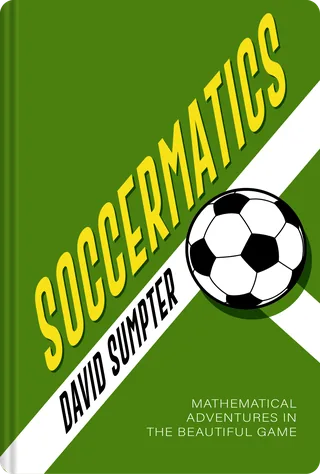
14Soccermatics

Soccermatics

David Sumpter

Discover how mathematics and data reveal football’s hidden patterns, from passing and shot quality to the tactics and decisions that separate winning teams from the rest.

15 min

Listen to the intro

0:47

What is Soccermatics about?

Soccermatics (2016) explores how mathematics and data can reveal the hidden patterns behind football. David Sumpter applies concepts from geometry, probability, statistics, and collective behaviour to explain passing networks, team formations, player movement, tactics, and goal scoring. Through real matches and accessible examples, the book shows how mathematical thinking can deepen our understanding of the game without taking away its excitement and unpredictability.

Who should read Soccermatics?

  • Football fans who want to understand the game more deeply
  • Coaches and analysts using data to improve team tactics
  • Students curious about how mathematics applies to real life
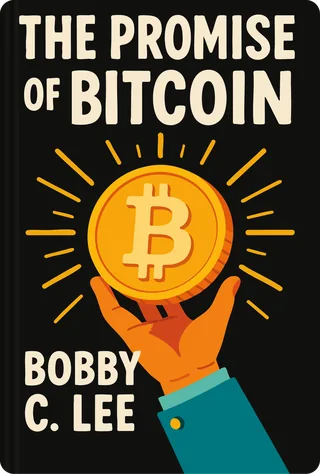
15The Promise of Bitcoin

The Promise of Bitcoin

Bobby C. Lee

Explore Bitcoin’s origins and technology, and how decentralisation could protect financial freedom, challenge traditional institutions, and reshape the global economy.

19 min

Listen to the intro

1:15

What is The Promise of Bitcoin about?

The Promise of Bitcoin (2021) explains in clear language what Bitcoin is, how it works, and why it may change the future of money. Bobby C. Lee covers the basics of blockchain technology, mining, wallets, and security, and explores Bitcoin’s potential as digital gold and a hedge against inflation. The book also discusses the risks, myths, and practical steps for anyone considering using or investing in Bitcoin.

Who should read The Promise of Bitcoin?

  • Beginners curious about how Bitcoin and blockchain actually work
  • Anyone weighing Bitcoin's risks before using or investing in it
  • Professionals wanting to understand how digital money may reshape finance
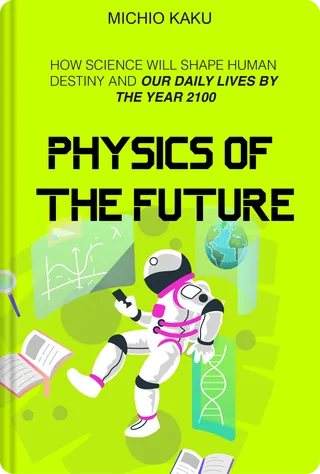
16Physics of the Future

Physics of the Future

Michio Kaku

Imagine the next century through breakthroughs in AI, medicine, nanotechnology, and space travel that could transform human life.

21 min

Listen to the intro

1:01

What is Physics of the Future about?

Physics of the Future (2011) predicts how science and technology could change daily life by the year 2100. Based on interviews with hundreds of leading scientists, Michio Kaku explores coming advances in computers, artificial intelligence, medicine, nanotechnology, energy, and space travel. He explains which developments are likely and when, and considers how they may transform work, health, and society.

Who should read Physics of the Future?

  • Tech enthusiasts curious about where innovation is heading
  • Professionals planning careers around emerging technologies
  • Anyone wondering how science could reshape daily life
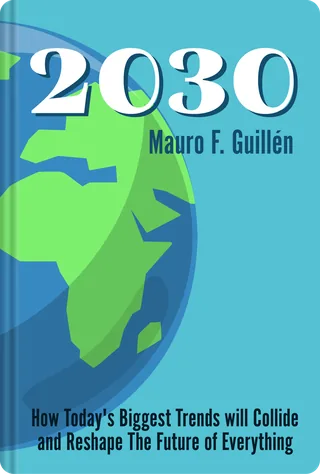
172030

2030

Mauro Guillén

Prepare for 2030 by understanding the demographic, technological, and economic forces reshaping how we live, work, and connect.

22 min

Listen to the intro

1:31

What is 2030 about?

2030 (2020) explores the major trends that will reshape the world by the year 2030, including ageing populations, a growing middle class in Asia and Africa, urbanisation, climate change, new technologies, and changing roles for women. Mauro Guillén explains how these trends interact and shows how individuals, businesses, and governments can prepare for a very different future.

Who should read 2030?

  • Business leaders planning strategy for the coming decade
  • Policymakers preparing for aging populations and rapid urbanization
  • Anyone curious how global trends will shape their future
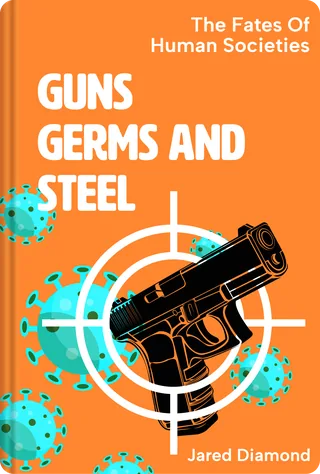
18Guns, Germs and Steel

Guns, Germs and Steel

Jared Diamond

Understand how geography, agriculture, technology, and disease shaped the rise of civilisations, global power, and inequality rather than race.

18 min

Listen to the intro

1:20

What is Guns, Germs and Steel about?

Guns, Germs and Steel (1997) asks why some societies came to dominate others throughout history. Jared Diamond argues that the answer lies not in differences between peoples but in geography and environment, such as which regions had plants and animals suitable for farming, and how easily ideas and crops could spread. The book won the Pulitzer Prize and changed how many people understand world history.

Who should read Guns, Germs and Steel?

  • History lovers curious why some nations grew powerful
  • Students exploring how geography shapes economies and societies
  • Anyone questioning the roots of global inequality
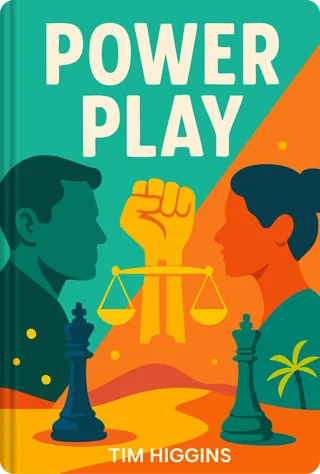
19Power Play

Power Play

Tim Higgins

Go behind Tesla’s rise to see how Elon Musk’s bold decisions, intense leadership, and high-risk gambles transformed the global auto industry.

14 min

Listen to the intro

0:59

What is Power Play about?

Power Play (2021) tells the dramatic inside story of Tesla’s rise from a small startup to one of the world’s most valuable car companies. Tim Higgins describes the risky bets, near-bankruptcies, production struggles, and bold vision that shaped the company under Elon Musk’s leadership, as well as its battle with traditional carmakers. The book offers lessons in innovation, ambition, and risk.

Who should read Power Play?

  • Entrepreneurs building ambitious startups against established competitors
  • Leaders weighing bold bets against the risk of failure
  • Anyone curious about how Tesla disrupted the car industry
20Cryptoassets

Cryptoassets

Chris Burniske and Jack Tatar

Evaluate digital assets with proven investment tools while understanding the technology, opportunities, and risks shaping this emerging market.

20 min

Listen to the intro

1:09

What is Cryptoassets about?

Cryptoassets (2017) is a guide for investors who want to understand digital assets such as Bitcoin and Ethereum. Chris Burniske and Jack Tatar explain how these assets work, how they fit into the history of financial bubbles and innovation, and how to evaluate them with care. The book also covers risks, valuation methods, and how cryptoassets might fit into a balanced investment approach.

Who should read Cryptoassets?

  • Investors curious about Bitcoin, Ethereum and other digital assets
  • Anyone who wants to weigh crypto risks before investing
  • Financial advisors building balanced portfolios with new asset classes

Related topics

Questions about Innovation & Invention

What is a good book to start with on innovation and invention?

Think Like a Rocket Scientist is an accessible starting point, showing how questioning assumptions and reasoning from first principles lead to breakthroughs. For a classic on why established companies stumble, The Innovator's Dilemma explains how disruptive change catches market leaders off guard.

What will I learn from innovation and invention books?

You will learn how new ideas are tested, refined and scaled, and why some organizations adapt while others fall behind. Titles such as Testing Business Ideas offer practical experiments to validate ideas with real customers, while Competing in the Age of AI shows how data and algorithms are reshaping strategy.

Who are these summaries for?

They suit entrepreneurs, managers, students and professionals who want to understand technological change and stay valuable as work evolves. Parents can also share Bedtime Biography: Edison with children to spark curiosity and perseverance.

Get the key ideas from the world's best books in about 15 minutes

Free account · One free summary every day