Get started

Topic

The best 81 Creative Thinking summaries

Creative thinking is the skill of questioning assumptions, connecting ideas in new ways and turning imagination into practical results, a skill that matters more than ever for students, professionals and entrepreneurs across the region as economies diversify and new industries take shape. The books here range from practical toolkits on idea generation and design thinking to guides on storytelling, testing business ideas and asking better questions, alongside a few literary works that show imagination at play. Readers can use these ideas to solve problems at work and in study, run smarter experiments before investing time and money, and communicate their ideas so others listen.

1The Creative Act

The Creative Act

Rick Rubin

Awaken your natural creativity through 78 insights on awareness, uncertainty, and channelling creative energy into work and life.

19 min

Listen to the intro

1:39

What is The Creative Act about?

The Creative Act (2023) is a reflection on creativity and how anyone can live a more creative life. Drawing on decades of working with artists, Rick Rubin shares short lessons about paying attention, being open to ideas, trusting intuition, experimenting, finishing work, and letting go of fear. The book presents creativity not as a rare gift but as a way of seeing and engaging with the world.

Who should read The Creative Act?

  • Writers, designers and makers stuck in a creative rut
  • Professionals wanting fresh ideas in their everyday work
  • Anyone who believes creativity is a gift they lack
2Think

Think

Simon Blackburn

Explore philosophy’s biggest questions about truth, morality, free will, and the mind while sharpening how you understand life.

19 min

Listen to the intro

1:20

What is Think about?

Think (1999) is an accessible introduction to philosophy for general readers. Simon Blackburn explores central questions about knowledge, the mind, free will, personal identity, reasoning, and morality, and introduces the ideas of great thinkers such as Descartes and Hume. The book encourages readers to think carefully and critically about their own beliefs.

Who should read Think?

  • Beginners curious about philosophy's biggest questions
  • Students wanting a clear introduction to great thinkers
  • Anyone who wants to reason more carefully and clearly
3The Net and the Butterfly

The Net and the Butterfly

Olivia Fox Cabane

Unlock breakthrough ideas by balancing focused effort with mental space, and approach problems with curiosity rather than pressure.

20 min

Listen to the intro

1:05

What is The Net and the Butterfly about?

The Net and the Butterfly (2017) explains how to have breakthrough ideas on demand. Olivia Fox Cabane, writing with Judah Pollack, describes two modes of thinking: the net, which is focused and deliberate, and the butterfly, the relaxed state in which sudden insights appear. Based on brain science, the book shows how to switch between these modes, quiet the inner critic, and turn creative insights into action.

Who should read The Net and the Butterfly?

  • Professionals who need fresh ideas under tight deadlines
  • Leaders seeking breakthrough solutions to stubborn problems
  • Anyone whose inner critic blocks their creative thinking
4What Your ADHD Child Wishes You Knew

What Your ADHD Child Wishes You Knew

Sharon Saline

See the world through your ADHD child's eyes and help them succeed at home and school with connection, empathy, collaboration and consistency.

19 min

Listen to the intro

1:48

What is What Your ADHD Child Wishes You Knew about?

What Your ADHD Child Wishes You Knew (2018) helps parents see the world through the eyes of children with ADHD. Sharon Saline draws on interviews with young people and her clinical experience to explain the challenges these children face with attention, emotions, and organisation. She offers a practical approach built on connection, empathy, collaboration, and consistency to help children succeed at home and at school.

Who should read What Your ADHD Child Wishes You Knew?

  • Parents of children recently diagnosed with ADHD
  • Teachers looking to support distracted or restless students
  • Families struggling with homework battles and daily routines
5Change by Design

Change by Design

Tim Brown

Drive innovation through design thinking that combines empathy, experimentation, and rapid prototyping to solve business and social challenges.

21 min

Listen to the intro

1:09

What is Change by Design about?

Change by Design (2009) introduces design thinking, a creative, human-centred approach to solving problems. Tim Brown explains how designers observe people’s real needs, generate many ideas, build quick prototypes, and test them, and shows how businesses, governments, and nonprofits can use the same process to innovate. The book helped bring design thinking into mainstream management.

Who should read Change by Design?

  • Managers who want to build a culture of innovation
  • Entrepreneurs designing products around real customer needs
  • Public sector and nonprofit leaders tackling social challenges
6Buoyant

Buoyant

Susie deVille

Reconnect with creativity, overcome burnout and fear, and build a business and life aligned with your authentic self.

17 min

Listen to the intro

1:32

What is Buoyant about?

Buoyant (2022) explores how entrepreneurs, professionals, and creators can recover the curiosity and imagination often weakened by pressure, routine, and fear of failure. Susie deVille explains how surroundings, daily habits, physical movement, play, and creative experimentation can restore energy and produce fresh ideas. Combining personal experience with practical exercises, the book encourages readers to move beyond self-doubt, reconnect with their natural creativity, and build work and lives that feel more purposeful and free.

Who should read Buoyant?

  • Entrepreneurs feeling drained by pressure and routine
  • Professionals recovering from burnout and fear of failure
  • Creators seeking to rekindle curiosity and fresh ideas
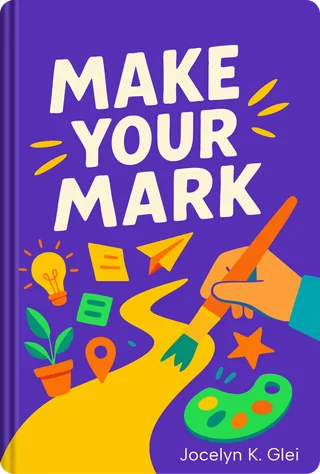
7Make Your Mark

Make Your Mark

Jocelyn K. Glei

Turn creative ideas into meaningful businesses by defining your vision, innovating with purpose, and leading with authenticity and transparency.

19 min

Listen to the intro

1:18

What is Make Your Mark about?

Make Your Mark (2014) brings together insights from successful entrepreneurs and creative leaders on building a business with purpose and impact. Edited by Jocelyn K. Glei, the book covers topics such as finding a clear purpose, designing great products, building a strong culture, and growing a company without losing its values. Its short, practical essays help creative professionals turn ideas into lasting ventures.

Who should read Make Your Mark?

  • Creative professionals ready to turn ideas into businesses
  • Founders who want to grow without losing their values
  • Leaders building a purpose-driven company culture
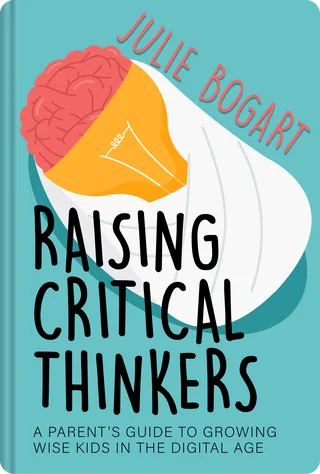
8Raising Critical Thinkers

Raising Critical Thinkers

Julie Bogart

Raise thoughtful children who question confidently, evaluate information clearly, and approach difficult issues with compassion and respect.

17 min

Listen to the intro

1:15

What is Raising Critical Thinkers about?

Raising Critical Thinkers (2022) gives parents practical ways to help children think for themselves in a world full of information and opinions. Julie Bogart explains how to encourage curiosity, help kids examine their own assumptions, understand different viewpoints, and evaluate sources carefully. With activities for different ages, the book shows how everyday conversations, reading, and play can build strong thinking skills.

Who should read Raising Critical Thinkers?

  • Parents who want children to think for themselves
  • Teachers helping students evaluate information and sources wisely
  • Families seeking everyday activities that build thinking skills
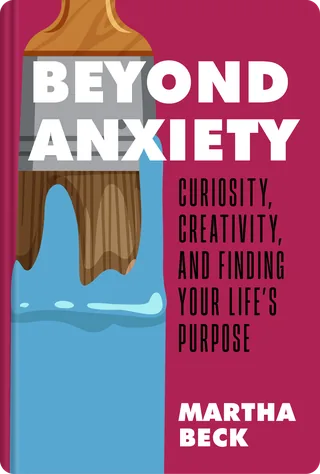
9Beyond Anxiety

Beyond Anxiety

Martha Beck

Break free from four hidden anxiety patterns and move toward greater calm, self-trust, and genuine connection.

19 min

Listen to the intro

1:11

What is Beyond Anxiety about?

Beyond Anxiety (2025) offers a new way of understanding and easing anxiety, which Martha Beck describes as one of the defining struggles of modern life. She explains how anxiety traps people in repetitive patterns of worry, and shows how curiosity, creativity, and attention to what brings real joy can calm the mind. The book encourages readers to move away from fear and toward a life that reflects their true purpose.

Who should read Beyond Anxiety?

  • Anyone caught in repetitive cycles of worry and overthinking
  • Professionals feeling drained by the pressures of modern life
  • People seeking calm, self-trust, and a clearer sense of purpose
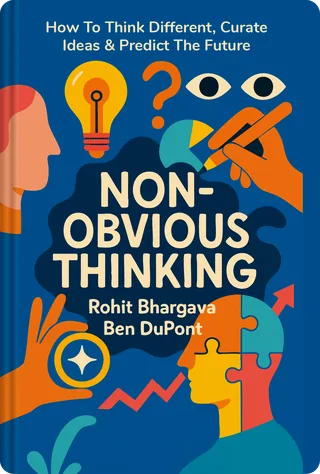
10Non-Obvious Thinking

Non-Obvious Thinking

Rohit Bhargava & Ben DuPont

Spot hidden patterns, challenge assumptions, and uncover overlooked opportunities to think more creatively and solve problems strategically.

16 min

Listen to the intro

2:31

What is Non-Obvious Thinking about?

Non-Obvious Thinking (2020) teaches how to notice what others miss and turn those observations into new ideas. Rohit Bhargava & Ben DuPont describe mindsets such as being observant, curious, flexible, thoughtful, and able to express ideas simply, and show how they can lead to fresh insights in business and life. With practical exercises and examples, the book helps readers think more creatively and anticipate change.

Who should read Non-Obvious Thinking?

  • Strategists who want to anticipate change before competitors
  • Entrepreneurs searching for opportunities others overlook
  • Anyone who wants to think more creatively
11The Teenage Brain

The Teenage Brain

Frances E. Jensen & Amy Ellis Nutt

Understand the developing teenage brain and support impulsive, emotional adolescents with greater insight, confidence, and connection.

14 min

Listen to the intro

1:41

What is The Teenage Brain about?

The Teenage Brain (2015) explains what science has discovered about the developing brains of teenagers and young adults. Frances E. Jensen & Amy Ellis Nutt show why teens can be highly capable learners yet also impulsive and emotional, and how sleep, stress, technology, and risky behaviours affect the growing brain. The book gives parents and teachers practical guidance for supporting young people through these years.

Who should read The Teenage Brain?

  • Parents raising teenagers who seem impulsive or moody
  • Teachers and school counselors working with adolescents
  • Anyone curious how sleep and technology shape teens
12Creativity Rules

Creativity Rules

Tina Seelig

Turn imagination into tangible results with a practical framework for generating, developing, and implementing creative ideas.

18 min

Listen to the intro

1:41

What is Creativity Rules about?

Creativity Rules (2017) explains how ideas grow from imagination into real products and ventures. Tina Seelig presents a framework she calls the Invention Cycle, which moves from imagination to creativity, innovation, and entrepreneurship. Drawing on her teaching at Stanford, she offers practical exercises and stories that help readers develop each skill and turn their ideas into reality.

Who should read Creativity Rules?

  • Aspiring entrepreneurs with ideas they want to launch
  • Professionals who want to think more creatively at work
  • Educators and team leaders who nurture innovation in others
13The Design Thinking Workbook

The Design Thinking Workbook

CJ Meadows and Charvi Parikh

Master design thinking with practical exercises and templates that reveal user needs, solve real problems, prototype ideas, and drive innovation.

13 min

Listen to the intro

2:09

What is The Design Thinking Workbook about?

The Design Thinking Workbook (2022) is a hands-on guide to design thinking, an approach to solving problems and creating new ideas by starting with people’s real needs. CJ Meadows and Charvi Parikh lead readers through essential skills such as observing users, framing problems, generating ideas, building simple prototypes, and testing them. With exercises and visual tools, the book helps businesses, educators, and entrepreneurs innovate more effectively.

Who should read The Design Thinking Workbook?

  • Entrepreneurs building products around real customer needs
  • Educators who want hands-on tools for teaching innovation
  • Team leaders looking for practical problem-solving exercises
14Do Bigger Things

Do Bigger Things

Dan McClure and Jennifer Wilde

Tackle ambitious challenges through system innovation that turns complex ideas into transformative solutions and lasting impact.

23 min

Listen to the intro

1:32

What is Do Bigger Things about?

Do Bigger Things (2024) argues that organisations must move beyond small improvements when confronting complex challenges and major opportunities. It introduces ecosystem innovation, an approach that brings together different organisations, technologies, specialists, and resources to create solutions that no single participant could deliver alone.

Who should read Do Bigger Things?

  • Leaders facing complex challenges beyond small, incremental improvements
  • Innovators building partnerships across organizations, technologies and sectors
  • Strategists seeking solutions no single organization could deliver
15Testing Business Ideas

Testing Business Ideas

David J. Bland and Alexander Osterwalder

Reduce business risk by testing assumptions, running over 40 practical experiments, and using real customer evidence to validate ideas.

18 min

Listen to the intro

1:35

What is Testing Business Ideas about?

Testing Business Ideas (2019) is a practical guide to reducing the risk of new business ideas by testing them before investing heavily. David J. Bland and Alexander Osterwalder show how to identify the assumptions behind an idea and present forty-four experiments for testing whether customers want it, whether it can be built, and whether it can be profitable. The book is designed for entrepreneurs, innovators, and teams in organisations of all sizes.

Who should read Testing Business Ideas?

  • Entrepreneurs validating a new idea before investing
  • Innovation teams inside companies of any size
  • Product managers who want real customer evidence
16The Call of the Wild and Free

The Call of the Wild and Free

Ainsley Arment

Nurture confident, joyful learners through curiosity, play, nature, and a freer approach to education.

15 min

Listen to the intro

1:06

What is The Call of the Wild and Free about?

The Call of the Wild and Free (2019) presents a joyful, nature-centred approach to children’s learning. Ainsley Arment encourages parents to nurture curiosity through outdoor exploration, reading, play, and hands-on discovery rather than rigid routines. The book offers practical ideas for creating a home environment where children can learn with freedom and wonder.

Who should read The Call of the Wild and Free?

  • Parents considering homeschooling for their children
  • Families seeking a gentler alternative to rigid schooling
  • Anyone wanting to spark children's curiosity through nature
17Lateral Thinking

Lateral Thinking

Edward de Bono

Master lateral thinking to break rigid patterns, challenge assumptions, shift perspectives, and generate unconventional solutions.

15 min

Listen to the intro

1:31

What is Lateral Thinking about?

Lateral Thinking (1970) introduces a way of thinking designed to generate new ideas by approaching problems from unexpected angles. Edward de Bono contrasts it with logical, step-by-step thinking, and explains techniques such as challenging assumptions, using random words to spark ideas, and looking for alternatives. The book includes exercises that help readers become more creative in work, school, and daily life.

Who should read Lateral Thinking?

  • Professionals stuck on problems that logic alone can't solve
  • Students and teachers who want to think more creatively
  • Anyone who wants fresh ideas for work and daily life
18Hidden Potential

Hidden Potential

Adam Grant

Unlock hidden potential through learning, persistence, feedback, and supportive relationships that turn growth into lasting achievement.

17 min

Listen to the intro

0:55

What is Hidden Potential about?

Hidden Potential (2023) argues that achievement depends less on natural talent and more on how people grow. Adam Grant explains how character skills such as discipline, determination, and the ability to learn from discomfort help people improve, and how the right support and systems can unlock potential in individuals, schools, and teams. The book is full of research and inspiring stories.

Who should read Hidden Potential?

  • Anyone who believes they lack natural talent
  • Teachers and parents nurturing growth in young learners
  • Managers building teams where people keep improving
19Limitless

Limitless

Jim Kwik

Unlock greater focus, memory, and mental energy through practical habits and learning techniques that accelerate skills and elevate performance.

20 min

Listen to the intro

0:54

What is Limitless about?

Limitless (2020) offers practical methods for learning faster, remembering more, and unlocking your mental potential. Jim Kwik presents a framework built on three elements: mindset, motivation, and methods. He shares techniques for improving focus, memory, reading speed, and study habits, along with advice on sleep, nutrition, and daily routines that support a healthy brain.

Who should read Limitless?

  • Students who want to study smarter and remember more
  • Professionals who need to learn new skills quickly
  • Anyone who struggles with focus, memory, or mental fatigue
20The Hidden Habits of Genius

The Hidden Habits of Genius

Craig Wright

Unlock your potential through the surprising daily habits that shaped history’s greatest minds.

19 min

Listen to the intro

1:45

What is The Hidden Habits of Genius about?

The Hidden Habits of Genius (2020) explores what the world’s greatest minds have in common. Craig Wright examines figures such as Leonardo da Vinci, Marie Curie, Mozart, Shakespeare, and Steve Jobs, and identifies habits that helped them change the world, including curiosity, persistence, imagination, and the ability to connect ideas from different fields. The book shows that genius involves more than natural talent.

Who should read The Hidden Habits of Genius?

  • Students curious about what made history's greatest minds
  • Professionals who want to think more creatively at work
  • Anyone who believes talent alone decides success

Related topics

Questions about Creative Thinking

What is a good book to start with on creative thinking?

The Creative Thinking Handbook is a practical starting point, offering tools like mind mapping and ways past mental blocks. For a sharper, more analytical approach, Think Like a Rocket Scientist shows how to question assumptions and reason from first principles.

What will I learn from creative thinking books?

You will learn how to generate and develop ideas, ask questions that open new possibilities, and test your assumptions before committing to them. Titles such as Questions Are the Answer and Testing Business Ideas turn these skills into steps you can apply right away.

Who are these summaries for?

They suit students, teachers, designers, managers and entrepreneurs who want fresh ways to approach problems and present ideas. Anyone who feels stuck or wants to bring more originality to their work will find something useful, from Change by Design to How to Tell a Story.

Get the key ideas from the world's best books in about 15 minutes

Free account · One free summary every day