Get started

Topic

The best 77 Economic Theory summaries

Economic Theory explores the ideas that explain how wealth is created, how markets and money behave, and why nations prosper or decline, questions that matter to readers in a region shaped by oil, trade, rapid development and shifting global power. The collection ranges from classics such as Ibn Khaldun's The Muqaddimah and Keynes's Essays In Persuasion to modern works on inflation, central banks, complexity, sound money and the economic impact of technology. With these ideas you can read the news with sharper judgement, understand the forces behind prices and policy, and make more thoughtful decisions about work, savings and the future.

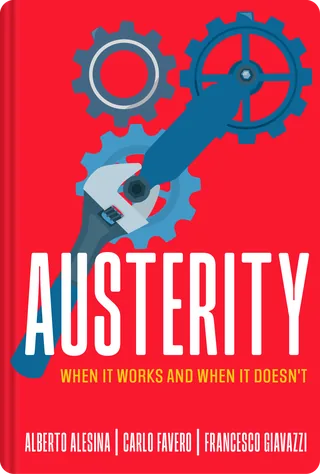
1Austerity

Austerity

Alberto Alesina, Carlo Favero and Francesco Giavazzi

Understand when austerity supports recovery and when it deepens crisis through evidence that challenges conventional economic thinking.

17 min

Listen to the intro

0:56

What is Austerity about?

Austerity (2019) examines what happens when governments cut spending or raise taxes to reduce public debt. Using data from many countries over several decades, Alberto Alesina, Carlo Favero and Francesco Giavazzi show that spending cuts tend to cause milder slowdowns than tax increases, and that the design and timing of austerity matter a great deal. The book offers an evidence-based contribution to a heated policy debate.

Who should read Austerity?

  • Policymakers weighing spending cuts against tax increases
  • Economics students studying fiscal policy and public debt
  • Anyone following debates on government budgets and recovery
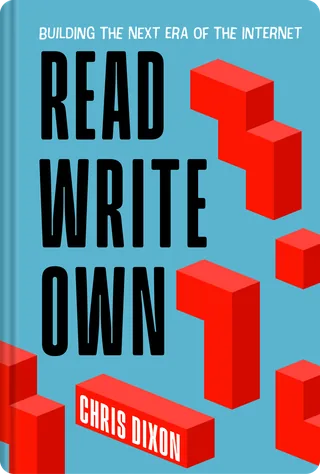
2Read Write Own

Read Write Own

Chris Dixon

Explore a decentralised internet where blockchains return ownership to creators, reduce Big Tech’s control, and unlock innovation and economic freedom.

18 min

Listen to the intro

1:23

What is Read Write Own about?

Read Write Own (2024) explains how the internet has evolved and where it may go next. Chris Dixon describes three eras: the read era of early websites, the write era of social media dominated by large platforms, and a possible own era in which blockchain networks let users share ownership and control. The book argues that new network designs could give creators and users a fairer share of the value they create.

Who should read Read Write Own?

  • Content creators wanting fairer ownership of their work
  • Entrepreneurs exploring blockchain-based business models
  • Anyone curious about the internet's next era
3The World for Sale

The World for Sale

Javier Blas and Jack Farchy

Enter the secretive world of commodity traders who move oil, metals, and food while shaping markets, politics, and global power.

16 min

Listen to the intro

1:45

What is The World for Sale about?

The World for Sale (2021) reveals the little-known world of commodity traders, the companies that buy, move, and sell much of the world’s oil, metals, and food. Javier Blas and Jack Farchy show how a handful of powerful firms grew rich by operating in difficult markets and sometimes working with controversial governments. The book explains how these traders shape global politics and the prices we all pay.

Who should read The World for Sale?

  • Professionals working in energy, mining, or shipping industries
  • Investors curious about what really drives commodity prices
  • Anyone interested in how money shapes global politics
4The Corporation in the 21st Century

The Corporation in the 21st Century

John Kay

Build a modern corporation that balances profit, purpose, and responsibility through strong governance, ethical leadership, and sustainable growth.

17 min

Listen to the intro

2:05

What is The Corporation in the 21st Century about?

The Corporation in the 21st Century (2024) explains how modern companies really create value today. John Kay argues that successful businesses now depend less on factories and physical assets and more on knowledge, skills, teamwork, and collective capabilities. He shows how this shift changes our understanding of ownership, competition, and finance, and why old economic ideas often fail to describe today’s businesses.

Who should read The Corporation in the 21st Century?

  • Business leaders rethinking how their companies create value
  • Investors who want to understand modern corporate ownership
  • Economics students questioning traditional theories of the firm
5The Anarchy

The Anarchy

William Dalrymple

Witness how the East India Company transformed commerce into conquest, revealing the devastating power of corporate ambition, greed, and empire.

20 min

Listen to the intro

1:15

What is The Anarchy about?

The Anarchy (2019) tells how the East India Company, a private trading business, rose to control much of India in the eighteenth century. William Dalrymple describes how the company used its own army, political alliances, and the weakening of the Mughal Empire to seize power and wealth. The book is a powerful account of corporate power and its consequences.

Who should read The Anarchy?

  • History lovers curious how Britain came to rule India
  • Business leaders reflecting on corporate power and its limits
  • Readers interested in colonialism, empire and South Asian history
6The Arthashastra

The Arthashastra

Kauṭalya

Master timeless Indian wisdom on governance, leadership, diplomacy, finance, and strategy through principles of discipline, foresight, and public welfare.

17 min

Listen to the intro

1:15

What is The Arthashastra about?

The Arthashastra (c. 2nd century BCE to 3rd century CE) is an ancient Indian treatise on statecraft, economics, and military strategy. It offers detailed advice to rulers on governing, managing the treasury, administering justice, gathering intelligence, conducting diplomacy, and waging war. The work is one of the oldest surviving texts on political strategy and is often compared to Machiavelli’s The Prince.

Who should read The Arthashastra?

  • Leaders seeking timeless principles of governance and strategy
  • Students of political science and ancient statecraft
  • Anyone comparing Eastern strategic thought with Machiavelli's The Prince
7Beautiful Game Theory

Beautiful Game Theory

Ignacio Palacios-Huerta

Understand the hidden logic behind football’s decisive moments, and how psychology, game theory, and split-second choices can determine victory or defeat.

14 min

Listen to the intro

0:51

What is Beautiful Game Theory about?

Beautiful Game Theory (2014) explores how professional soccer can be used to understand and test important economic theories. Ignacio Palacios-Huerta draws on real match data to examine game theory, strategic decision-making, incentives, discrimination, human preferences, and behavioural economics. By analysing situations such as penalty kicks, referee decisions, and competitive pressure, the book shows how the world’s most popular sport can reveal surprising insights into economics and human behaviour.

Who should read Beautiful Game Theory?

  • Football fans curious about the logic behind the game
  • Economics students seeking real-world examples of game theory
  • Decision-makers who want to choose better under pressure
8An Economist Walks into a Brothel

An Economist Walks into a Brothel

Allison Schrager

Make smarter financial and life decisions by understanding risk through surprising lessons drawn from unexpected places.

16 min

Listen to the intro

1:15

What is An Economist Walks into a Brothel about?

An Economist Walks into a Brothel (2019) explains how people can make better decisions when outcomes are uncertain and no option is completely safe. Allison Schrager examines individuals and organisations that regularly manage serious financial, professional, and personal risks, identifying principles that can be applied to business and everyday life. The book shows how understanding incentives, measuring possible losses, recognising hidden dangers, and preparing for unexpected outcomes can help people pursue opportunities without taking unnecessary risks.

Who should read An Economist Walks into a Brothel?

  • Professionals weighing risky career or financial decisions
  • Investors who want to measure and limit potential losses
  • Anyone facing uncertain choices with no perfectly safe option
9The War on Normal People

The War on Normal People

Andrew Yang

Understand how automation is reshaping work and widening inequality, and explore practical ways to rebuild opportunity in a changing economy.

18 min

Listen to the intro

1:16

What is The War on Normal People about?

The War on Normal People (2018) warns that automation and artificial intelligence are rapidly replacing millions of jobs, especially for workers without college degrees. Andrew Yang describes how this shift is already affecting communities and argues that society must respond with new ideas. He makes the case for a universal basic income and a more human-centred economy that values people beyond their jobs.

Who should read The War on Normal People?

  • Workers worried about automation replacing their jobs
  • Policymakers exploring universal basic income and economic reform
  • Anyone curious how AI will reshape communities
10The AI Economy

The AI Economy

Roger Bootle

Prepare for the economic shifts AI will bring to work and markets, and learn how businesses and workers can adapt.

17 min

Listen to the intro

1:01

What is The AI Economy about?

The AI Economy (2019) examines how artificial intelligence and robots will affect jobs, wages, and economic growth. Roger Bootle takes a balanced view, arguing that fears of mass unemployment may be exaggerated, while recognising that many jobs and skills will change. He discusses what education, government policy, and individuals can do to prepare for a future shaped by intelligent machines.

Who should read The AI Economy?

  • Professionals worried about AI replacing their jobs
  • Business leaders planning for automation and workforce change
  • Policymakers and educators shaping how people prepare for AI
11Blowout

Blowout

Rachel Maddow

Uncover how oil and gas power fuels corruption, weakens democracies, and quietly shapes political crises around the world.

19 min

Listen to the intro

1:39

What is Blowout about?

Blowout (2019) investigates the global oil and gas industry and its influence on politics and democracy. Rachel Maddow traces how energy wealth has fuelled corruption, strengthened authoritarian governments, and caused environmental harm, with examples ranging from Russia to Oklahoma. The book calls for stronger oversight of one of the world’s most powerful industries.

Who should read Blowout?

  • Readers curious how energy wealth shapes global politics
  • Professionals working in or around the oil and gas sector
  • Anyone concerned with governance, accountability and environmental impact
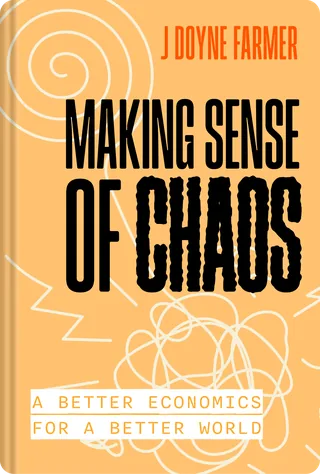
12Making Sense of Chaos

Making Sense of Chaos

J Doyne Farmer

Discover how complexity science reveals patterns within chaos, helping us understand economies, technology, and an unpredictable future.

18 min

Listen to the intro

1:25

What is Making Sense of Chaos about?

Making Sense of Chaos (2024) argues that traditional economics often fails to predict crises because it assumes the economy is stable and predictable. J Doyne Farmer introduces complexity economics, which uses computer simulations of many interacting individuals and businesses to model how real economies behave. He shows how this approach can help us understand financial crashes, climate policy, and economic change.

Who should read Making Sense of Chaos?

  • Economists frustrated by models that miss real crises
  • Policymakers shaping responses to financial and climate risks
  • Anyone curious how simulations reveal patterns in chaos
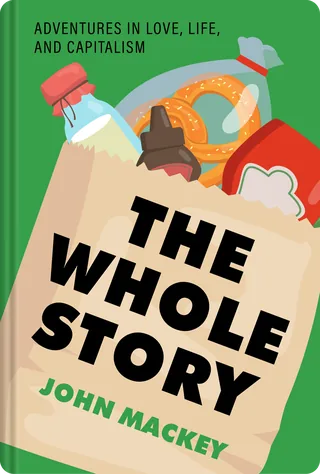
13The Whole Story

The Whole Story

John Mackey

Follow the Whole Foods cofounder’s journey from college dropout to business pioneer, revealing how conscious capitalism can unite profit with purpose.

14 min

Listen to the intro

1:33

What is The Whole Story about?

The Whole Story (2024) is John Mackey’s account of building Whole Foods Market, from a small natural foods store in Austin, Texas, in 1980 to a national grocery chain later acquired by Amazon. He describes the setbacks, near failures, and leadership lessons of more than four decades in business. The book also explains his belief that companies can serve customers, employees, suppliers, and communities while still earning strong profits.

Who should read The Whole Story?

  • Founders building a business with purpose beyond profit
  • Leaders steering companies through setbacks and near failures
  • Anyone curious how Whole Foods grew into a national chain
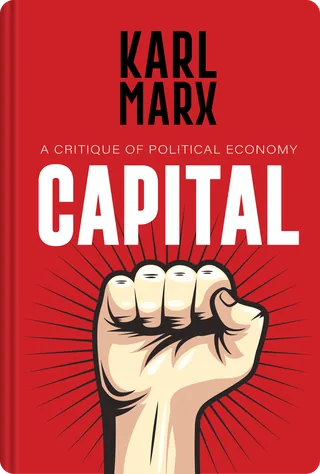
14Capital

Capital

Karl Marx

Understand Marx’s critique of capitalism and how labour, wealth, exploitation, and class struggle shape inequality, power, and conflict within modern economic systems.

21 min

Listen to the intro

1:28

What is Capital about?

Capital (1867) examines how capitalism operates through the production of commodities, the organisation of labour, and the accumulation of wealth. Karl Marx argues that profit is generated by the difference between the value workers create and the wages they receive, a process he describes through the concept of surplus value. The book analyses money, markets, industrial production, and class relations, revealing how the pursuit of capital can produce inequality, exploitation, and recurring economic crises. The first volume appeared in 1867, while the remaining volumes were published after Marx’s death.

Who should read Capital?

  • Economics students exploring classic critiques of capitalism
  • Readers curious about the roots of economic inequality
  • Anyone studying how labor, wages and profit connect
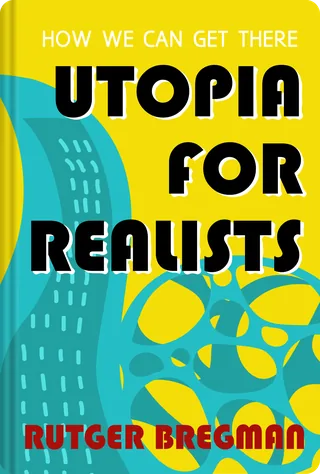
15Utopia for Realists

Utopia for Realists

Rutger Bregman

Rethink progress through bold ideas like universal basic income and shorter workweeks that could create a fairer, more prosperous society.

21 min

Listen to the intro

1:01

What is Utopia for Realists about?

Utopia for Realists (2016) argues that bold ideas once considered unrealistic can become reality, as many past reforms did. Rutger Bregman makes the case for a universal basic income, a shorter working week, and more open cooperation between countries, supporting his arguments with historical examples and research. The book encourages readers to imagine a better future and work toward it.

Who should read Utopia for Realists?

  • Policymakers exploring fresh solutions to poverty and inequality
  • Workers questioning long hours and modern work culture
  • Anyone who believes bold ideas can shape a better future
16The Deficit Myth

The Deficit Myth

Stephanie Kelton

Rethink government deficits and explore how currency-issuing nations could use public spending more boldly to address economic and social challenges.

17 min

Listen to the intro

1:17

What is The Deficit Myth about?

The Deficit Myth (2020) challenges the common belief that governments must manage their budgets like households. Stephanie Kelton explains the ideas of Modern Monetary Theory, arguing that countries that issue their own currency face limits set by inflation rather than by running out of money. She suggests that this view could change how governments think about spending on jobs, health, and public services.

Who should read The Deficit Myth?

  • Economics students curious about Modern Monetary Theory
  • Policy makers weighing public spending against inflation risks
  • Anyone who assumes governments should budget like households
17Cobalt Red

Cobalt Red

Siddharth Kara

Expose the exploitation and environmental damage behind cobalt mining, revealing the hidden human cost of batteries and clean energy.

15 min

Listen to the intro

1:27

What is Cobalt Red about?

Cobalt Red (2023) reveals the human cost behind the cobalt used in the batteries of phones, laptops, and electric cars. Siddharth Kara travelled to mining regions in the Democratic Republic of the Congo and documented the dangerous conditions faced by workers, including children, who dig cobalt by hand. The book calls on companies and consumers to take responsibility for the supply chains that power modern technology.

Who should read Cobalt Red?

  • Consumers curious about the true cost of their devices
  • Business leaders responsible for ethical supply chains
  • Anyone concerned with human rights and clean energy
18Growth

Growth

Daniel Susskind

Question whether endless economic growth truly improves life, and rethink progress through well-being, equality, technology, and environmental limits.

18 min

Listen to the intro

1:11

What is Growth about?

Growth (2024) examines humanity’s long pursuit of economic growth, how it lifted billions out of poverty, and why it now faces serious challenges such as inequality and environmental damage. Daniel Susskind argues that simply stopping growth is not the answer. Instead, he shows how societies can pursue a better kind of growth driven by ideas and innovation, guided by clear values about what we want progress to achieve.

Who should read Growth?

  • Policymakers weighing economic growth against social and environmental costs
  • Students curious about how economies create lasting prosperity
  • Anyone questioning whether progress should mean more than GDP
197 Powers

7 Powers

Hamilton Helmer

Master seven strategic powers that create lasting competitive advantage and protect your company’s profits as it grows.

18 min

Listen to the intro

1:16

What is 7 Powers about?

7 Powers (2016) explains what makes a business truly valuable over the long term. Hamilton Helmer identifies seven sources of lasting competitive advantage: scale economies, network economies, counter-positioning, switching costs, branding, cornered resource, and process power. Using examples such as Netflix, Intel, and Apple, the book gives leaders and investors a clear framework for building and recognising durable strategy.

Who should read 7 Powers?

  • Founders building companies meant to last for decades
  • Investors looking for businesses with durable competitive advantages
  • Leaders shaping strategy to protect profits as they grow
20The Black Swan

The Black Swan

Nassim Nicholas Taleb

Prepare for the unpredictable by understanding how rare events shape history, markets, and life beyond the limits of prediction.

18 min

Listen to the intro

1:01

What is The Black Swan about?

The Black Swan (2007) explores the huge impact of rare and unpredictable events, such as financial crashes, wars, and major inventions. Nassim Nicholas Taleb argues that people underestimate the unknown, trust forecasts too much, and explain surprising events only after they happen. He shows how to prepare for uncertainty by building resilience instead of relying on predictions, and the book changed how many people think about risk.

Who should read The Black Swan?

  • Investors who want to prepare for sudden market crashes
  • Leaders who make decisions under uncertainty and risk
  • Anyone who trusts forecasts and predictions too much

Related topics

Questions about Economic Theory

What is a good book to start with on economic theory?

How Economics Explains the World is a friendly entry point that connects economic ideas to everyday choices and global trends. In This Economy? is also a clear guide to inflation, recessions and central banks.

What will I learn from economic theory books?

You will learn how money, markets and institutions interact, and why economies move through cycles of growth and crisis. Titles like The Muqaddimah and Principles For Dealing With the Changing World Order show how these patterns shape the rise and fall of nations.

Who are these summaries for?

They suit students, professionals, investors and curious readers who want to understand the economy without a technical background. Each summary distils a book's core arguments so you can grasp them in a short sitting.

Get the key ideas from the world's best books in about 15 minutes

Free account · One free summary every day