Get started

Topic

The best 65 Geopolitics summaries

Geopolitics explores how power, territory, alliances and rivalries shape the fate of nations, a subject that touches daily life in a region where Palestine, the Gulf, Egypt and Syria have long stood at the center of global contests. The books here range from broad histories such as The Cold War and The Hundred Years' War on Palestine to firsthand memoirs and portraits of leaders like King Faisal, Nasser, Sadat and Lee Kuan Yew, alongside classic works on statecraft from ancient Greece and India. Together they help the reader understand the news with deeper context, recognise recurring patterns in how conflicts begin and end, and form a more informed view of where the region and the world may be heading.

1The Libyan Revolution and Its Aftermath

The Libyan Revolution and Its Aftermath

Peter Cole and Brian McQuinn

Uncover how revolution, foreign intervention, and competing powers plunged Libya into turmoil long after its regime fell.

19 min

Listen to the intro

1:05

What is The Libyan Revolution and Its Aftermath about?

The Libyan Revolution and Its Aftermath (2015) brings together research on the Libyan uprising of 2011 and the political, military, and social developments that followed it. The contributors examine local communities, armed groups, state institutions, regional interests, and the difficulties involved in rebuilding authority after the collapse of the former government. By looking beyond simple explanations, the book helps readers understand why Libya’s transition became fragmented and why stable national institutions proved difficult to establish.

Who should read The Libyan Revolution and Its Aftermath?

  • Students of Middle Eastern politics and modern North African history
  • Analysts studying post-conflict transitions and state rebuilding
  • Anyone seeking to understand Libya beyond simple headlines
2Strangers in the House

Strangers in the House

Raja Shehadeh

Experience life in occupied Ramallah through a moving memoir of family, identity, resistance, and a son’s complex bond with his politically active father.

18 min

Listen to the intro

1:28

What is Strangers in the House about?

Strangers in the House (2002) is Raja Shehadeh’s memoir of growing up in Ramallah and coming of age under Israeli occupation. He describes his complex relationship with his father, a prominent lawyer who was killed in 1985, and his own decision to follow him into law. The book explores family, memory, exile, and the daily realities of life under occupation.

Who should read Strangers in the House?

  • Readers curious about daily life in occupied Palestine
  • Sons and daughters with complex bonds to their fathers
  • Law students drawn to justice and human rights
3Understanding Power

Understanding Power

Noam Chomsky, Peter R. Mitchell & John Schoeffel

Question how political and economic power shape knowledge, belief, and society, and reclaim your role in shaping the future.

17 min

Listen to the intro

1:45

What is Understanding Power about?

Understanding Power (2002) brings together edited transcripts of discussions and talks that Noam Chomsky gave between 1989 and 1999. Chomsky examines how governments, corporations, and the media shape public opinion, and discusses foreign policy, economic power, and the role of ordinary citizens in creating change. Editors Peter R. Mitchell and John Schoeffel added extensive notes and sources to support the arguments.

Who should read Understanding Power?

  • Readers curious about how media shapes public opinion
  • Students of politics, economics, or international relations
  • Citizens who want a greater role in shaping change
4History of the Peloponnesian War

History of the Peloponnesian War

Thucydides

Witness the struggle between Athens and Sparta while uncovering timeless lessons on power, ambition, fear, leadership, and the nature of war.

20 min

Listen to the intro

1:19

What is History of the Peloponnesian War about?

History of the Peloponnesian War (5th century BCE) is the classic account of the long war between Athens and Sparta and their allies in ancient Greece. Thucydides, who lived through the conflict, describes its causes, battles, and political debates, including famous speeches such as Pericles’ funeral oration. His careful, evidence-based approach makes the work one of the foundations of historical writing and political thought.

Who should read History of the Peloponnesian War?

  • Leaders seeking timeless lessons on power and ambition
  • Students of history, politics and international relations
  • Anyone curious about why great powers go to war
5The Hundred Years' War on Palestine

The Hundred Years' War on Palestine

Rashid Khalidi

Reexamine a century of Palestinian history through colonialism, global power, displacement, resistance, and the enduring struggle for justice and self-determination.

24 min

Listen to the intro

1:21

What is The Hundred Years' War on Palestine about?

The Hundred Years' War on Palestine (2020) presents the modern history of Palestine as a hundred-year struggle that began with the Balfour Declaration in 1917. Rashid Khalidi describes six key moments, from the British Mandate and the Nakba of 1948 to the wars and negotiations of later decades, as turning points in this conflict. Drawing on his own family’s archives and experiences in Jerusalem, he gives the Palestinian story a personal and historical voice.

Who should read The Hundred Years' War on Palestine?

  • Readers seeking a Palestinian perspective on modern history
  • Students of the Middle East and colonial history
  • Anyone wanting to understand the roots of the conflict over Palestine
6I Shall Not Hate

I Shall Not Hate

Dr. Izzeldin Abuelaish

Witness a Palestinian doctor transform unimaginable loss into a courageous call for peace, dialogue, and human dignity over hatred and revenge.

18 min

Listen to the intro

1:15

What is I Shall Not Hate about?

I Shall Not Hate (2010) is the memoir of a Palestinian doctor from Gaza who lost three of his daughters and a niece when shells struck his family home in January 2009. Dr. Izzeldin Abuelaish describes his childhood in a refugee camp, his medical career, and his commitment to treating patients on both sides of the conflict. Rather than responding with hatred, he calls for peace, dialogue, and education for girls and women.

Who should read I Shall Not Hate?

  • Anyone searching for strength after a painful personal loss
  • Readers wanting a Palestinian perspective on life in Gaza
  • Advocates of peace, dialogue and education for girls
7Who Rules The World

Who Rules The World

Noam Chomsky

Expose the hidden power struggles through which governments, corporations, and elites shape democracy, justice, and humanity’s future.

20 min

Listen to the intro

1:56

What is Who Rules The World about?

Who Rules The World (2016) examines how global power is exercised and who truly benefits from it. Noam Chomsky analyses the foreign policy of the United States and other major powers, the influence of corporations and elites, and threats such as nuclear weapons and climate change. He argues that ordinary citizens have more power to shape events than they often realise.

Who should read Who Rules The World?

  • Readers curious about who really holds global power
  • Students of politics, international relations or foreign policy
  • Citizens who want to influence events in their world
8Blowout

Blowout

Rachel Maddow

Uncover how oil and gas power fuels corruption, weakens democracies, and quietly shapes political crises around the world.

19 min

Listen to the intro

1:39

What is Blowout about?

Blowout (2019) investigates the global oil and gas industry and its influence on politics and democracy. Rachel Maddow traces how energy wealth has fuelled corruption, strengthened authoritarian governments, and caused environmental harm, with examples ranging from Russia to Oklahoma. The book calls for stronger oversight of one of the world’s most powerful industries.

Who should read Blowout?

  • Readers curious how energy wealth shapes global politics
  • Professionals working in or around the oil and gas sector
  • Anyone concerned with governance, accountability and environmental impact
9Myanmar's Enemy Within

Myanmar's Enemy Within

Francis Wade

Uncover how fear, nationalism, propaganda, and silence normalised violence against Myanmar’s Muslim minorities and allowed injustice to take root.

18 min

Listen to the intro

1:53

What is Myanmar's Enemy Within about?

Myanmar's Enemy Within (2017) investigates how nationalism, political change, and divisions over identity contributed to the persecution of the Rohingya in Myanmar. It provides historical and social context for understanding exclusion, displacement, and the dangers of hostility toward minority communities.

Who should read Myanmar's Enemy Within?

  • Readers seeking to understand the Rohingya crisis
  • Anyone concerned with minority rights and justice
  • Students of nationalism, propaganda and identity conflicts
10Nineteen Eighty-Four (1984)

Nineteen Eighty-Four (1984)

George Orwell

Enter a regime that controls truth, history, and thought, revealing how unchecked power can erase freedom and humanity.

15 min

Listen to the intro

1:17

What is Nineteen Eighty-Four (1984) about?

Nineteen Eighty-Four (1984), first published in 1949, imagines a future society ruled by a total dictatorship led by the mysterious Big Brother. Winston Smith works at the Ministry of Truth rewriting history, while the Party watches every citizen and controls even language and thought. George Orwell’s classic novel is a powerful warning about surveillance, propaganda, and the loss of truth and freedom.

Who should read Nineteen Eighty-Four (1984)?

  • Readers who want to experience a defining literary classic
  • Anyone curious how propaganda and surveillance shape public thinking
  • Students exploring the link between language, truth and power
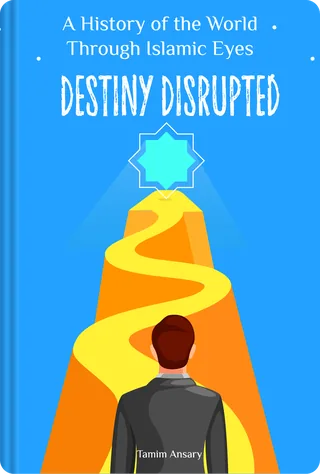
11Destiny Disrupted

Destiny Disrupted

Tamim Ansary

Revisit world history through the rise, ideas, and influence of Islamic civilisation, revealing its vital role in humanity’s shared story.

24 min

Listen to the intro

1:10

What is Destiny Disrupted about?

Destiny Disrupted (2009) retells world history from the perspective of the Islamic world. Beginning with the life of Prophet Muhammad (PBUH) and the early Muslim community, Tamim Ansary traces the rise of Islamic civilisation, its achievements in science and culture, its encounters with Europe, and the challenges of the modern era. The book helps readers understand how Muslims have seen their own history.

Who should read Destiny Disrupted?

  • History lovers seeking a non-Western view of the past
  • Anyone curious how Muslims understand their own history
  • Students exploring Islamic civilization's role in world history
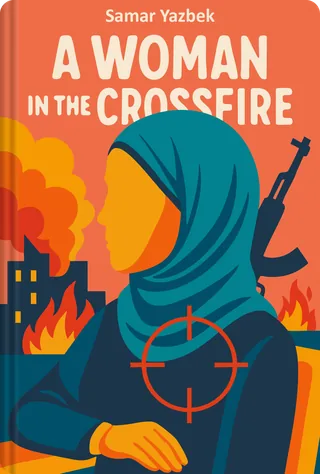
12A Woman in the Crossfire

A Woman in the Crossfire

Samar Yazbek

Witness Syria’s 2011 uprising through Samar Yazbek’s firsthand account of peaceful protest, brutal repression, ordinary courage, and war’s human cost.

19 min

Listen to the intro

1:55

What is A Woman in the Crossfire about?

A Woman in the Crossfire (2012) is Samar Yazbek’s diary of the first months of the Syrian uprising in 2011. Moving between demonstrations, hospitals, and conversations with ordinary people, she records the fear, courage, and suffering she witnessed as peaceful protests were met with force. The book won the PEN Pinter Prize for an International Writer of Courage and offers a powerful firsthand account of a turning point in Syria’s history.

Who should read A Woman in the Crossfire?

  • Readers seeking firsthand accounts of Syria's 2011 uprising
  • Journalists and writers interested in reporting under pressure
  • Anyone seeking the human stories behind news headlines
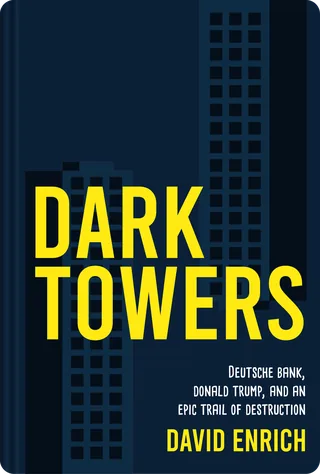
13Dark Towers

Dark Towers

David Enrich

Enter the hidden world of a powerful bank where risky deals, secrecy, and political influence expose the dangers of unchecked power.

16 min

Listen to the intro

0:45

What is Dark Towers about?

Dark Towers (2020) investigates the history of Deutsche Bank, one of the world’s largest banks, and how its pursuit of growth led to a long series of scandals. David Enrich describes risky deals, weak oversight, and the bank’s lending relationship with Donald Trump over many years. The book shows how a culture that rewarded profit above caution damaged a major institution.

Who should read Dark Towers?

  • Finance professionals curious about how big banks go wrong
  • Leaders building cultures that balance profit with caution
  • Readers who enjoy investigative stories of corporate scandal
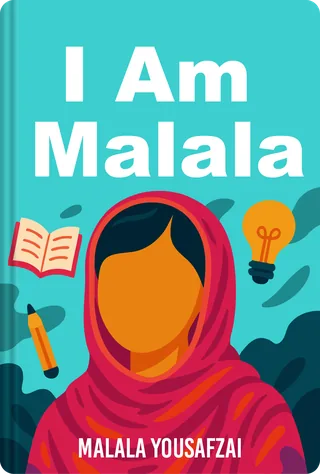
14I Am Malala

I Am Malala

Malala Yousafzai

Follow Malala’s courageous fight for girls’ education and discover how one young voice became a global symbol of resilience, equality, and hope.

19 min

Listen to the intro

1:18

What is I Am Malala about?

I Am Malala (2013) is the story of a girl from Pakistan’s Swat Valley who spoke out for the right of girls to go to school, and was attacked for it at the age of fifteen. Malala Yousafzai describes her family, especially her father, a teacher who supported her voice, her recovery, and her determination to continue her campaign. The book is an inspiring story of courage and the power of education.

Who should read I Am Malala?

  • Parents who want to support their daughters' education
  • Students looking for a true story of courage
  • Teachers who believe education can change lives
15The Silk Roads

The Silk Roads

Peter Frankopan

Trace how ancient trade routes made the East a centre of wealth, power, and culture—and how their enduring legacy continues to shape today’s changing world.

24 min

Listen to the intro

1:59

What is The Silk Roads about?

The Silk Roads (2015) retells world history by placing the trade routes connecting Asia, the Middle East, and Europe at its centre. Peter Frankopan explains how these routes carried not only silk and valuable goods, but also religions, scientific knowledge, political ideas, diseases, and armies. Moving from ancient empires to the modern struggle for energy and influence, the book challenges the traditional Europe-centred view of history and shows how the lands along the Silk Roads have shaped global civilisation.

Who should read The Silk Roads?

  • History lovers seeking a fresh, non-European perspective
  • Anyone curious how trade shaped religions and ideas
  • Professionals following today's global competition for energy and influence
16Revolutionary Iran

Revolutionary Iran

Michael Axworthy

Trace Iran’s revolutionary journey to understand how ideology, religion, power, and historical memory continue to shape its identity and global choices.

19 min

Listen to the intro

1:52

What is Revolutionary Iran about?

Revolutionary Iran (2013) presents a modern history of Iran from the revolution of 1979 through the political and social developments that followed. It examines leadership, institutions, war, reform movements, and the changing relationship between the state and Iranian society.

Who should read Revolutionary Iran?

  • Readers seeking to understand modern Iran's political evolution
  • Students of Middle Eastern history and international relations
  • Analysts and journalists following Iran's regional and global role
17Palestine

Palestine

Nur Masalha

Trace 4,000 years of Palestinian history, identity, and cultural continuity through archaeology, language, and historical evidence that challenge narratives of erasure.

24 min

Listen to the intro

1:25

What is Palestine about?

Palestine (2018) presents an extensive history of Palestine, tracing its name, geography, communities, and cultural identity across approximately four thousand years. Nur Masalha draws on historical records, archaeology, maps, inscriptions, and other sources to demonstrate the deep and continuous connection between the land and its people. The book offers a detailed perspective on how Palestinian identity developed through different eras while preserving its enduring historical roots.

Who should read Palestine?

  • History lovers curious about Palestine's ancient past
  • Students researching Palestinian identity and cultural heritage
  • Anyone seeking evidence that challenges narratives of erasure
18Hawai’i

Hawai’i

Sumner La Croix

Trace Hawaii’s transformation from ancient kingdom to modern state, shaped by outside forces, economic change, culture, and local resilience.

21 min

Listen to the intro

1:23

What is Hawai’i about?

Hawai’i (2019) tells the economic and political history of the Hawaiian Islands over eight hundred years. Sumner La Croix explains how Hawaiian society was organised before contact with outsiders, how trade, sugar plantations, and foreign influence transformed the islands, and how Hawai’i became part of the United States. The book shows how land, power, and institutions shaped the islands’ development.

Who should read Hawai’i?

  • History readers curious about Pacific island kingdoms
  • Economics students exploring how institutions shape nations
  • Anyone interested in land, power and foreign influence
19The Sleepwalkers

The Sleepwalkers

Christopher Clark

Trace how nationalism, alliances, and political misjudgements led Europe into World War I while its leaders remained blind to the approaching disaster.

22 min

Listen to the intro

1:27

What is The Sleepwalkers about?

The Sleepwalkers (2012) explains how Europe went to war in 1914. Christopher Clark traces the complex web of alliances, rivalries, and decisions among the great powers in the years before the First World War, and shows how leaders on all sides, uncertain and short-sighted, stumbled into a catastrophe none of them fully intended. The book is widely praised as a masterful work of history.

Who should read The Sleepwalkers?

  • History lovers curious about how World War I began
  • Students of international relations and diplomacy
  • Leaders who want to avoid strategic blind spots
20Biography of Genghis Khan

Biography of Genghis Khan

Jack Weatherford

Rethink Genghis Khan as a transformative leader whose conquests reshaped trade, communication, governance, and the foundations of the modern world.

24 min

Listen to the intro

1:41

What is Biography of Genghis Khan about?

Biography of Genghis Khan (2004) reexamines the life of Genghis Khan and the empire he founded. Jack Weatherford traces how a young outcast named Temüjin united the Mongol tribes and built the largest land empire in history, and argues that the empire also connected distant regions through trade, communication, and the exchange of ideas. The book challenges the view of the Mongols as mere destroyers while acknowledging the devastation of their conquests.

Who should read Biography of Genghis Khan?

  • History lovers curious about the Mongol Empire's real legacy
  • Leaders studying how one outcast united rival tribes
  • Anyone interested in how trade and ideas shaped today's world

Related topics

Questions about Geopolitics

What is a good book to start with on geopolitics?

The Cold War is a clear starting point, explaining how the rivalry between the United States and the Soviet Union shaped the modern world. Readers wanting a view closer to home can follow with The Hundred Years' War on Palestine, which places the region's central question within the wider story of global power.

What will I learn from geopolitics books?

You will learn how nationalism, alliances, resources and misjudgment push states toward war or peace, as The Sleepwalkers shows for the First World War. You will also see how leaders weigh strategy and diplomacy, from King Faisal and the 1973 oil embargo to Lee Kuan Yew's reading of China and the United States.

Who are these summaries for?

They suit students, professionals and curious readers who want to understand the forces behind regional and world events without reading every book in full. They are also valuable for anyone interested in Arab history and identity, through titles such as Arabs and Nasser: The Last Arab.

Get the key ideas from the world's best books in about 15 minutes

Free account · One free summary every day