Get started

Topic

The best 59 World History summaries

World History brings together the empires, wars, faiths and leaders that shaped the world we live in, from ancient Athens and Rome to the Arab and Islamic heritage and the modern Middle East, helping readers in the region see their own story within the wider human story. The collection mixes classic works such as Ibn Khaldun's The Muqaddimah and Thucydides' History of the Peloponnesian War with modern histories of Palestine, the Cold War and the First World War, alongside biographies of figures like King Faisal and Nelson Mandela. Readers can use these ideas to understand how civilizations rise and decline, to read current events with deeper context, and to draw lessons on leadership, power and resilience.

1World Order

World Order

Henry Kissinger

Understand how diplomacy, power, ideology, and national interests have shaped global order across civilisations and history.

17 min

Listen to the intro

1:02

What is World Order about?

World Order (2014) examines how different civilisations have understood international order and why the world struggles to agree on shared rules today. Henry Kissinger traces the European balance-of-power system that grew out of the Peace of Westphalia, and compares it with the traditions of Asia, the Middle East, and the United States. The book asks how a stable global order can be built in an age of rising powers and new technologies.

Who should read World Order?

  • Students of international relations and diplomatic history
  • Diplomats and policymakers navigating a shifting global landscape
  • Anyone curious why nations struggle to agree today
2The Sleepwalkers

The Sleepwalkers

Christopher Clark

Trace how nationalism, alliances, and political misjudgements led Europe into World War I while its leaders remained blind to the approaching disaster.

22 min

Listen to the intro

1:27

What is The Sleepwalkers about?

The Sleepwalkers (2012) explains how Europe went to war in 1914. Christopher Clark traces the complex web of alliances, rivalries, and decisions among the great powers in the years before the First World War, and shows how leaders on all sides, uncertain and short-sighted, stumbled into a catastrophe none of them fully intended. The book is widely praised as a masterful work of history.

Who should read The Sleepwalkers?

  • History lovers curious about how World War I began
  • Students of international relations and diplomacy
  • Leaders who want to avoid strategic blind spots
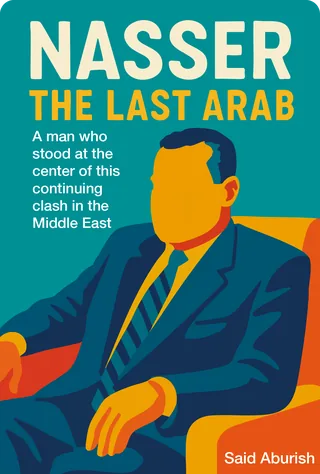
3Nasser: The Last Arab

Nasser: The Last Arab

Said Aburish

Trace Gamal Abdel Nasser’s rise, his vision of Arab unity, and his lasting influence on the Middle East through a balanced portrait of his achievements, authoritarianism, and political failures.

19 min

Listen to the intro

1:23

What is Nasser: The Last Arab about?

Nasser: The Last Arab (2004) is a biography of Gamal Abdel Nasser, the Egyptian leader who became the most influential figure in the Arab world in the 1950s and 1960s. Said Aburish traces Nasser’s rise through the 1952 revolution, the nationalisation of the Suez Canal, his vision of Arab unity, and the defeat of 1967. The book examines both his achievements and his failures and his lasting influence on the region.

Who should read Nasser: The Last Arab?

  • Readers curious about modern Arab political history
  • Students of Arab nationalism and the Nasser era
  • Anyone weighing the legacy of charismatic national leaders
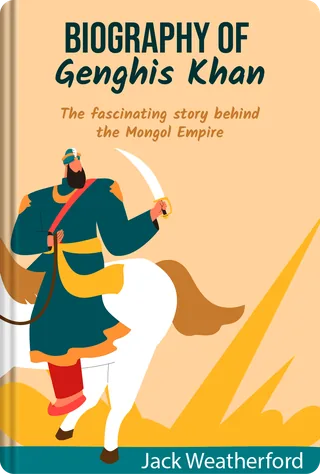
4Biography of Genghis Khan

Biography of Genghis Khan

Jack Weatherford

Rethink Genghis Khan as a transformative leader whose conquests reshaped trade, communication, governance, and the foundations of the modern world.

24 min

Listen to the intro

1:41

What is Biography of Genghis Khan about?

Biography of Genghis Khan (2004) reexamines the life of Genghis Khan and the empire he founded. Jack Weatherford traces how a young outcast named Temüjin united the Mongol tribes and built the largest land empire in history, and argues that the empire also connected distant regions through trade, communication, and the exchange of ideas. The book challenges the view of the Mongols as mere destroyers while acknowledging the devastation of their conquests.

Who should read Biography of Genghis Khan?

  • History lovers curious about the Mongol Empire's real legacy
  • Leaders studying how one outcast united rival tribes
  • Anyone interested in how trade and ideas shaped today's world
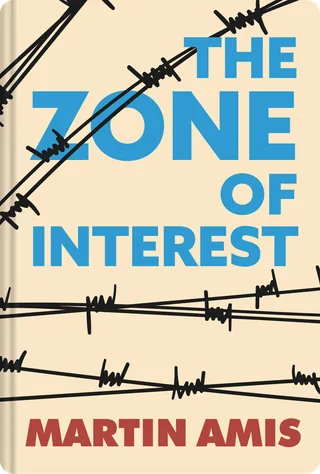
5The Zone of Interest

The Zone of Interest

Martin Amis

Enter the machinery of totalitarian power and witness how ordinary people adapt to cruelty, denial, and moral corruption while claiming innocence.

15 min

Listen to the intro

1:46

What is The Zone of Interest about?

The Zone of Interest (2014) is a novel set in a Nazi concentration camp during the Second World War. Martin Amis tells the story through three narrators, including a camp commander and a prisoner forced to work in the camp, to show how ordinary people take part in or adapt to terrible crimes. The novel explores moral responsibility and the capacity for cruelty, and inspired an award-winning film in 2023.

Who should read The Zone of Interest?

  • Readers drawn to literary fiction about moral responsibility
  • Anyone curious how ordinary people become complicit in atrocity
  • Viewers of the 2023 film seeking its source
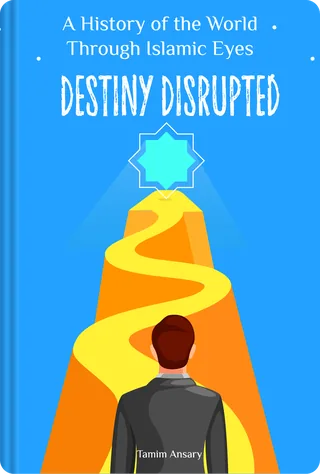
6Destiny Disrupted

Destiny Disrupted

Tamim Ansary

Revisit world history through the rise, ideas, and influence of Islamic civilisation, revealing its vital role in humanity’s shared story.

24 min

Listen to the intro

1:10

What is Destiny Disrupted about?

Destiny Disrupted (2009) retells world history from the perspective of the Islamic world. Beginning with the life of Prophet Muhammad (PBUH) and the early Muslim community, Tamim Ansary traces the rise of Islamic civilisation, its achievements in science and culture, its encounters with Europe, and the challenges of the modern era. The book helps readers understand how Muslims have seen their own history.

Who should read Destiny Disrupted?

  • History lovers seeking a non-Western view of the past
  • Anyone curious how Muslims understand their own history
  • Students exploring Islamic civilization's role in world history
7Palestine

Palestine

Nur Masalha

Trace 4,000 years of Palestinian history, identity, and cultural continuity through archaeology, language, and historical evidence that challenge narratives of erasure.

24 min

Listen to the intro

1:25

What is Palestine about?

Palestine (2018) presents an extensive history of Palestine, tracing its name, geography, communities, and cultural identity across approximately four thousand years. Nur Masalha draws on historical records, archaeology, maps, inscriptions, and other sources to demonstrate the deep and continuous connection between the land and its people. The book offers a detailed perspective on how Palestinian identity developed through different eras while preserving its enduring historical roots.

Who should read Palestine?

  • History lovers curious about Palestine's ancient past
  • Students researching Palestinian identity and cultural heritage
  • Anyone seeking evidence that challenges narratives of erasure
8Desert Warrior

Desert Warrior

Khaled bin Sultan

Enter the Gulf War through a Saudi commander’s perspective on high-stakes leadership, coalition strategy, political tension, loyalty, and diplomacy.

19 min

Listen to the intro

1:18

What is Desert Warrior about?

Desert Warrior (1995) is Prince Khaled bin Sultan’s personal account of the 1991 Gulf War, in which he served as commander of the Joint Forces. Written with the journalist Patrick Seale, it describes the planning of the campaign to liberate Kuwait, the coordination between Arab and Western coalition forces, and the difficult decisions faced by military leaders. The book offers a rare Arab perspective on one of the major conflicts of the late twentieth century.

Who should read Desert Warrior?

  • History readers curious about the 1991 Gulf War
  • Leaders who coordinate teams across different cultures
  • Anyone seeking an Arab view of modern conflicts
9Long Walk to Freedom

Long Walk to Freedom

Nelson Mandela

Follow Nelson Mandela’s journey from 27 years in prison to South Africa’s presidency, revealing the courage, forgiveness, and resilience behind his fight for freedom.

15 min

Listen to the intro

0:54

What is Long Walk to Freedom about?

Long Walk to Freedom (1994) is the autobiography of Nelson Mandela, who led the struggle against apartheid in South Africa. He describes his childhood, his education and work as a lawyer, his political activism, and his twenty-seven years in prison, followed by his release and election as the country’s first democratically elected president. The book is an inspiring story of courage, perseverance, and reconciliation.

Who should read Long Walk to Freedom?

  • Readers inspired by true stories of courage and perseverance
  • Leaders seeking lessons in forgiveness and reconciliation
  • Anyone interested in South Africa's struggle against apartheid
10Orientalism

Orientalism

Edward W. Said

Uncover how Western portrayals of the East created enduring stereotypes and turned knowledge into an instrument of political and cultural power.

21 min

Listen to the intro

2:30

What is Orientalism about?

Orientalism (1978) is one of the most influential books of the twentieth century. Edward W. Said shows how Western scholars, writers, and politicians created a distorted image of the Arab and Islamic world, presenting it as mysterious, backward, and in need of Western control. He argues that this way of seeing supported colonial power, and his work changed how the world studies culture, history, and the Middle East.

Who should read Orientalism?

  • Students of history, politics, or Middle Eastern studies
  • Readers curious how the West came to see Arabs and Muslims
  • Anyone who questions Western stereotypes about the Muslim world
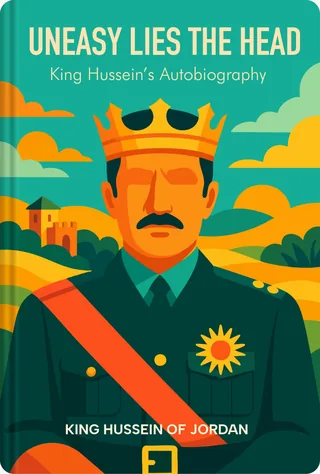
11Uneasy Lies the Head

Uneasy Lies the Head

King Hussein bin Talal

Step inside a leader’s life to witness the pressure, solitude, and personal sacrifices behind power, duty, and difficult decisions.

17 min

Listen to the intro

1:28

What is Uneasy Lies the Head about?

Uneasy Lies the Head (1962) is the autobiography of King Hussein of Jordan, written about a decade after he came to the throne as a teenager. It describes his upbringing and education, the assassination of his grandfather King Abdullah I in Jerusalem, and the political pressures and crises of his early reign. The book offers a personal view of the responsibilities of leadership in a turbulent region.

Who should read Uneasy Lies the Head?

  • Readers curious about Jordan's modern history and monarchy
  • Young leaders shouldering heavy responsibility early in life
  • Anyone seeking a personal view of leadership under pressure
12Foragers, Farmers, and Fossil Fuels

Foragers, Farmers, and Fossil Fuels

Ian Morris

See how the way societies capture energy shaped their values on violence, inequality, and gender, from hunter-gatherers to the industrial age.

18 min

Listen to the intro

1:37

What is Foragers, Farmers, and Fossil Fuels about?

Foragers, Farmers, and Fossil Fuels (2015) argues that the way societies capture energy shapes their values. Ian Morris traces human history through three great eras, hunting and gathering, farming, and the age of fossil fuels, and shows how each produced different attitudes toward violence, inequality, and gender. The book, based on his Tanner Lectures, includes responses from other scholars and asks what values the future may bring.

Who should read Foragers, Farmers, and Fossil Fuels?

  • History lovers curious why values change across eras
  • Students of anthropology, economics, or social science
  • Anyone wondering how energy shapes the way societies think
13On the Origin of Species

On the Origin of Species

Charles Darwin

Discover how natural selection drives evolution, shaping useful traits and creating the extraordinary diversity of life.

18 min

Listen to the intro

1:22

What is On the Origin of Species about?

On the Origin of Species (1859) presents Charles Darwin’s theory of evolution through natural selection, explaining how species gradually change across generations. Drawing on observations from nature, selective breeding, geography, and the fossil record, Darwin argues that organisms with traits better suited to their environments are more likely to survive and reproduce. The book transformed the study of life by offering a scientific framework for understanding adaptation, biological diversity, and the relationships among living organisms.

Who should read On the Origin of Species?

  • Students of biology exploring the roots of modern science
  • Readers interested in ideas that reshaped scientific history
  • Nature lovers curious about adaptation and biodiversity
14Lincoln vs. Davis

Lincoln vs. Davis

Nigel Hamilton

Compare Abraham Lincoln and Jefferson Davis to see how their opposing leadership and visions shaped the Civil War and America’s future.

21 min

Listen to the intro

1:24

What is Lincoln vs. Davis about?

Lincoln vs. Davis (2024) tells the story of the American Civil War through the rivalry between two presidents: Abraham Lincoln of the United States and Jefferson Davis of the Confederacy. Nigel Hamilton compares their leadership, decisions, and strategies in the first years of the war, showing how their different characters and choices shaped the course of the conflict and the future of the country.

Who should read Lincoln vs. Davis?

  • History lovers curious about the American Civil War
  • Leaders who want lessons from contrasting command styles
  • Students of politics exploring how leaders shape nations
15The Muqaddimah

The Muqaddimah

Ibn Khaldūn

Discover Ibn Khaldun’s timeless explanation of how social cohesion, leadership, economics, and environment drive the rise and fall of civilisations.

22 min

Listen to the intro

1:14

What is The Muqaddimah about?

The Muqaddimah (1377) is the famous introduction to Ibn Khaldūn’s history of the world and one of the most important works of Arab and Islamic thought. It explains how societies rise and fall, introducing the concept of asabiyyah, or social cohesion, and examining economics, politics, education, and the development of cities. Many scholars regard it as a founding work of sociology and the philosophy of history.

Who should read The Muqaddimah?

  • Students of history, sociology, or political science
  • Leaders curious why nations and civilizations rise and fall
  • Readers exploring the heritage of Arab and Islamic thought
16A History of God

A History of God

Karen Armstrong

Trace how ideas of God evolved across Judaism, Christianity, and Islam in response to history, suffering, wonder, and humanity’s search for meaning.

17 min

Listen to the intro

1:40

What is A History of God about?

A History of God (1993) traces changing ideas about God across the histories of Judaism, Christianity, and Islam. It examines how religious thought developed in response to cultural, intellectual, and political changes over many centuries.

Who should read A History of God?

  • Readers curious about the history of religious thought
  • Students of comparative religion and theology
  • Anyone exploring how Judaism, Christianity and Islam developed
17The Gulag Archipelago 1918-1956

The Gulag Archipelago 1918-1956

Aleksandr Solzhenitsyn

Enter the brutal world of Stalin’s Soviet labour camps through survivor testimony, historical investigation, and a powerful defence of truth, conscience, and human resilience.

19 min

Listen to the intro

1:38

What is The Gulag Archipelago 1918-1956 about?

The Gulag Archipelago 1918-1956 (1973) is a powerful account of the Soviet system of forced labour camps. Drawing on his own years as a prisoner and the testimony of hundreds of others, Aleksandr Solzhenitsyn describes arrests, interrogations, and life in the camps, revealing the scale of suffering under Soviet rule. The book had a major impact on how the world understood the Soviet Union.

Who should read The Gulag Archipelago 1918-1956?

  • History readers curious about Soviet rule under Stalin
  • Anyone who values truth and conscience under pressure
  • Readers seeking stories of human endurance through suffering
18The Life of Saladin

The Life of Saladin

Beha Ed-Din Ibn Shaddad

Trace Saladin’s rise as a unifying leader during the Crusades and uncover how his strategy, justice, and chivalry shaped one of history’s most enduring legacies.

16 min

Listen to the intro

1:13

What is The Life of Saladin about?

The Life of Saladin (1897) presents an intimate account of Salah al-Din al-Ayyubi’s character, leadership, military campaigns, religious devotion, and final years. Based largely on direct observation, the book describes his struggle against the Crusaders, the recovery of Jerusalem, and his encounters with the forces of the Third Crusade. It also reveals his generosity, discipline, sense of justice, and relationships with soldiers, scholars, and political allies. The original medieval biography was written by a close companion of Salah al-Din and published in this English translation in 1897.

Who should read The Life of Saladin?

  • History enthusiasts curious about the Crusades and Jerusalem
  • Leaders seeking lessons in justice, unity and discipline
  • Readers who want an eyewitness portrait of Saladin
19Nexus

Nexus

Yuval Noah Harari

Trace how information networks, from language and writing to the internet and AI, built civilisations and continue to shape humanity’s future.

22 min

Listen to the intro

1:12

What is Nexus about?

Nexus (2024) traces the history of information networks, from stories and written records to printing, mass media, and artificial intelligence. Yuval Noah Harari argues that more information does not automatically lead to truth or wisdom, and that information networks have often been used to build power and order. He warns that artificial intelligence may bring unprecedented risks and calls for strong safeguards.

Who should read Nexus?

  • Anyone curious how information shaped human history
  • Policymakers and leaders weighing the risks of AI
  • Readers flooded with news who want sharper judgment
20The Square and the Tower

The Square and the Tower

Niall Ferguson

Uncover how hidden networks shape history and why real power often flows beyond official institutions.

17 min

Listen to the intro

1:42

What is The Square and the Tower about?

The Square and the Tower (2017) retells history as a struggle between two kinds of power: networks, symbolised by the town square where people meet freely, and hierarchies, symbolised by the tower of rulers. Niall Ferguson shows how informal networks of traders, thinkers, and revolutionaries have repeatedly challenged established authorities, and explains what this means in today’s world of social media and global connections.

Who should read The Square and the Tower?

  • History lovers curious about the forces behind major events
  • Leaders who want to understand informal influence in organizations
  • Anyone wondering how social media reshapes power today

Related topics

Questions about World History

What is a good book to start with on world history?

Arabs is an accessible starting point, tracing three thousand years of Arab civilization and the role of language and faith in shaping it. For a broader framework, The Muqaddimah offers Ibn Khaldun's classic explanation of why civilizations rise and fall.

What will I learn from world history books?

You will learn how climate, alliances, ideas and leadership combined to shape major turning points, as shown in The Fate of Rome and The Sleepwalkers. These books also explain the roots of today's rivalries and conflicts, helping you follow the news with clearer understanding.

Who are these summaries for?

They suit students, professionals and curious readers who want to understand the past without reading long volumes. Anyone interested in the region's history, from The Hundred Years' War on Palestine to King Faisal of Saudi Arabia, will find a clear and focused overview.

Get the key ideas from the world's best books in about 15 minutes

Free account · One free summary every day