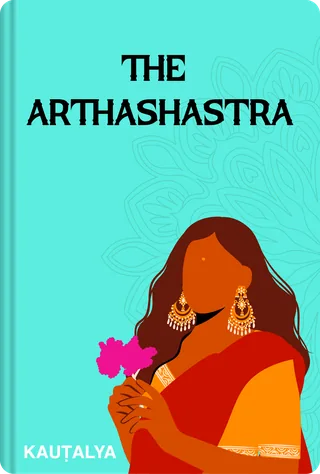
The Arthashastra
Kauṭalya
Master timeless Indian wisdom on governance, leadership, diplomacy, finance, and strategy through principles of discipline, foresight, and public welfare.
Listen to the intro
 Business & Career
 Philosophy
 Money & Economics
 History & Politics
Outline
What's it about?
The Arthashastra (c. 2nd century BCE to 3rd century CE) is an ancient Indian treatise on statecraft, economics, and military strategy. It offers detailed advice to rulers on governing, managing the treasury, administering justice, gathering intelligence, conducting diplomacy, and waging war. The work is one of the oldest surviving texts on political strategy and is often compared to Machiavelli’s The Prince.
Key ideas
- The Arthashastra is an ancient Indian treatise on statecraft, economics, and military strategy, dated between the 2nd century BCE and the 3rd century CE.
- Kauṭalya gives rulers detailed advice on governing, managing the treasury, and administering justice.
- The book treats intelligence gathering and diplomacy as core tools of rule, alongside waging war.
- It is one of the oldest surviving texts on political strategy and is often compared to Machiavelli's The Prince.
- Its guiding principles are discipline, foresight, and public welfare, which still apply to leadership, finance, and strategy today.
About the author
Kauṭalya is the name traditionally given to the author of the Arthashastra, often identified with Chanakya, an adviser to the Indian emperor Chandragupta Maurya in the 4th century BCE. Modern scholars believe the text was compiled and expanded over several centuries.
Questions people ask
What is the Arthashastra about?
It is an ancient Indian treatise on statecraft, economics, and military strategy. It advises rulers on governing, the treasury, justice, intelligence, diplomacy, and war.
Who wrote the Arthashastra and when?
The author is Kauṭalya. The work dates from roughly the 2nd century BCE to the 3rd century CE.
How long is the Durar summary of the Arthashastra?
The Durar summary takes about 15 minutes to read or listen to. It covers the book's main advice on governance, finance, diplomacy, and strategy.
You May Also Like


More in Business & Career




Get the key ideas from the world's best books in about 15 minutes
Free account · One free summary every day