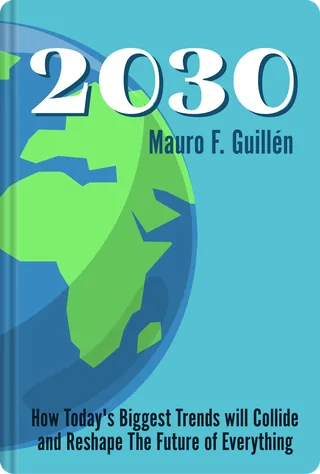
2030
Mauro Guillén
Prepare for 2030 by understanding the demographic, technological, and economic forces reshaping how we live, work, and connect.
Listen to the intro
 Money & Economics
 History & Politics
 Society & Culture
 Science & Technology
 Nature & the Environment
Outline
What's it about?
2030 (2020) explores the major trends that will reshape the world by the year 2030, including ageing populations, a growing middle class in Asia and Africa, urbanisation, climate change, new technologies, and changing roles for women. Mauro Guillén explains how these trends interact and shows how individuals, businesses, and governments can prepare for a very different future.
Key ideas
- Populations are ageing, and this will reshape how societies work, spend and care for their people.
- The middle class is growing quickly in Asia and Africa, shifting where economic demand and opportunity are found.
- Urbanisation, climate change and new technologies do not act alone; they interact and amplify one another.
- Women's roles are changing, and this is one of the major forces shaping the world by 2030.
- Individuals, businesses and governments can prepare for a very different future by understanding these trends early.
About the author
Mauro Guillén is a Spanish sociologist and management scholar who has taught at the Wharton School of the University of Pennsylvania and served as dean of the Cambridge Judge Business School. He is known for his research on global economic, demographic, and social trends. His books include 2030 and The Perennials.
Questions people ask
What is the main idea of 2030 by Mauro Guillén?
The book argues that demographic, technological and economic trends, such as ageing populations and a growing middle class in Asia and Africa, will reshape the world by 2030. Guillén explains how these trends interact.
Who should read 2030 by Mauro Guillén?
It suits anyone who wants to understand how the future of work, cities and markets may change, including individuals, business leaders and people involved in policy. It helps readers prepare for a different future.
How long is the Durar summary of 2030?
The Durar summary of 2030 takes about 15 minutes to read or listen to. It covers the major trends Guillén describes and how they connect.
You May Also Like



More in Money & Economics
Get the key ideas from the world's best books in about 15 minutes
Free account · One free summary every day