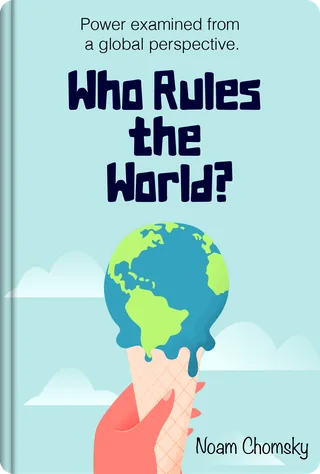
Who Rules The World
Noam Chomsky
Expose the hidden power struggles through which governments, corporations, and elites shape democracy, justice, and humanity’s future.
Listen to the intro
 History & Politics
 Society & Culture
Outline
What's it about?
Who Rules The World (2016) examines how global power is exercised and who truly benefits from it. Noam Chomsky analyses the foreign policy of the United States and other major powers, the influence of corporations and elites, and threats such as nuclear weapons and climate change. He argues that ordinary citizens have more power to shape events than they often realise.
Key ideas
- The book looks at how global power is exercised and who truly benefits from it.
- Chomsky analyses the foreign policy of the United States and other major powers.
- Corporations and elites shape decisions that affect democracy, justice, and the future of humanity.
- Nuclear weapons and climate change are presented as serious threats to humanity.
- Ordinary citizens have more power to shape events than they often realise.
About the author
Noam Chomsky is an American linguist, philosopher, and political critic, born in 1928. He transformed the study of language with his theories of grammar and taught for decades at the Massachusetts Institute of Technology. He has written more than one hundred books, including Manufacturing Consent and Understanding Power.
Questions people ask
What is Who Rules The World about?
Published in 2016, it examines how global power is exercised and who benefits from it. Noam Chomsky looks at the foreign policy of major powers, the influence of corporations and elites, and threats such as nuclear weapons and climate change.
What is the main idea of Who Rules The World?
Chomsky argues that global power serves some groups far more than others, yet ordinary citizens have more ability to shape events than they often realise.
How long does the Who Rules The World summary take?
The Durar summary takes about 15 minutes to read or listen to. It covers the book's main arguments on power, foreign policy, and the role of citizens.
You May Also Like
More in History & Politics
Get the key ideas from the world's best books in about 15 minutes
Free account · One free summary every day