Get started

Topic

The best 43 Revolutions & Movements summaries

Revolutions and movements are the moments when ordinary people, thinkers and leaders challenge colonial rule, oppression or injustice, and for readers in the Middle East these struggles are close to home, from Palestine and Syria to the legacy of Nasser and the wider fight against empire. This collection gathers firsthand testimonies, biographies of figures such as Nelson Mandela and Malala Yousafzai, and influential works of history and political thought, including Frantz Fanon on colonialism and Rashid Khalidi on a century of Palestinian history. Reading them helps you understand why societies rise against injustice, what such struggles cost, and how courage, dignity and forgiveness can shape a nation's path.

1I Am Malala

I Am Malala

Malala Yousafzai

Follow Malala’s courageous fight for girls’ education and discover how one young voice became a global symbol of resilience, equality, and hope.

19 min

Listen to the intro

1:18

What is I Am Malala about?

I Am Malala (2013) is the story of a girl from Pakistan’s Swat Valley who spoke out for the right of girls to go to school, and was attacked for it at the age of fifteen. Malala Yousafzai describes her family, especially her father, a teacher who supported her voice, her recovery, and her determination to continue her campaign. The book is an inspiring story of courage and the power of education.

Who should read I Am Malala?

  • Parents who want to support their daughters' education
  • Students looking for a true story of courage
  • Teachers who believe education can change lives
2The Fate of Rome

The Fate of Rome

Kyle Harper

Rethink Rome’s fall through the climate shifts, pandemics, politics, and wars that combined to bring down one of history’s greatest empires.

25 min

Listen to the intro

1:22

What is The Fate of Rome about?

The Fate of Rome (2017) offers a new explanation for the fall of the Roman Empire, focusing on the role of climate change and disease. Kyle Harper shows how a period of favourable climate helped Rome grow, while cooling temperatures and devastating pandemics later weakened its population, economy, and army. The book reveals how nature shaped one of history’s greatest empires.

Who should read The Fate of Rome?

  • History lovers curious about why great empires collapse
  • Readers interested in how climate and disease shape societies
  • Anyone drawing lessons from past pandemics for today
3A Vindication of the Rights of Woman

A Vindication of the Rights of Woman

Mary Wollstonecraft

Challenge the roots of gender inequality through a powerful defence of women’s education, reason, opportunity, and equal participation in society.

25 min

Listen to the intro

1:23

What is A Vindication of the Rights of Woman about?

A Vindication of the Rights of Woman (1792) is one of the earliest and most influential works arguing for women’s education and equality. Mary Wollstonecraft argues that women are rational beings who deserve the same opportunities to learn and develop their minds as men, and that educated women benefit families and society. The book remains a landmark in the history of ideas about education and human dignity.

Who should read A Vindication of the Rights of Woman?

  • Students of history and the evolution of ideas
  • Educators who value learning opportunities for girls and women
  • Readers curious about education's role in family and society
4Muhammad (PBUH)

Muhammad (PBUH)

Martin Lings

Explore the life, mission, and enduring legacy of Prophet Muhammad (PBUH) through a beautifully written account grounded in classical Islamic sources.

18 min

Listen to the intro

1:19

What is Muhammad (PBUH) about?

Muhammad (PBUH) (1983) is a biography of Prophet Muhammad (PBUH) based on the earliest Arabic sources, including the classical works of sira. Martin Lings tells the story of the Prophet’s life in clear, graceful prose, from his early years in Makkah and the first revelation to the migration to Madinah and the spread of Islam. The book is widely admired for its accuracy, respect, and readability.

Who should read Muhammad (PBUH)?

  • Anyone seeking a reliable, readable biography of the Prophet (PBUH)
  • Readers wanting to deepen their love for the Prophet (PBUH)
  • Students of Islamic history and the classical sira
5The Wide Wide Sea

The Wide Wide Sea

Hampton Sides

Follow Captain James Cook’s final voyage, where exploration, ambition, empire, and cultural misunderstanding converge in tragedy.

23 min

Listen to the intro

1:33

What is The Wide Wide Sea about?

The Wide Wide Sea (2024) follows the final voyage of the British explorer Captain James Cook, who set out in 1776 to search for a northern sea route between the Atlantic and the Pacific. Hampton Sides describes the ship’s journey across the Pacific, Cook’s encounters with the peoples of the islands, and the tensions that led to his death in Hawaii in 1779. The book explores exploration, ambition, empire, and cultural misunderstanding.

Who should read The Wide Wide Sea?

  • History lovers drawn to the age of exploration
  • Readers curious about clashes between empires and cultures
  • Anyone fascinated by great sea voyages and adventure
6History of the Peloponnesian War

History of the Peloponnesian War

Thucydides

Witness the struggle between Athens and Sparta while uncovering timeless lessons on power, ambition, fear, leadership, and the nature of war.

20 min

Listen to the intro

1:19

What is History of the Peloponnesian War about?

History of the Peloponnesian War (5th century BCE) is the classic account of the long war between Athens and Sparta and their allies in ancient Greece. Thucydides, who lived through the conflict, describes its causes, battles, and political debates, including famous speeches such as Pericles’ funeral oration. His careful, evidence-based approach makes the work one of the foundations of historical writing and political thought.

Who should read History of the Peloponnesian War?

  • Leaders seeking timeless lessons on power and ambition
  • Students of history, politics and international relations
  • Anyone curious about why great powers go to war
7Patriot

Patriot

Alexei Navalny

Witness Alexei Navalny’s defiance against corruption and repression, revealing the personal cost of truth and the endurance of courage when freedom is taken.

16 min

Listen to the intro

1:54

What is Patriot about?

Patriot (2024) is the memoir of Russian opposition leader Alexei Navalny, completed in prison and published after his death. It follows his early life, his campaigns against corruption, his recovery from poisoning in 2020, and his decision to return to Russia, where he was immediately arrested. The book includes his prison diaries and reflects on courage, hope, and the price of public service.

Who should read Patriot?

  • Readers drawn to memoirs of courage under pressure
  • Anyone who values integrity and speaking the truth
  • Students of modern Russian history and politics
8The Wretched of the Earth

The Wretched of the Earth

Frantz Fanon

Confront the psychological and political violence of colonialism and explore Fanon’s radical vision of liberation, dignity, justice, and human renewal.

21 min

Listen to the intro

1:22

What is The Wretched of the Earth about?

The Wretched of the Earth (1961) is a powerful analysis of colonialism and its psychological, social, and political effects on colonised peoples. Writing during the Algerian War of Independence, Frantz Fanon defends the struggle for liberation and warns that newly independent nations could be betrayed by self-serving local elites. The book became one of the most influential texts of the anticolonial movements of the twentieth century.

Who should read The Wretched of the Earth?

  • Students of history, politics or postcolonial studies
  • Readers curious about colonialism's lasting psychological effects
  • Anyone questioning how elites shape newly independent nations
9The Life of Saladin

The Life of Saladin

Beha Ed-Din Ibn Shaddad

Trace Saladin’s rise as a unifying leader during the Crusades and uncover how his strategy, justice, and chivalry shaped one of history’s most enduring legacies.

16 min

Listen to the intro

1:13

What is The Life of Saladin about?

The Life of Saladin (1897) presents an intimate account of Salah al-Din al-Ayyubi’s character, leadership, military campaigns, religious devotion, and final years. Based largely on direct observation, the book describes his struggle against the Crusaders, the recovery of Jerusalem, and his encounters with the forces of the Third Crusade. It also reveals his generosity, discipline, sense of justice, and relationships with soldiers, scholars, and political allies. The original medieval biography was written by a close companion of Salah al-Din and published in this English translation in 1897.

Who should read The Life of Saladin?

  • History enthusiasts curious about the Crusades and Jerusalem
  • Leaders seeking lessons in justice, unity and discipline
  • Readers who want an eyewitness portrait of Saladin
10Animal Farm

Animal Farm

George Orwell

Witness a revolution descend into tyranny as power, propaganda, and inequality slowly strip a society of its freedom.

16 min

Listen to the intro

2:04

What is Animal Farm about?

Animal Farm (1945) is a short, powerful fable about the animals of Manor Farm, who rebel against their careless owner, Mr. Jones, hoping to build a society where all are equal. Over time, the cleverest animals, led by Napoleon, seize power, rewrite the rules, and become as oppressive as the farmer they replaced. George Orwell’s classic allegory warns how power can corrupt ideals and how truth can be twisted.

Who should read Animal Farm?

  • Readers curious about how power corrupts good intentions
  • Students exploring classic literature and political allegory
  • Anyone who wants to spot propaganda and twisted truths
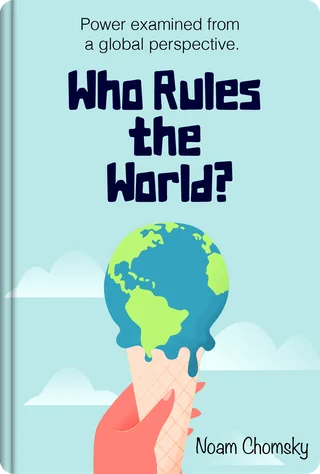
11Who Rules The World

Who Rules The World

Noam Chomsky

Expose the hidden power struggles through which governments, corporations, and elites shape democracy, justice, and humanity’s future.

20 min

Listen to the intro

1:56

What is Who Rules The World about?

Who Rules The World (2016) examines how global power is exercised and who truly benefits from it. Noam Chomsky analyses the foreign policy of the United States and other major powers, the influence of corporations and elites, and threats such as nuclear weapons and climate change. He argues that ordinary citizens have more power to shape events than they often realise.

Who should read Who Rules The World?

  • Readers curious about who really holds global power
  • Students of politics, international relations or foreign policy
  • Citizens who want to influence events in their world
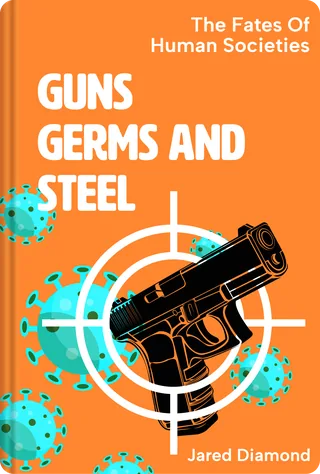
12Guns, Germs and Steel

Guns, Germs and Steel

Jared Diamond

Understand how geography, agriculture, technology, and disease shaped the rise of civilisations, global power, and inequality rather than race.

18 min

Listen to the intro

1:20

What is Guns, Germs and Steel about?

Guns, Germs and Steel (1997) asks why some societies came to dominate others throughout history. Jared Diamond argues that the answer lies not in differences between peoples but in geography and environment, such as which regions had plants and animals suitable for farming, and how easily ideas and crops could spread. The book won the Pulitzer Prize and changed how many people understand world history.

Who should read Guns, Germs and Steel?

  • History lovers curious why some nations grew powerful
  • Students exploring how geography shapes economies and societies
  • Anyone questioning the roots of global inequality
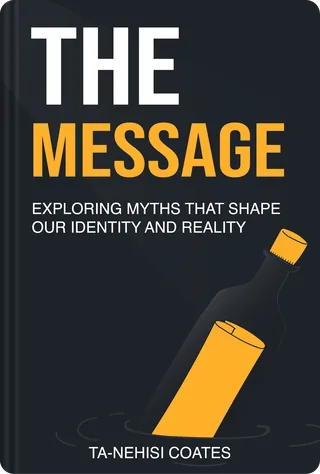
13The Message

The Message

Ta-Nehisi Coates

Journey through Senegal, South Carolina, and Palestine to uncover how powerful narratives shape identity, conceal injustice, and define what societies accept as truth.

20 min

Listen to the intro

1:58

What is The Message about?

The Message (2024) is a collection of essays about writing and the power of stories to shape how people see the world. Ta-Nehisi Coates travels to Senegal, to South Carolina, and to the West Bank and Jerusalem, reflecting on history, identity, and the narratives used to justify injustice. Written partly as advice to young writers, the book argues that honest storytelling carries great responsibility.

Who should read The Message?

  • Aspiring writers who want to tell stories honestly
  • Readers curious how narratives shape identity and history
  • Anyone seeking deeper understanding of Palestine and injustice
14The Demon of Unrest

The Demon of Unrest

Erik Larson

Enter the tense months before the American Civil War, when fear, pride, ideology, and political miscalculation pushed a divided nation toward conflict.

19 min

Listen to the intro

1:18

What is The Demon of Unrest about?

The Demon of Unrest (2024) tells the story of the five tense months between Abraham Lincoln’s election in 1860 and the attack on Fort Sumter that began the American Civil War. Erik Larson follows the leaders, soldiers, and ordinary people caught up in the crisis, showing how pride, misunderstanding, and deep division over slavery pushed the country into war. The book reads like a gripping historical drama.

Who should read The Demon of Unrest?

  • History lovers curious about the road to civil war
  • Readers who enjoy true stories told like dramas
  • Anyone studying how political miscalculation leads to conflict
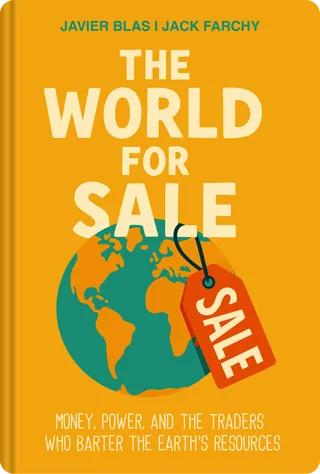
15The World for Sale

The World for Sale

Javier Blas and Jack Farchy

Enter the secretive world of commodity traders who move oil, metals, and food while shaping markets, politics, and global power.

16 min

Listen to the intro

1:45

What is The World for Sale about?

The World for Sale (2021) reveals the little-known world of commodity traders, the companies that buy, move, and sell much of the world’s oil, metals, and food. Javier Blas and Jack Farchy show how a handful of powerful firms grew rich by operating in difficult markets and sometimes working with controversial governments. The book explains how these traders shape global politics and the prices we all pay.

Who should read The World for Sale?

  • Professionals working in energy, mining, or shipping industries
  • Investors curious about what really drives commodity prices
  • Anyone interested in how money shapes global politics
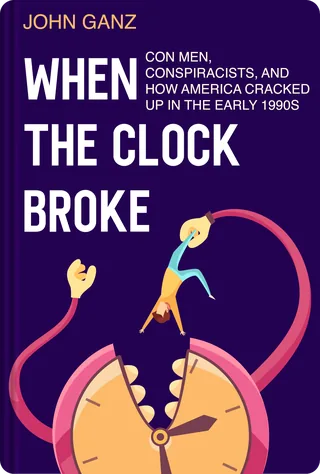
16When the Clock Broke

When the Clock Broke

John Ganz

Trace how conspiracy, populist anger, and institutional distrust in early 1990s America laid the foundations for today’s political divisions.

21 min

Listen to the intro

1:15

What is When the Clock Broke about?

When the Clock Broke (2024) examines the political and cultural turmoil in the United States in the early 1990s, after the end of the Cold War. John Ganz traces how economic anxiety, distrust of institutions, conspiracy theories, and new forms of media gave rise to populist figures and movements. He argues that many of the divisions in American politics today first took shape in this period.

Who should read When the Clock Broke?

  • Readers curious about the roots of American polarization
  • Students of modern US political and media history
  • Anyone trying to understand today's populist movements
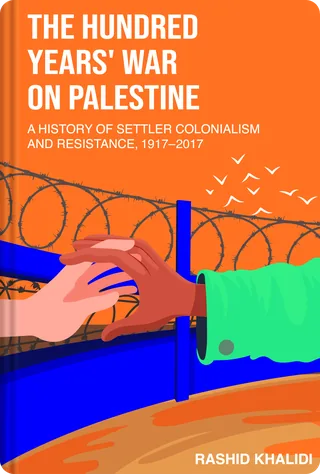
17The Hundred Years' War on Palestine

The Hundred Years' War on Palestine

Rashid Khalidi

Reexamine a century of Palestinian history through colonialism, global power, displacement, resistance, and the enduring struggle for justice and self-determination.

24 min

Listen to the intro

1:21

What is The Hundred Years' War on Palestine about?

The Hundred Years' War on Palestine (2020) presents the modern history of Palestine as a hundred-year struggle that began with the Balfour Declaration in 1917. Rashid Khalidi describes six key moments, from the British Mandate and the Nakba of 1948 to the wars and negotiations of later decades, as turning points in this conflict. Drawing on his own family’s archives and experiences in Jerusalem, he gives the Palestinian story a personal and historical voice.

Who should read The Hundred Years' War on Palestine?

  • Readers seeking a Palestinian perspective on modern history
  • Students of the Middle East and colonial history
  • Anyone wanting to understand the roots of the conflict over Palestine
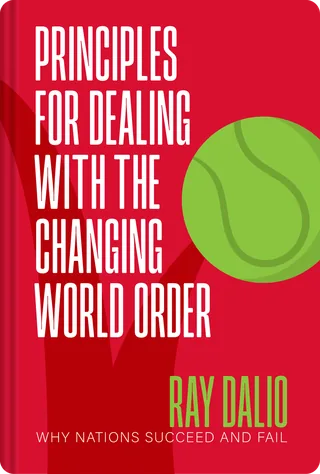
18Principles For Dealing With the Changing World Order

Principles For Dealing With the Changing World Order

Ray Dalio

Decode 500 years of recurring cycles to understand why nations rise and fall and navigate today’s shifting economic and political order.

18 min

Listen to the intro

1:26

What is Principles For Dealing With the Changing World Order about?

Principles For Dealing With the Changing World Order (2021) studies the rise and fall of great powers over the past five hundred years, including the Dutch and British empires, the United States, and China. Ray Dalio identifies repeating cycles driven by debt, internal conflict, and competition between nations, and uses them to explain today’s world and consider what may come next.

Who should read Principles For Dealing With the Changing World Order?

  • Investors preparing for long-term economic and political shifts
  • Policymakers studying why great powers rise and fall
  • Anyone seeking historical context for today's global tensions
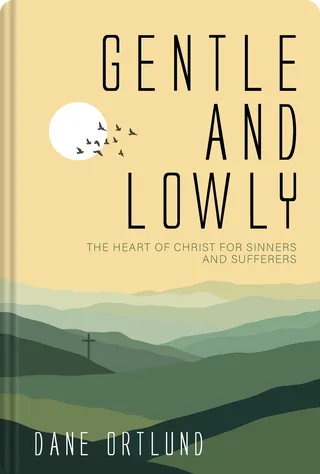
19Gentle and Lowly

Gentle and Lowly

Dane Ortlund

Experience Jesus as gentle and compassionate, finding rest, grace, and comfort in a faith that embraces human weakness.

14 min

Listen to the intro

1:53

What is Gentle and Lowly about?

Gentle and Lowly (2020) examines the compassion and mercy at the heart of Christian teachings about Jesus. It offers reassurance to readers facing weakness or hardship and emphasises the importance of approaching faith with trust and humility.

Who should read Gentle and Lowly?

  • Christians who feel weighed down by their own failings
  • Anyone facing hardship who longs for comfort and rest
  • Readers curious about Christian teachings on mercy and compassion
20Nasser: The Last Arab

Nasser: The Last Arab

Said Aburish

Trace Gamal Abdel Nasser’s rise, his vision of Arab unity, and his lasting influence on the Middle East through a balanced portrait of his achievements, authoritarianism, and political failures.

19 min

Listen to the intro

1:23

What is Nasser: The Last Arab about?

Nasser: The Last Arab (2004) is a biography of Gamal Abdel Nasser, the Egyptian leader who became the most influential figure in the Arab world in the 1950s and 1960s. Said Aburish traces Nasser’s rise through the 1952 revolution, the nationalisation of the Suez Canal, his vision of Arab unity, and the defeat of 1967. The book examines both his achievements and his failures and his lasting influence on the region.

Who should read Nasser: The Last Arab?

  • Readers curious about modern Arab political history
  • Students of Arab nationalism and the Nasser era
  • Anyone weighing the legacy of charismatic national leaders

Related topics

Questions about Revolutions & Movements

What is a good book to start with on revolutions and movements?

Long Walk to Freedom is an accessible starting point, following Nelson Mandela from 27 years in prison to the presidency of South Africa. For a story closer to the region, The Hundred Years' War on Palestine offers a clear reading of a century of colonialism, resistance and the struggle for self-determination.

What will I learn from books on revolutions and movements?

You will learn how colonialism, repression and political miscalculation spark resistance, and what it costs the people who live through it. Works like The Wretched of the Earth and A Woman in the Crossfire show both the ideas behind liberation and the human reality of uprising.

Who are these summaries for?

They suit readers who want to understand the forces that have shaped the Arab world and other nations, whether students, professionals or anyone who follows current events. They also serve readers looking for inspiring examples of steadfastness, such as I Am Malala and I Shall Not Hate.

Get the key ideas from the world's best books in about 15 minutes

Free account · One free summary every day