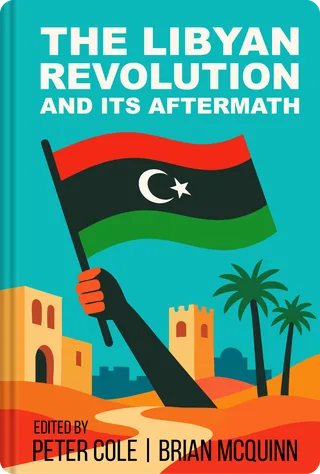
The Libyan Revolution and Its Aftermath
Peter Cole and Brian McQuinn
Uncover how revolution, foreign intervention, and competing powers plunged Libya into turmoil long after its regime fell.
Listen to the intro
 History & Politics
 Society & Culture
Outline
What's it about?
The Libyan Revolution and Its Aftermath (2015) brings together research on the Libyan uprising of 2011 and the political, military, and social developments that followed it. The contributors examine local communities, armed groups, state institutions, regional interests, and the difficulties involved in rebuilding authority after the collapse of the former government. By looking beyond simple explanations, the book helps readers understand why Libya’s transition became fragmented and why stable national institutions proved difficult to establish.
Key ideas
- The book collects research on the 2011 Libyan uprising and the political, military, and social developments that followed it.
- Contributors look closely at local communities, armed groups, state institutions, and regional interests rather than treating Libya as one story.
- Rebuilding authority after the former government collapsed turned out to be a hard and uneven task.
- Simple explanations fall short, which is why Libya's transition became fragmented.
- Stable national institutions proved difficult to establish, and the book helps explain the reasons.
About the author
Peter Cole and Brian McQuinn are researchers and editors who have studied Libya, armed conflict, political transitions, and the organisation of local groups. Their work combines field research with political and historical analysis to explain developments that are often misunderstood outside the region. In this volume, they brought together specialists with direct knowledge of Libya and its communities.
Questions people ask
What is The Libyan Revolution and Its Aftermath about?
It brings together research on the 2011 Libyan uprising and what came after it. It examines why the transition became fragmented and why stable national institutions were hard to build.
Who is The Libyan Revolution and Its Aftermath for?
It suits readers interested in modern politics, geopolitics, and revolutions who want a closer look at Libya beyond simple explanations. It focuses on local communities, armed groups, state institutions, and regional interests.
How long is the Durar summary of The Libyan Revolution and Its Aftermath?
The Durar summary takes about 15 minutes to read or listen to. It covers the main arguments of the book by Peter Cole and Brian McQuinn.
You May Also Like

More in History & Politics



Get the key ideas from the world's best books in about 15 minutes
Free account · One free summary every day