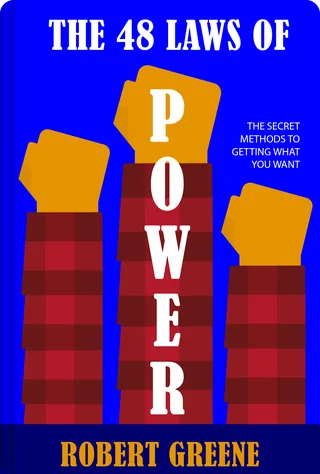
The 48 Laws of Power
Robert Greene
Master the hidden dynamics of power through strategy, perception, and timing—and avoid becoming a pawn in someone else’s game.
Listen to the intro
 History & Politics
 Society & Culture
 Psychology
Outline
What's it about?
The 48 Laws of Power (1998) distils three thousand years of history into forty-eight rules about how power is gained, used, and defended. Robert Greene illustrates each law with stories of rulers, courtiers, generals, and con artists, from ancient China to the European courts. The book is read both as a guide to understanding power and as a way to recognise and protect yourself from manipulation.
Key ideas
- The book condenses three thousand years of history into forty-eight rules about how power is gained, used, and defended.
- Each law is illustrated with stories of rulers, courtiers, generals, and con artists, from ancient China to the European courts.
- Strategy, perception, and timing are the hidden dynamics behind who holds power and who ends up a pawn.
- Reading about these tactics helps you recognise manipulation and protect yourself from it.
About the author
Robert Greene is an American author whose books on power, strategy, and human behaviour have sold millions of copies worldwide. The 48 Laws of Power was his first book and remains his best-known work. His other books include The 33 Strategies of War, Mastery, and The Laws of Human Nature.
Questions people ask
What is The 48 Laws of Power about?
It is a collection of forty-eight rules on how power is gained, used, and defended, drawn from three thousand years of history. Robert Greene backs each law with stories of rulers, courtiers, generals, and con artists.
Who should read The 48 Laws of Power?
Anyone who wants to understand how power works, and how to recognise and guard against manipulation. It is read as a guide to understanding power as much as a manual for using it.
How long is the Durar summary of The 48 Laws of Power?
The Durar summary takes about 15 minutes to read or listen to. It covers the book's main ideas about strategy, perception, and timing.
You May Also Like




More in History & Politics








Get the key ideas from the world's best books in about 15 minutes
Free account · One free summary every day