
In 1377, in the castle of Ibn Salama in what is now Algeria, a man in his mid-forties sat down to explain why kingdoms rise and fall. He was Ibn Khaldun, born in Tunis, and he had spent years in and out of the courts of North African rulers. The book he wrote there, the Muqaddimah, is one that many scholars now call a founding work of sociology.
Picture the scene. There are thick walls and no court to attend. For once there is no office to defend, only time to think about what he had watched happen to rulers and the people around them.
More than six centuries later, the questions on his desk are still on ours. Why do some teams pull together while others split apart? Who gets to tell the story of a people? Why do clever people make poor decisions, and why does the future keep catching us out?
This piece follows those questions through six books, from Ibn Khaldun to Nassim Nicholas Taleb, a Lebanese-American writer on risk. Each one gets its own section. Read it on the drive to work or in pieces over coffee. The thread that connects them becomes clear by the end.
Ibn Khaldun and asabiyyah: what holds a group together?
The Muqaddimah is the introduction to Ibn Khaldun's history of the world, and it is one of the most important works of Arab and Islamic thought. Its best-known idea is asabiyyah, usually translated as social cohesion: the bond that lets a group act as one.
For Ibn Khaldun, cohesion works alongside leadership, economics and environment as forces that drive the rise and fall of civilisations. He wrote about politics, education, money and the growth of cities in the same book. That breadth is a large part of why many scholars treat it as a founding work of sociology and the philosophy of history.
You do not need a dynasty to see the idea at work. Think of the group you spend most of your week with, whether that is a project team, a class or an extended family. Reading Ibn Khaldun, you start to treat the bond between people as something real that shows in how they behave. It stops sounding like a slogan.
Here is a useful question for any manager or HR team, inspired by the book though not taken from it: beyond the salary, what actually binds this group together?
An Orientalism summary: Edward Said on who tells the story
Jump six centuries forward. In 1978 the literary scholar Edward W. Said published Orientalism, which became one of the most influential books of the twentieth century.
Said shows how Western scholars, writers and politicians built a distorted image of the Arab and Islamic world. That image presented the region as mysterious, backward and in need of Western control. He argues that this way of seeing supported colonial power, and that knowledge itself became a tool of political and cultural power.
His work changed how the world studies culture, history and the Middle East. For a reader in Riyadh, Dubai or Amman, it also leaves a practical habit. When you read about any place, ask three things: who wrote this, who was it written for, and what did the writer want the reader to feel?
Ibn Khaldun wrote about his world from inside it. Said looked at how others had written about that same world from outside. Read together, they make you more careful about every description of a society, including your own.
What did a chronicler see in Saladin?
Baha al-Din Ibn Shaddad, spelled Beha Ed-Din in the English translation, was a close companion of Salah al-Din al-Ayyubi. He wrote his biography of the sultan in the medieval period, largely from what he saw with his own eyes. An English translation was published in 1897 as The Life of Saladin.
The book covers the struggle against the Crusaders, the recovery of Jerusalem and the encounters with the forces of the Third Crusade. Many readers remember the quieter parts most: his generosity, discipline and sense of justice, and the way he dealt with soldiers, scholars and political allies.
Place it beside the first two books. The summary's one-line description calls Saladin a unifying leader, which makes him a living case of the cohesion Ibn Khaldun wrote about. And unlike the outside images Said examined, this is an insider's account, written by someone who stood close to the man.
The closeness that gives the book its warmth is also a reason to read it attentively. A companion sees a great deal, and he also cares. Holding both of those in mind is a skill worth practising with any eyewitness.
A Sapiens summary: the shared stories that let strangers cooperate
Yuval Noah Harari's Sapiens, published in 2011, covers the history of humanity from early communities to the interconnected societies of today. He examines how language, shared stories, agriculture, political institutions, trade, science and technology made cooperation possible on a large scale.
Think about this morning. You may have paid for coffee with a card, driven on roads built by people you will never meet, and trusted that a meeting invitation meant others would turn up. None of that works without beliefs that millions of strangers share.
Ibn Khaldun wrote about the bond within a group. Harari asks how cooperation stretches across entire societies of people who will never know each other's names. The two questions sit naturally side by side.
You may not agree with every part of the book, and it seems to expect that. It invites readers to question familiar assumptions about progress, power and happiness, and about the choices that may shape the future.
Thinking, Fast and Slow: the two systems behind every judgement
So far the focus has been on whole societies. Daniel Kahneman's 2011 book moves inside a single head. Drawing on decades of research with Amos Tversky, he describes two systems that shape every judgement we make: a fast, intuitive System 1 and a slow, deliberate System 2.
The book explains the mental shortcuts and biases behind everyday mistakes, including anchoring, overconfidence and loss aversion. Anchoring, in plain terms, is when the first number you hear pulls your judgement towards it. That might be the asking price in a car showroom or the first salary figure mentioned in an offer.
This matters for the earlier thinkers too. Stories about nations and the impressions we form in a job interview both pass through the fast system first. Kahneman's practical point is learning to recognise the moments when slowing down leads to better decisions.
For anyone who hires people, a first impression in the opening minute is a good place to start noticing which system is doing the work.
A Black Swan summary: Taleb on the rare event that changes everything
Nassim Nicholas Taleb's The Black Swan, published in 2007, looks at the huge impact of rare and unpredictable events such as financial crashes, wars and major inventions. He argues that people underestimate the unknown, trust forecasts too much, and explain surprising events only after they happen.
That last point loops back to the historians. Every history, including the ones in this article, is written after the fact, when the ending is already known. Once you know how a story ends, it can feel as though it was always going to end that way.
Taleb's answer is to prepare for uncertainty by building resilience instead of relying on predictions. In everyday terms, which is our reading and not a quote from the book, that might mean a household budget with some slack in it, or a career plan that still works if one assumption turns out to be wrong. The book changed how many people think about risk.
What links Ibn Khaldun, Said, Harari, Kahneman and Taleb?
Put the six side by side and a pattern appears. Ibn Khaldun says groups rise and fall partly on the strength of their bonds. Harari shows that bonds at the scale of whole societies run on shared stories. Said shows how a story told about a people can be distorted and used for power, and Ibn Shaddad gives us a story told by someone who was there.
Kahneman then looks at how one person judges any story, quickly or slowly. Taleb reminds us that every story about the future is fragile. Put simply, a society is a group of people who share a story and make judgements under uncertainty.
Each of these six is available on Durar as a summary of about 15 minutes, in Arabic and English, as audio or text. A summary gives you the key ideas. It is not the book, and it cannot give you the original voice of Ibn Khaldun or the slow pleasure of a long argument. If one of them catches you, the original is worth your time.
Start with today's free summary
Read today's summaryOne summary is open to everyone, every day, in Arabic and English, as audio or text.Summaries mentioned in this article
In the order they appear above. Each is about 15 minutes, in Arabic or English, as audio or text.
 The MuqaddimahIbn KhaldūnYou take away Ibn Khaldun's explanation of how asabiyyah, or social cohesion, works together with leadership, economics and environment to drive the rise and fall of civilisations.Listen to the summary →
 OrientalismEdward W. SaidYou see how Western scholars, writers and politicians built a distorted image of the Arab and Islamic world, and why Said argues that this way of seeing supported colonial power.Listen to the summary →
 The Life of SaladinBeha Ed-Din Ibn ShaddadYou follow Salah al-Din through the eyes of a close companion, from the recovery of Jerusalem and the Third Crusade to his generosity, discipline and sense of justice.Listen to the summary →
 SapiensYuval Noah HarariYou trace how language, shared stories, agriculture, trade, science and technology let humans cooperate on a large scale, and you are invited to rethink familiar ideas about progress and happiness.Listen to the summary →
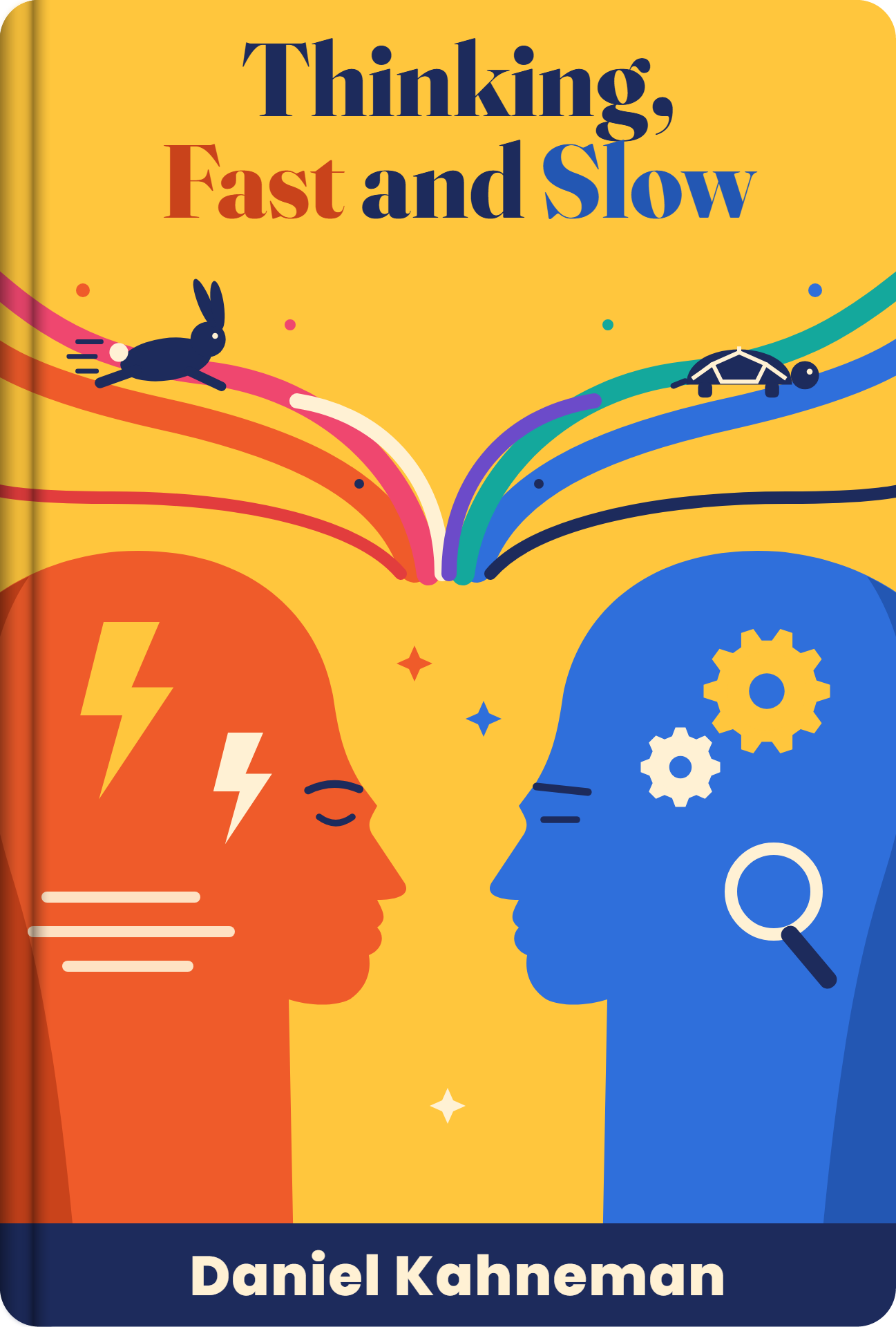 Thinking, Fast and SlowDaniel KahnemanYou learn the difference between fast, intuitive System 1 and slow, deliberate System 2, and how to spot the moments when slowing down leads to better decisions.Listen to the summary →
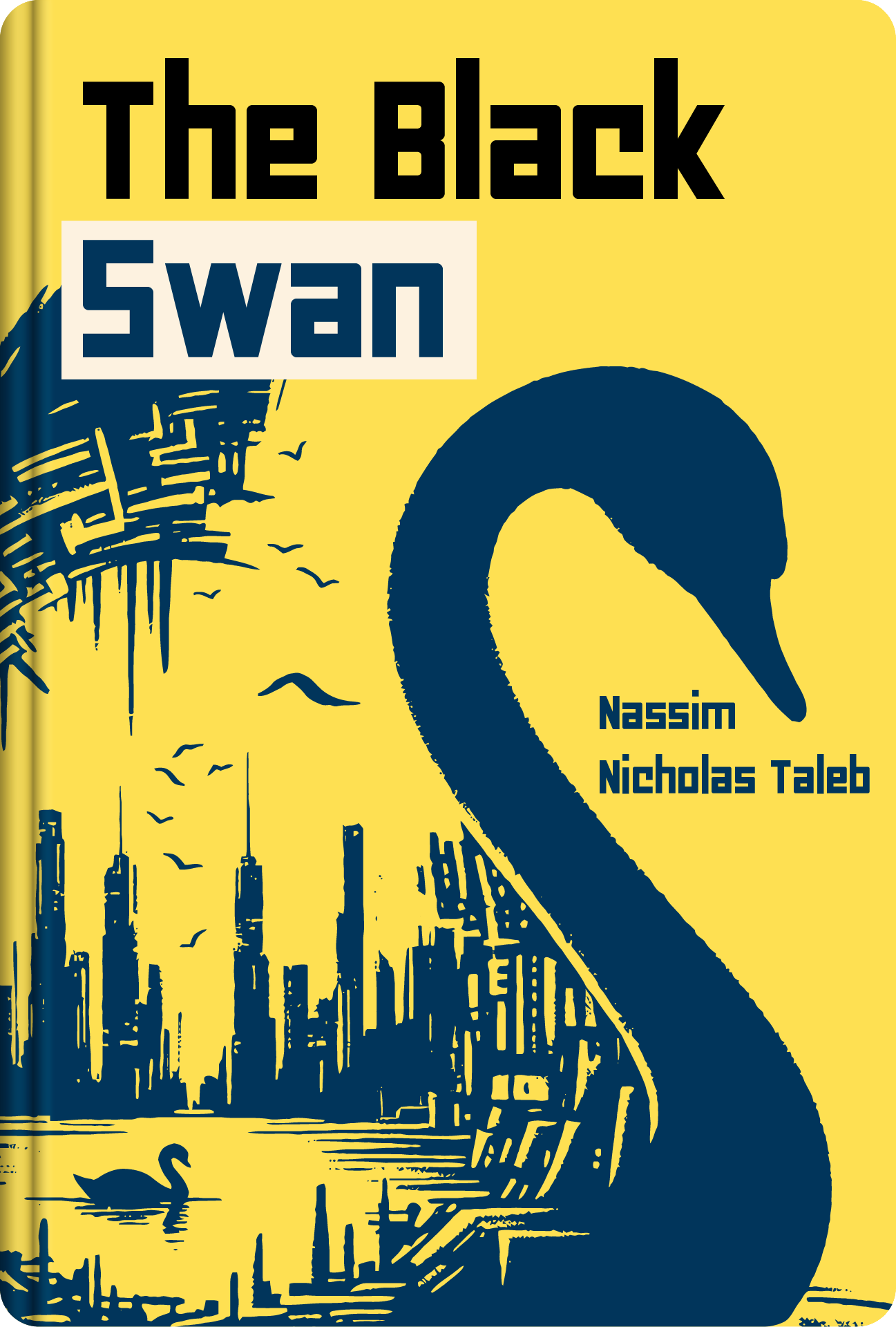 The Black SwanNassim Nicholas TalebYou learn why people underestimate rare events and trust forecasts too much, and how to prepare by building resilience instead of relying on predictions.Listen to the summary →
Try this week
A few small experiments that turn these six books into habits. None of them needs more than a few minutes.
- Name the glue. Pick one group you belong to, such as your team, your class or your family, and write one sentence about what really holds it together.
- Ask three questions of one article. Before you share something about another country or culture, ask who wrote it, who it was written for and what they wanted you to feel.
- Catch an anchor. The next time a price or a figure comes first, whether in a shop or a salary talk, pause and ask what you would have thought without it.
- Write one 'if I am wrong' line. For one plan this month, such as a purchase or a job move, write down what you would do if your forecast turns out to be wrong.
- Find an eyewitness. Ask a parent or grandparent about a year that changed things for your family, and notice how a first-hand account differs from the version everyone repeats.
You can do all of this without an app. If you would like the books behind these ideas in about 15 minutes each, the summaries are listed above.
Every society runs on a story, and every story is told after the fact.
Try the yearly plan free for 14 days
Start 14 days free1,000 summaries on iPhone, Android and the web, with new titles every week and offline listening. Cancel before the 14 days end and nothing is charged.Questions people ask
What is the Muqaddimah by Ibn Khaldun about?
The Muqaddimah, written in 1377, is the introduction to Ibn Khaldun's history of the world. It explains how societies rise and fall, introduces the concept of asabiyyah, and examines economics, politics, education and the development of cities. Many scholars regard it as a founding work of sociology and the philosophy of history.
What does asabiyyah mean in Ibn Khaldun?
Asabiyyah is usually translated as social cohesion, the bond that allows a group to act together. In the Muqaddimah it sits alongside leadership, economics and environment as one of the forces behind the rise and fall of civilisations.
What is a Black Swan event according to Taleb?
In The Black Swan (2007), Nassim Nicholas Taleb looks at rare and unpredictable events with a huge impact, such as financial crashes, wars and major inventions. He argues that people underestimate the unknown, trust forecasts too much and explain such events only afterwards. His advice is to build resilience instead of relying on predictions.
Is a 15-minute summary enough to understand books like Sapiens or the Muqaddimah?
A summary gives you the key ideas of a book in about 15 minutes, which is enough to follow the main argument and decide whether to read further. It does not replace the original. On Durar every summary exists in both Arabic and English, and you can switch language from the summary page.