Get started

Topic

The best 12 Physics & Space summaries

Physics and space explore the deepest questions about the universe, from the Big Bang and black holes to the nature of time itself, and they matter to readers in a region whose scholars once led the world in astronomy and whose nations are now launching their own space missions. The books gathered here range from classic introductions to cosmology and quantum theory to bold explorations of higher dimensions, the future of spaceflight, and the engineering stories behind modern rockets. With these ideas you can make sense of science news, discuss big discoveries with confidence, and look at the night sky with a clearer understanding of how the universe works.

1Liftoff

Liftoff

Eric Berger

Go behind SpaceX’s early failures to see how bold engineering, sacrifice, and persistence transformed the future of spaceflight.

16 min

Listen to the intro

1:16

What is Liftoff about?

Liftoff (2021) tells the story of SpaceX’s early years, when a small team of engineers worked on a remote Pacific island to build and launch the Falcon 1 rocket. After three failed launches that nearly ended the company, the fourth attempt in 2008 reached orbit and changed the future of spaceflight. Eric Berger’s fast-paced account shows how bold goals, fast learning, and persistence can turn failure into success.

Who should read Liftoff?

  • Entrepreneurs facing setbacks in the early days of a startup
  • Engineers who want to build ambitious, high-risk projects
  • Space enthusiasts curious about how SpaceX reached orbit
2A Short History of Nearly Everything

A Short History of Nearly Everything

Bill Bryson

Journey through the history of science to uncover how the universe, Earth, and life began in a clear and captivating way.

23 min

Listen to the intro

1:49

What is A Short History of Nearly Everything about?

A Short History of Nearly Everything (2003) takes readers on an entertaining journey through the history of science, from the Big Bang and the formation of Earth to the rise of life and human beings. Bill Bryson explains how scientists discovered what we know about atoms, stars, rocks, and cells, and shares colourful stories about the people behind the discoveries. The book became one of the most popular science books ever.

Who should read A Short History of Nearly Everything?

  • Curious readers who want science explained without jargon
  • Students looking for a lively overview of science
  • Anyone fascinated by the stories behind great discoveries
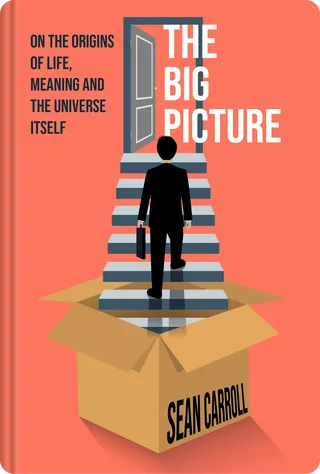
3The Big Picture

The Big Picture

Sean Carroll

Reconcile science with meaning by exploring how physics, consciousness, morality, and purpose can coexist in one natural worldview.

20 min

Listen to the intro

1:01

What is The Big Picture about?

The Big Picture (2016) presents an ambitious account of how modern science describes the universe, life, consciousness, and humanity’s place within nature. Sean Carroll connects ideas from physics, biology, philosophy, and information theory while distinguishing established knowledge from questions that remain open. The book encourages readers to build a coherent view of reality while continuing to think carefully about meaning, values, responsibility, and the limits of human understanding.

Who should read The Big Picture?

  • Curious readers who want modern physics explained clearly
  • Thinkers exploring how science relates to meaning and values
  • Students drawn to big questions about consciousness and reality
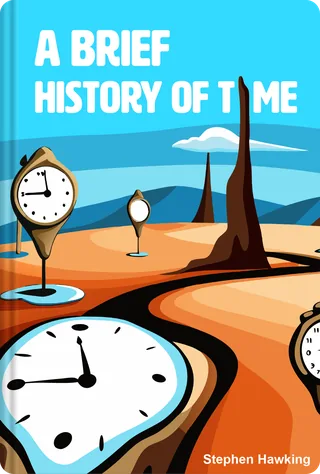
4A Brief History of Time

A Brief History of Time

Stephen Hawking

Journey from the Big Bang to black holes and uncover how space, time, and physics shape the universe.

20 min

Listen to the intro

1:21

What is A Brief History of Time about?

A Brief History of Time (1988) explains the biggest questions about the universe in language that general readers can follow. Stephen Hawking explores the Big Bang, black holes, the nature of time, and the search for a theory that unites all of physics. The book became one of the best-selling science books in history and inspired millions of people to take an interest in cosmology.

Who should read A Brief History of Time?

  • Curious readers who wonder how the universe began
  • Students wanting a clear introduction to modern physics
  • Anyone fascinated by black holes and the nature of time
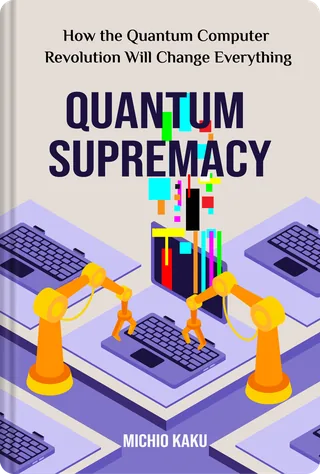
5Quantum Supremacy

Quantum Supremacy

Michio Kaku

Explore how quantum computing could transform AI, medicine, climate research, and the future of human innovation.

20 min

Listen to the intro

1:24

What is Quantum Supremacy about?

Quantum Supremacy (2023) explains how quantum computers work and why they could transform the world. Michio Kaku describes how these machines, which use the strange rules of quantum physics, may one day solve problems far beyond today’s computers, in areas such as medicine, energy, climate, and artificial intelligence. The book offers an exciting and accessible look at a technology still being developed.

Who should read Quantum Supremacy?

  • Tech enthusiasts curious about the next computing revolution
  • Professionals in medicine, energy or AI fields
  • Anyone wanting quantum physics explained in plain language
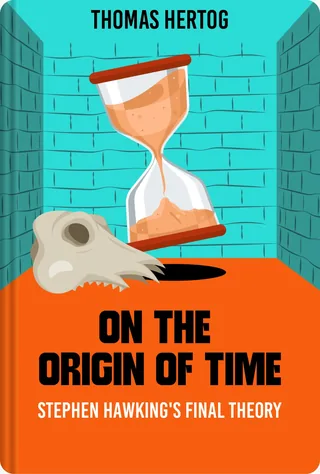
6On the Origin of Time

On the Origin of Time

Thomas Hertog

Explore Stephen Hawking’s final theory that the laws of physics evolved with the universe, transforming how we understand its origins.

16 min

Listen to the intro

1:05

What is On the Origin of Time about?

On the Origin of Time (2023) tells the story of Stephen Hawking’s final theory about the beginning of the universe. Thomas Hertog, his close collaborator for twenty years, explains how they came to believe that the laws of physics themselves may have evolved in the early universe, much as living things evolve. The book offers a fresh way to think about why the universe seems so well suited for life.

Who should read On the Origin of Time?

  • Science enthusiasts curious about how the universe began
  • Fans of Stephen Hawking seeking his final ideas
  • Students exploring cosmology and the laws of physics
7Physics of the Impossible

Physics of the Impossible

Michio Kaku

Explore the real science behind time travel, invisibility, and other seemingly impossible technologies that could shape the future.

17 min

Listen to the intro

1:48

What is Physics of the Impossible about?

Physics of the Impossible (2008) takes a scientific look at ideas from science fiction, such as force fields, invisibility, teleportation, time travel, and faster-than-light travel. Michio Kaku sorts them into three classes: those that may be possible within this century, those that may take thousands of years, and those that break the known laws of physics. The result is an entertaining and accessible tour of modern physics.

Who should read Physics of the Impossible?

  • Science fiction fans curious about the real science
  • Students wanting an accessible introduction to modern physics
  • Anyone wondering which futuristic technologies could actually happen
8The God Equation

The God Equation

Michio Kaku

Follow science’s pursuit of one equation that unites every force of nature, from Newton and Einstein to modern string theory.

18 min

Listen to the intro

0:47

What is The God Equation about?

The God Equation (2021) tells the story of physicists’ search for a single theory that could explain all the forces of nature, from gravity to the forces inside the atom. Michio Kaku traces this quest from Newton and Einstein to quantum mechanics and string theory, and explains why uniting these ideas is one of science’s greatest challenges. The book makes complex physics clear and exciting for general readers.

Who should read The God Equation?

  • Curious readers drawn to the mysteries of the universe
  • Students exploring physics beyond the classroom textbook
  • Anyone wanting Einstein and string theory explained simply
9Hyperspace

Hyperspace

Michio Kaku

Venture beyond familiar reality through higher dimensions, string theory, and wormholes that could reveal the universe’s hidden structure.

19 min

Listen to the intro

2:04

What is Hyperspace about?

Hyperspace (1994) introduces readers to one of the most exciting ideas in modern physics: that our universe may have more dimensions than the three we can see. Michio Kaku explains how extra dimensions could help unite the forces of nature, and explores related ideas such as wormholes, parallel universes, and time travel. The book makes advanced physics clear, exciting, and accessible.

Who should read Hyperspace?

  • Curious readers fascinated by the universe's deepest mysteries
  • Students exploring physics beyond the standard classroom textbook
  • Science fiction fans curious what real physics allows
10The Future of Humanity

The Future of Humanity

Michio Kaku

Imagine humanity’s future beyond Earth through space colonisation, advanced AI, genetic engineering, and interstellar travel.

21 min

Listen to the intro

0:47

What is The Future of Humanity about?

The Future of Humanity (2018) explores whether humans could one day live beyond Earth. Michio Kaku describes how we might build settlements on the Moon and Mars, explore the moons of Jupiter and Saturn, travel to other stars, and extend human life with new technology. Grounded in real physics and current research, the book offers an inspiring and imaginative look at humanity’s long-term future in space.

Who should read The Future of Humanity?

  • Space enthusiasts curious about life on Mars and beyond
  • Students drawn to physics, astronomy and future technology
  • Readers who wonder where science may take humanity next
11The Tao of Physics

The Tao of Physics

Fritjof Capra

Connect modern physics with Eastern philosophy to uncover striking parallels between quantum theory, relativity, and ancient views of reality.

18 min

Listen to the intro

0:53

What is The Tao of Physics about?

The Tao of Physics (1975) explores parallels between concepts in modern physics and ideas found in several Eastern philosophical traditions. It presents these connections as a philosophical perspective that can broaden reflection on nature rather than as scientific proof of spiritual teachings.

Who should read The Tao of Physics?

  • Science lovers curious about philosophy's big questions
  • Readers exploring links between quantum physics and ancient thought
  • Thinkers who enjoy reflecting on nature and reality
12Cosmos

Cosmos

Carl Sagan

Journey through the cosmos to explore the origins of life, humanity’s place in the universe, and the profound connections shaping existence.

18 min

Listen to the intro

1:22

What is Cosmos about?

Cosmos (1980) takes readers on an inspiring journey through the universe and the history of science. Carl Sagan explores the birth of stars and galaxies, the origins of life on Earth, and the great thinkers who helped humanity understand its place in the cosmos. Written alongside his famous television series, the book celebrates curiosity and wonder and remains one of the most popular science books ever published.

Who should read Cosmos?

  • Stargazers curious about how stars and galaxies form
  • Students who want an inspiring introduction to science
  • Anyone fascinated by the great thinkers of scientific history

Related topics

Questions about Physics & Space

What is a good book to start with on physics and space?

A Short History of Nearly Everything is a friendly starting point, explaining how the universe, Earth, and life began in clear and engaging language. Once you are comfortable, A Brief History of Time takes you from the Big Bang to black holes and the nature of space and time.

What will I learn from physics and space books?

You will learn the core ideas of modern physics, including relativity, quantum theory, and the search for a single theory uniting the forces of nature. Titles such as Physics of the Impossible and Liftoff also show how these ideas are shaping future technologies and real space exploration.

Who are these summaries for?

They are for curious readers, students, and professionals who want to understand the universe without wading through equations. Each summary distils the key ideas of a major book into a short read you can finish on a commute or a break.

Get the key ideas from the world's best books in about 15 minutes

Free account · One free summary every day