Get started

Topic

The best 98 Media & Influence summaries

Media and influence is about how stories, information networks and persuasion shape what people believe, buy and accept as true, a question that matters deeply in a region where news, social platforms and competing narratives about Palestine, oil and global power reach every home. The books here range from studies of how narratives conceal injustice and drive markets, to histories of information from writing to the internet, to critiques of surveillance technology and practical guides to persuasive, ethical communication. Readers can use these ideas to question the messages they receive, protect their attention and privacy, and speak with more clarity and credibility in their own work and community.

1Extremely Hardcore

Extremely Hardcore

Zoë Schiffer

Go inside Twitter after Elon Musk’s takeover to witness the chaos, cultural upheaval, and power struggles that reshaped the company.

20 min

Listen to the intro

2:24

What is Extremely Hardcore about?

Extremely Hardcore (2024) tells the inside story of Twitter after Elon Musk bought the company in 2022. Drawing on interviews with employees, Zoë Schiffer describes mass layoffs, sudden policy changes, the launch of paid verification, and the transformation of Twitter into X. The book is a vivid case study in leadership, company culture, and what happens when a major platform changes almost overnight.

Who should read Extremely Hardcore?

  • Leaders navigating major organizational change or restructuring
  • Employees curious how acquisitions reshape company culture
  • Anyone following the tech industry and social media
2In This Economy?

In This Economy?

Kyla Scanlon

Understand inflation, recessions, central banks, and market cycles through clear visuals that make today’s economy easier to navigate.

14 min

Listen to the intro

1:05

What is In This Economy? about?

In This Economy? (2024) explains how the economy works in clear, relatable language for a generation facing rising prices, housing costs, and uncertainty. Kyla Scanlon covers topics such as inflation, interest rates, the stock market, and the gap between economic data and how people actually feel. The book helps readers understand the forces shaping their financial lives.

Who should read In This Economy??

  • Young adults confused by rising prices and housing costs
  • Anyone who wants economic news explained in plain language
  • Beginners curious about inflation, recessions, and central banks
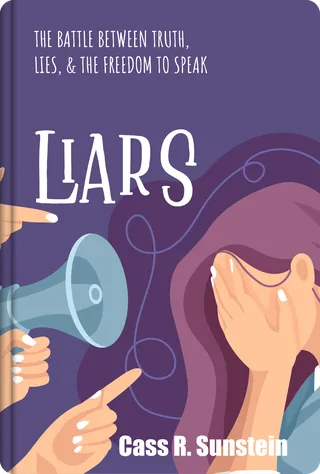
3Liars

Liars

Cass R. Sunstein

Resist misinformation by questioning what you believe, defending truth, and protecting freedom before deception becomes normal.

18 min

Listen to the intro

1:44

What is Liars about?

Liars (2021) examines how societies can respond to lies and misinformation without undermining freedom of speech. Legal scholar Cass R. Sunstein explores why falsehoods spread, when they cause real harm, and how new technologies such as doctored videos make the problem more serious. He argues that most false statements should be answered with more speech, while some harmful lies may justify careful regulation.

Who should read Liars?

  • Anyone worried about misinformation spreading online
  • Policymakers weighing free speech against harmful lies
  • Journalists and educators who defend the truth
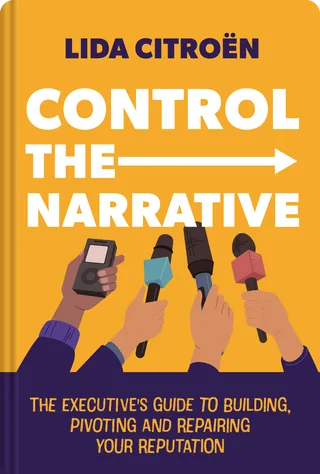
4Control the Narrative

Control the Narrative

Lida Citroën

Shape how others see you through clear messaging, consistent actions, and a personal brand that builds credibility and career opportunity.

16 min

Listen to the intro

1:12

What is Control the Narrative about?

Control the Narrative (2021) explains how leaders and professionals can build, protect, and repair their reputations in a world where information travels quickly. Lida Citroën presents methods for defining a clear personal brand, communicating consistently, responding to criticism, and aligning public perception with genuine values and behaviour. The book emphasises that controlling a narrative does not mean hiding the truth, but communicating one’s work and intentions clearly before others define the story.

Who should read Control the Narrative?

  • Leaders whose reputations face public scrutiny or criticism
  • Professionals building a personal brand to advance their careers
  • Anyone repairing their image after a setback or misunderstanding
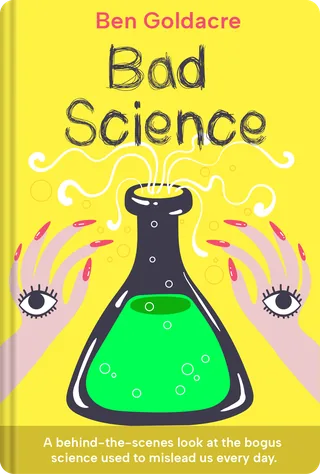
5Bad Science

Bad Science

Ben Goldacre

Spot pseudoscience, misleading statistics, and distorted research while building the critical thinking needed to question claims and demand evidence.

22 min

Listen to the intro

1:04

What is Bad Science about?

Bad Science (2008) teaches readers how to spot misleading claims about health and medicine. Ben Goldacre exposes common tricks behind exaggerated news stories, questionable health products, and poorly designed studies, and explains basic ideas such as the placebo effect and fair testing. Written with humour and clarity, the book helps people think critically about evidence and make better decisions about their health.

Who should read Bad Science?

  • Anyone confused by conflicting health headlines
  • Parents weighing health products and supplement claims
  • Students learning to evaluate research and evidence
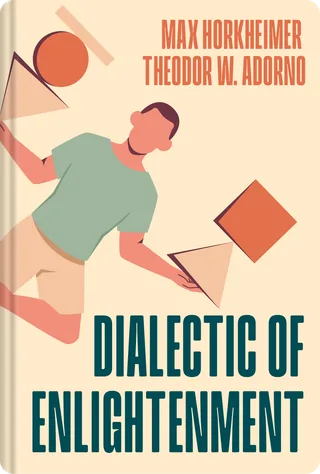
6Dialectic of Enlightenment

Dialectic of Enlightenment

Max Horkheimer and Theodor W. Adorno

Question the hidden costs of modern progress and uncover how media and systems of logic quietly shape what we think and trust.

23 min

Listen to the intro

1:33

What is Dialectic of Enlightenment about?

Dialectic of Enlightenment (1947) is a landmark work of critical theory that asks why modern societies, despite scientific progress, can still slide into oppression. Max Horkheimer and Theodor W. Adorno argue that reason, when reduced to a tool for control and efficiency, can turn against human freedom. Their famous chapter on the culture industry examines how mass entertainment can shape thinking and encourage conformity.

Who should read Dialectic of Enlightenment?

  • Students of philosophy and critical social theory
  • Media professionals questioning entertainment's influence on audiences
  • Anyone wondering why progress doesn't always bring freedom
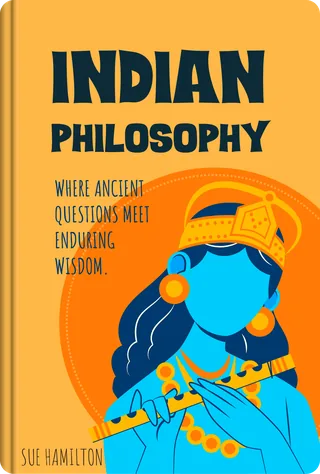
7Indian Philosophy

Indian Philosophy

Sue Hamilton

Journey through Indian philosophy to explore the mind, suffering, liberation, and timeless insights into the self and reality.

20 min

Listen to the intro

1:31

What is Indian Philosophy about?

Indian Philosophy (2001) is a short introduction to the major schools of thought that developed in ancient and classical India. Sue Hamilton explains how thinkers in the Hindu, Buddhist, and Jain traditions approached questions about knowledge, the self, reality, and the path to liberation from suffering. The book presents these ideas clearly for readers new to the subject and shows how they differ from Western philosophy.

Who should read Indian Philosophy?

  • Students new to philosophy beyond the Western tradition
  • Readers curious how Hindu, Buddhist and Jain thinkers reasoned
  • Anyone comparing Eastern and Western ideas about knowledge and reality
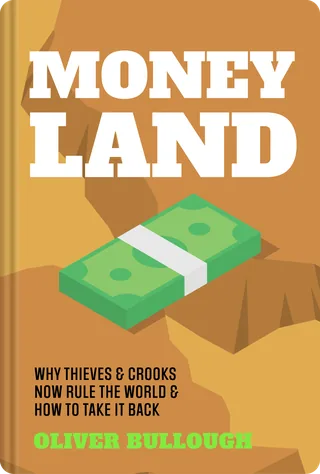
8Moneyland

Moneyland

Oliver Bullough

Enter the hidden world where the ultra-rich move wealth beyond laws and borders, fuelling corruption and weakening democracy.

18 min

Listen to the intro

1:03

What is Moneyland about?

Moneyland (2018) reveals how wealthy and corrupt individuals hide their money across borders using offshore companies, secret accounts, and legal loopholes. Oliver Bullough calls this hidden world Moneyland, a place where rules for ordinary people do not apply to the very rich. He explains the harm this causes to countries and ordinary citizens and what can be done to stop it.

Who should read Moneyland?

  • Readers curious how the ultra-rich hide their wealth
  • Finance, law and compliance professionals fighting financial crime
  • Anyone concerned about corruption and its cost to society
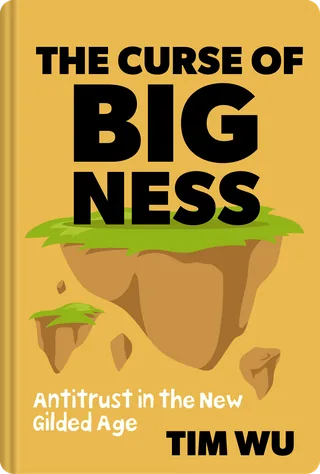
9The Curse of Bigness

The Curse of Bigness

Tim Wu

See how corporate concentration threatens markets and democracy, and why confronting monopolies is essential to limiting unchecked power.

19 min

Listen to the intro

1:05

What is The Curse of Bigness about?

The Curse of Bigness (2018) warns that giant corporations have become too powerful and that this concentration of economic power threatens competition, innovation, and democracy. Tim Wu revisits the history of antitrust laws, which were created to break up monopolies, and explains how their weakening allowed a few companies to dominate entire industries. He calls for renewed efforts to protect fair competition.

Who should read The Curse of Bigness?

  • Policymakers and regulators shaping competition and antitrust rules
  • Entrepreneurs competing against dominant companies in their industry
  • Anyone curious how corporate power shapes markets and society
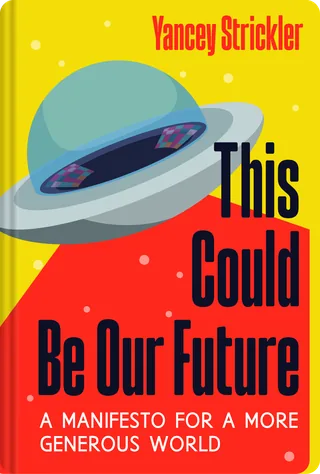
10This Could Be Our Future

This Could Be Our Future

Yancey Strickler

Redefine value beyond profit to help businesses and societies build a more balanced, meaningful, and humane future.

20 min

Listen to the intro

0:51

What is This Could Be Our Future about?

This Could Be Our Future (2019) argues that the belief that money is all that matters has shaped society in harmful ways. Yancey Strickler proposes an alternative approach he calls Bentoism, which encourages people and organisations to weigh long-term values such as community, knowledge, and purpose alongside financial success. The book offers a hopeful vision of a more generous and balanced future.

Who should read This Could Be Our Future?

  • Entrepreneurs who want profit and purpose to coexist
  • Leaders rethinking how their organizations measure success
  • Anyone tired of money being the only measure
11Dear Madam President

Dear Madam President

Jennifer Palmieri

Navigate power, ambition, and public life through the experiences of women in politics, and find the courage to lead, persist, and be heard.

16 min

Listen to the intro

1:06

What is Dear Madam President about?

Dear Madam President (2018) is written as a letter of advice to the first woman who will become president of the United States. Jennifer Palmieri draws on her experience in politics, including the 2016 presidential campaign, to reflect on leadership, confidence, and ambition. She encourages women in every field to lead in their own way rather than imitating traditional models.

Who should read Dear Madam President?

  • Women aiming for leadership roles in any field
  • Professionals curious about life inside political campaigns
  • Anyone seeking confidence to lead in their own way
12Blowout

Blowout

Rachel Maddow

Uncover how oil and gas power fuels corruption, weakens democracies, and quietly shapes political crises around the world.

19 min

Listen to the intro

1:39

What is Blowout about?

Blowout (2019) investigates the global oil and gas industry and its influence on politics and democracy. Rachel Maddow traces how energy wealth has fuelled corruption, strengthened authoritarian governments, and caused environmental harm, with examples ranging from Russia to Oklahoma. The book calls for stronger oversight of one of the world’s most powerful industries.

Who should read Blowout?

  • Readers curious how energy wealth shapes global politics
  • Professionals working in or around the oil and gas sector
  • Anyone concerned with governance, accountability and environmental impact
13On Freedom

On Freedom

Timothy Snyder

Rethink freedom as the ability to act on your values, built on security, trust and knowledge, not just the absence of government.

21 min

Listen to the intro

1:01

What is On Freedom about?

On Freedom (2024) asks what freedom really means and what it takes to sustain it. Timothy Snyder argues that freedom is not simply the absence of government, but the ability to act on our values, which depends on conditions such as security, trust, knowledge, and the capacity to shape our own lives. Drawing on history, philosophy, and his travels, the book offers a positive vision of a free society.

Who should read On Freedom?

  • Readers curious about what freedom truly means
  • Students of history, philosophy and political thought
  • Citizens who want to build trust in their communities
14How to Be an Antiracist

How to Be an Antiracist

Ibram Kendi

Move beyond being “not racist” by recognising systemic inequality, challenging injustice, and actively helping build a fairer society.

16 min

Listen to the intro

0:56

What is How to Be an Antiracist about?

How to Be an Antiracist (2019) combines memoir, history, and social analysis to explain how racism operates in policies, institutions, and personal beliefs. Ibram Kendi argues that it is not enough to be “not racist” and that people should actively support policies that create racial equality. Drawing on his own experiences, he encourages readers to examine their assumptions and work toward a fairer society.

Who should read How to Be an Antiracist?

  • Anyone who wants to understand how racism shapes institutions
  • Leaders aiming to build fair and inclusive organizations
  • Readers ready to question their own hidden assumptions
15The Cold War

The Cold War

Robert J. McMahon

Understand how the rivalry between the United States and Soviet Union reshaped global politics, warfare, ideology, and modern history.

23 min

Listen to the intro

1:43

What is The Cold War about?

The Cold War (2003) is a short, clear introduction to the long rivalry between the United States and the Soviet Union that shaped world politics from 1945 to 1991. Robert J. McMahon explains how the conflict began, how it spread around the globe through proxy wars and the nuclear arms race, and how it finally ended. The book helps readers understand a period that still influences today’s world.

Who should read The Cold War?

  • Students new to twentieth-century world history
  • Anyone curious how today's global politics took shape
  • Readers wanting a concise guide to superpower rivalry
16The Work of Art in the Age of Mechanical Reproduction

The Work of Art in the Age of Mechanical Reproduction

Walter Benjamin

Explore how mechanical reproduction transforms art’s uniqueness, turning it into a powerful force for mass communication and political influence.

15 min

Listen to the intro

2:12

What is The Work of Art in the Age of Mechanical Reproduction about?

The Work of Art in the Age of Mechanical Reproduction (1935) is one of the most influential essays on art and technology. Walter Benjamin argues that when artworks can be copied endlessly through photography and film, they lose their unique presence, which he calls their aura. He explores how new technologies change the way people experience art and how art can be used for political purposes.

Who should read The Work of Art in the Age of Mechanical Reproduction?

  • Art and media students exploring technology's cultural impact
  • Creators wondering how endless copies change their work's value
  • Anyone curious how images shape public opinion and politics
17Scary Smart

Scary Smart

Mo Gawdat

Confront how rapidly advancing AI could redefine humanity’s future and why shaping it ethically is a responsibility shared by us all.

16 min

Listen to the intro

1:45

What is Scary Smart about?

Scary Smart (2021) examines the future of artificial intelligence and the role each of us plays in shaping it. Mo Gawdat argues that AI will soon become far more intelligent than humans, and that machines will learn their values by watching how people behave. He calls on readers to model kindness, fairness, and responsibility, so that the intelligent machines of the future work for the good of humanity.

Who should read Scary Smart?

  • Anyone curious about where artificial intelligence is heading
  • Parents and educators shaping values in a digital age
  • Tech professionals concerned about the ethics of AI
18The Bitcoin Standard

The Bitcoin Standard

Saifedean Ammous

Explore the case for Bitcoin as sound money through the history of currency, inflation, scarcity, and centralised control.

19 min

Listen to the intro

0:58

What is The Bitcoin Standard about?

The Bitcoin Standard (2018) explains the history of money and argues that Bitcoin could serve as a form of sound money in the digital age. Saifedean Ammous traces how societies used shells, metals, gold, and government-issued currencies, and discusses why money that is hard to produce tends to hold its value. The book presents the case for Bitcoin as a long-term store of value.

Who should read The Bitcoin Standard?

  • Anyone curious about how money evolved through history
  • Readers seeking to understand inflation and why currencies lose value
  • Savers weighing Bitcoin's case as a long-term store of value
19On Palestine

On Palestine

Noam Chomsky and Ilan Pappé

Examine Palestine’s past, present, and future through a critical dialogue on occupation, displacement, global politics, justice, equality, and peace.

21 min

Listen to the intro

1:12

What is On Palestine about?

On Palestine (2015) brings together conversations and reflections by Noam Chomsky and Ilan Pappé on Palestinian history, rights, and the continuing search for justice and peace. The authors examine the conditions in Gaza and the West Bank, the influence of international powers, and the ways media and political language shape public understanding of the situation. The book also considers how education, international solidarity, and peaceful civic action can contribute to a more just future.

Who should read On Palestine?

  • Readers seeking a deeper understanding of the Palestinian cause
  • Students of history, politics, and international relations
  • Anyone curious how media shapes views on Palestine
20Reimagining Capitalism in a World on Fire

Reimagining Capitalism in a World on Fire

Rebecca Henderson

Rebuild capitalism through businesses that unite profitability, sustainability, and shared prosperity to protect society and the planet.

16 min

Listen to the intro

1:29

What is Reimagining Capitalism in a World on Fire about?

Reimagining Capitalism in a World on Fire (2020) argues that businesses can and must help solve major problems such as climate change and inequality. Rebecca Henderson shows that companies focused on shared value and long-term thinking can be both profitable and responsible. With real examples, she explains how business leaders, investors, and governments can work together to build a fairer and more sustainable economy.

Who should read Reimagining Capitalism in a World on Fire?

  • Business leaders balancing profit with social responsibility
  • Investors seeking long-term, sustainable returns
  • Anyone concerned about climate change and inequality

Related topics

Questions about Media & Influence

What is a good book to start with on media and influence?

Nexus is a strong starting point, tracing how information networks from language and writing to the internet have built civilizations and shaped power. For a more personal and regional angle, The Message shows how powerful narratives in places like Palestine define what societies accept as truth.

What will I learn from media and influence books?

You will learn how stories spread and move public behaviour, as Narrative Economics shows with markets, and how tech companies turn personal data into influence, as explained in The Age of Surveillance Capitalism. You will also gain practical tools for shaping your own message and reputation.

Who are these summaries for?

They suit anyone who follows the news, uses social media or works in communication, marketing or public life and wants to understand the forces behind what they see. Professionals will find practical value in titles like Control the Narrative and Exactly What to Say.

Get the key ideas from the world's best books in about 15 minutes

Free account · One free summary every day