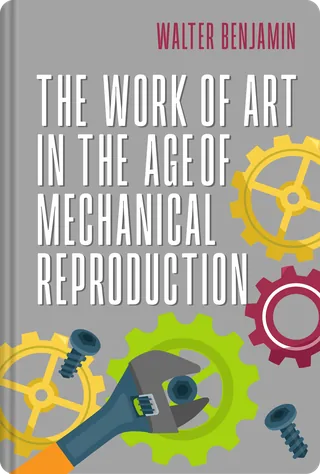
The Work of Art in the Age of Mechanical Reproduction
Walter Benjamin
Explore how mechanical reproduction transforms art’s uniqueness, turning it into a powerful force for mass communication and political influence.
Listen to the intro
 Philosophy
 Society & Culture
 Science & Technology
 Education & Creativity
Outline
What's it about?
The Work of Art in the Age of Mechanical Reproduction (1935) is one of the most influential essays on art and technology. Walter Benjamin argues that when artworks can be copied endlessly through photography and film, they lose their unique presence, which he calls their aura. He explores how new technologies change the way people experience art and how art can be used for political purposes.
Key ideas
- When artworks can be copied endlessly through photography and film, they lose the unique presence Benjamin calls their aura.
- New technologies change not only how art is made but how people experience it.
- Mechanical reproduction turns art into a tool for mass communication.
- Because art reaches so many people, it can also be used for political purposes.
About the author
Walter Benjamin (1892–1940) was a German philosopher, cultural critic, and essayist associated with the Frankfurt School. He wrote about literature, art, history, and modern city life, and his ideas remain influential in cultural and media studies. His works include Illuminations, a collection of his essays, and The Arcades Project.
Questions people ask
What is the main idea of The Work of Art in the Age of Mechanical Reproduction?
Walter Benjamin argues that endless copying through photography and film strips artworks of their unique presence, or aura. This changes how people experience art and opens it to political use.
What does Walter Benjamin mean by aura?
In this essay, aura is the unique presence an artwork has before it can be copied endlessly. Benjamin says reproduction through photography and film causes it to fade.
How long is the Durar summary of this essay?
The Durar summary takes about 15 minutes to read or listen to. It covers Benjamin's argument about reproduction, aura and the political use of art.
You May Also Like




More in Philosophy






Get the key ideas from the world's best books in about 15 minutes
Free account · One free summary every day