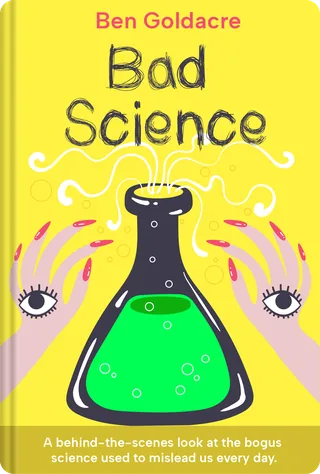
Bad Science
Ben Goldacre
Spot pseudoscience, misleading statistics, and distorted research while building the critical thinking needed to question claims and demand evidence.
Listen to the intro
 Society & Culture
 Science & Technology
 Health & Nutrition
Outline
What's it about?
Bad Science (2008) teaches readers how to spot misleading claims about health and medicine. Ben Goldacre exposes common tricks behind exaggerated news stories, questionable health products, and poorly designed studies, and explains basic ideas such as the placebo effect and fair testing. Written with humour and clarity, the book helps people think critically about evidence and make better decisions about their health.
Key ideas
- Exaggerated health stories in the news often rely on a few common tricks that readers can learn to recognise.
- Questionable health products can sound convincing, so claims about them deserve a request for real evidence.
- Poorly designed studies can mislead, which is why fair testing matters when judging whether a treatment works.
- The placebo effect is a basic idea that explains why people can feel better without a real treatment.
- Thinking critically about evidence helps you make better decisions about your own health.
About the author
Ben Goldacre is a British physician, academic, and science writer at the University of Oxford who works to improve the use of evidence in medicine. He wrote the popular Bad Science column in The Guardian for many years. His books include Bad Science and Bad Pharma.
Questions people ask
What is Bad Science by Ben Goldacre about?
Bad Science teaches readers how to spot misleading claims about health and medicine. It exposes the tricks behind exaggerated news stories, questionable health products, and poorly designed studies.
Who is Bad Science for?
It is for anyone who reads health news or sees health claims and wants to judge the evidence for themselves. No scientific background is needed, since the book explains basic ideas clearly and with humour.
How long is the Durar summary of Bad Science?
The Durar summary takes about 15 minutes to read or listen to. It covers the main ideas of the book, including the placebo effect, fair testing, and how to question health claims.
You May Also Like
The Moth, Meg Bowles, Catherine Burns, Jenifer Hixson, Sarah Austin Jenness and Kate Tellers

More in Society & Culture

Get the key ideas from the world's best books in about 15 minutes
Free account · One free summary every day