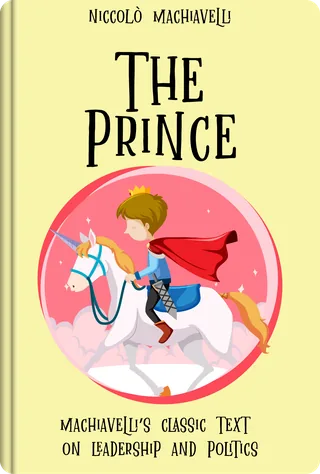
The Prince
Niccolò Machiavelli
Understand how leaders gain and preserve power through Machiavelli’s uncompromising lessons on strategy, authority, and political realism.
Listen to the intro
 Philosophy
 History & Politics
Outline
What's it about?
The Prince (1532) is a short and famously blunt guide to gaining and keeping political power. Niccolò Machiavelli advises rulers to see politics as it really is rather than as it should be, discussing how to win loyalty, when to be feared rather than loved, and how to handle fortune and crisis. Written for the Medici family, the book became one of the founding works of modern political thought.
Key ideas
- Machiavelli tells rulers to see politics as it really is, not as it should be.
- The Prince is a short, blunt guide to gaining and keeping political power.
- It discusses how a ruler can win loyalty and when being feared is wiser than being loved.
- Fortune and crisis are unavoidable, and a ruler must learn how to handle them.
- Written for the Medici family, it became a founding work of modern political thought.
About the author
Niccolò Machiavelli (1469–1527) was an Italian diplomat, political philosopher, and writer from Florence. He served the Florentine Republic for years before being forced from office when the Medici family returned to power. His works include The Prince, Discourses on Livy, and The Art of War.
Questions people ask
What is The Prince about?
The Prince is a short guide to gaining and keeping political power. Machiavelli argues that rulers should see politics as it really is and act on that view.
Who is The Prince by Machiavelli for?
It suits readers interested in leadership, political thought, history and ethics. Anyone curious about how power works in practice will find it useful.
How long is the Durar summary of The Prince?
The Durar summary takes about 15 minutes to read or listen to. It covers the main lessons on authority, loyalty, fear and fortune.
You May Also Like

More in Philosophy

Get the key ideas from the world's best books in about 15 minutes
Free account · One free summary every day