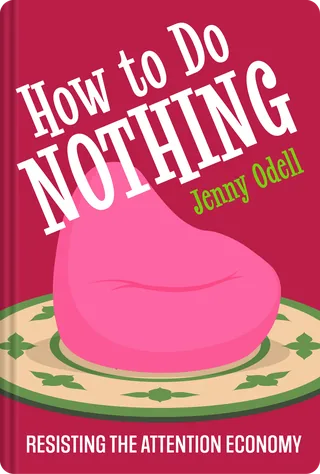
How to Do Nothing
Jenny Odell
Reclaim your attention from social media and constant productivity to restore deeper connections with yourself, others, and the natural world.
Listen to the intro
 Philosophy
 Money & Economics
 Society & Culture
 Mindfulness & Happiness
Outline
What's it about?
How to Do Nothing (2019) is a thoughtful critique of the attention economy, in which apps and platforms compete constantly for our time. Jenny Odell encourages readers to resist this pressure by paying deeper attention to their surroundings, such as nature, local communities, and the people and places around them. The book argues that reclaiming our attention can lead to a more meaningful life.
Key ideas
- Apps and platforms compete constantly for our time, and this competition is what the book calls the attention economy.
- Jenny Odell treats the pressure to stay online and productive as something readers can choose to resist.
- Paying deeper attention to nature, local communities, and the people and places around you is the book's main practice.
- Reclaiming your attention can lead to a more meaningful life and stronger connections with yourself, others, and the natural world.
About the author
Jenny Odell is an American artist, writer, and educator who has taught at Stanford University. Her work explores attention, time, and our relationship with the places we live. Her books include How to Do Nothing and Saving Time.
Questions people ask
What is How to Do Nothing by Jenny Odell about?
It is a thoughtful critique of the attention economy, where apps and platforms compete for our time. Odell argues that reclaiming our attention can lead to a more meaningful life.
Who is How to Do Nothing for?
It suits readers who feel pulled around by social media and constant productivity and want to give more attention to their surroundings, their communities, and the people and places near them.
How long is the Durar summary of How to Do Nothing?
The Durar summary takes about 15 minutes to read or listen to. It covers the book's critique of the attention economy and its case for deeper attention to the world around us.
You May Also Like
More in Philosophy
Get the key ideas from the world's best books in about 15 minutes
Free account · One free summary every day