A Vindication of the Rights of Woman
Mary Wollstonecraft
Challenge the roots of gender inequality through a powerful defence of women’s education, reason, opportunity, and equal participation in society.
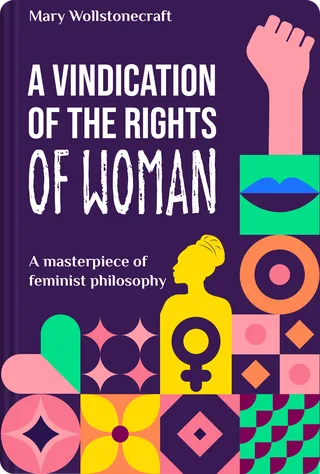
Listen to the intro
 Philosophy
 History & Politics
 Society & Culture
Outline
What's it about?
A Vindication of the Rights of Woman (1792) is one of the earliest and most influential works arguing for women’s education and equality. Mary Wollstonecraft argues that women are rational beings who deserve the same opportunities to learn and develop their minds as men, and that educated women benefit families and society. The book remains a landmark in the history of ideas about education and human dignity.
Key ideas
- Women are rational beings, and Wollstonecraft argues they deserve the same chance as men to learn and develop their minds.
- Education is the central issue: she traces unequal treatment of women back to how girls are taught and what is expected of them.
- Educated women do not only help themselves; the book argues they benefit their families and society as a whole.
- Published in 1792, it is one of the earliest and most influential works to argue for women's education and equality.
- The book is a landmark in the history of ideas about education and human dignity.
About the author
Mary Wollstonecraft (1759–1797) was a British writer and philosopher who worked as a teacher and governess before becoming an author. She wrote about education, politics, and society, and her ideas influenced generations of reformers. Her works include Thoughts on the Education of Daughters and A Vindication of the Rights of Woman.
Questions people ask
What is A Vindication of the Rights of Woman about?
It is Mary Wollstonecraft's 1792 argument that women are rational beings who should have the same opportunities as men to learn and develop their minds. She also argues that educated women benefit families and society.
Who should read A Vindication of the Rights of Woman?
It suits readers interested in the history of ideas, education, philosophy and human dignity, and anyone curious about how the case for women's education was first made.
How long is the Durar summary of this book?
The Durar summary takes about 15 minutes to read or listen to, and it covers the book's main arguments on women's education, reason and equal participation in society.
You May Also Like







More in Philosophy









Get the key ideas from the world's best books in about 15 minutes
Free account · One free summary every day