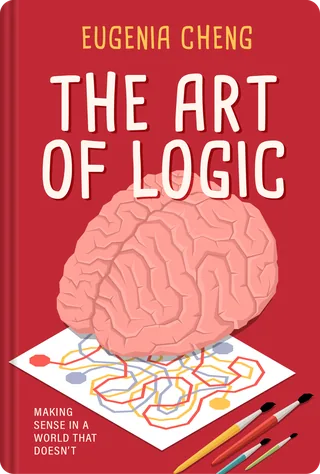
The Art of Logic
Eugenia Cheng
Think more clearly, challenge assumptions, and navigate disagreements with logic that strengthens decisions and conversations.
Listen to the intro
 Philosophy
 Science & Technology
Outline
What's it about?
The Art of Logic (2018) shows how the tools of mathematics can help us think more clearly about everyday arguments, politics, and social issues. Eugenia Cheng explains logical ideas such as implication, false dichotomies, and relationships between concepts, and shows how emotions and logic can work together rather than against each other. The book helps readers spot flawed reasoning and argue more fairly and effectively.
Key ideas
- The tools of mathematics can sharpen how we reason about everyday arguments, social issues, and political questions.
- Logical ideas such as implication show how one claim does or does not follow from another.
- A false dichotomy presents only two options when more exist, and spotting it opens up better choices.
- Emotions and logic can work together rather than against each other in a conversation.
- Learning to spot flawed reasoning helps you argue more fairly and effectively.
About the author
Eugenia Cheng is a British mathematician, pianist, and author who is known for making abstract mathematics accessible and fun. She is Scientist in Residence at the School of the Art Institute of Chicago and has worked at universities in Britain and the United States. Her books include How to Bake Pi, The Art of Logic, and x + y.
Questions people ask
What is The Art of Logic about?
Eugenia Cheng uses the tools of mathematics to show how to think more clearly about everyday arguments, politics, and social issues. She explains ideas like implication and false dichotomies and how logic and emotion can work together.
Who is The Art of Logic for?
It suits anyone who wants to spot flawed reasoning, question assumptions, and handle disagreements more fairly. No mathematics background is needed to follow the core ideas.
How long is the Durar summary of The Art of Logic?
The Durar summary takes about 15 minutes to read or listen to. It covers the book's main logical ideas and how they apply to everyday arguments.
You May Also Like




More in Philosophy






Get the key ideas from the world's best books in about 15 minutes
Free account · One free summary every day