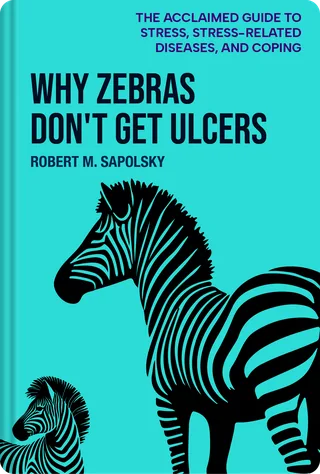
Why Zebras Don't Get Ulcers
Robert M. Sapolsky
See how chronic stress reshapes the body and mind, and why modern pressures can quietly fuel illness.
Listen to the intro
 Health & Nutrition
 Psychology
Outline
What's it about?
Why Zebras Don't Get Ulcers (1994) explains how stress affects the body and why modern life makes us sick. Robert M. Sapolsky shows that animals like zebras activate their stress response only in short emergencies, while humans often keep it switched on for weeks or years because of worries and pressures. He explains the effects on the heart, digestion, memory, and sleep, and how to cope better.
Key ideas
- Animals like zebras switch on the stress response only during short emergencies, then return to normal once the danger has passed.
- Humans often keep the stress response running for weeks or years because of worries and pressures, not just physical threats.
- Long-lasting stress affects the heart, digestion, memory, and sleep, which helps explain why modern life can make people ill.
- Illness from stress can build quietly, so everyday pressures deserve to be taken seriously rather than brushed aside.
- The book also explains how to cope with stress better, so the response does not stay switched on.
About the author
Robert M. Sapolsky is an American neuroscientist, primatologist, and professor of biology and neurology at Stanford University. He is known for his long-term research on stress among wild baboons in Kenya and for his lively, humorous writing about science. His books include Why Zebras Don’t Get Ulcers, A Primate’s Memoir, and Behave.
Questions people ask
What is Why Zebras Don't Get Ulcers about?
It explains how stress affects the body and why modern life makes us sick. Robert M. Sapolsky contrasts short animal emergencies with the weeks or years of stress humans often carry.
Who is Why Zebras Don't Get Ulcers for?
It suits anyone curious about how chronic stress affects health, including the heart, digestion, memory, and sleep, and how to cope with it better.
How long is the Durar summary of this book?
The Durar summary takes about 15 minutes to read or listen to. It covers the main ideas of the 1994 book by Robert M. Sapolsky.
You May Also Like







More in Health & Nutrition










Get the key ideas from the world's best books in about 15 minutes
Free account · One free summary every day