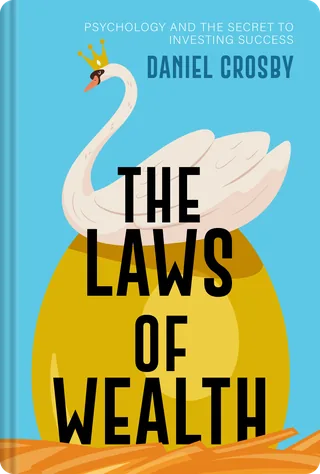
The Laws of Wealth
Daniel Crosby
Invest more rationally through ten essential rules that control emotion, counter cognitive bias, and build disciplined, evidence-based decisions.
Listen to the intro
 Personal Growth & Self-Help
 Money & Economics
 Psychology
Outline
What's it about?
The Laws of Wealth (2016) explains how psychology affects our financial decisions and why investors often act against their own interests. Daniel Crosby presents simple rules for managing yourself, such as controlling emotions and avoiding overconfidence, and rules for managing investments using a disciplined, evidence-based process. The book helps readers make calmer and wiser money decisions.
Key ideas
- Investors often act against their own interests, and psychology explains why so many money decisions go wrong.
- The book offers ten essential rules for investing more rationally.
- Some rules are about managing yourself, such as controlling emotions and avoiding overconfidence.
- Other rules are about managing investments through a disciplined, evidence-based process rather than impulse.
- Knowing your own cognitive biases helps you make calmer and wiser money decisions.
About the author
Daniel Crosby is an American psychologist and behavioural finance expert who applies psychology to investing and financial planning. He serves as chief behavioural officer at an investment firm and speaks widely about investor behaviour. His books include The Laws of Wealth, The Behavioral Investor, and The Soul of Wealth.
Questions people ask
What is The Laws of Wealth about?
It explains how psychology shapes financial decisions and why investors often work against themselves. Daniel Crosby offers ten rules for managing both yourself and your investments.
Who is The Laws of Wealth for?
It suits anyone who invests or wants to start and wants to understand how emotion and bias affect money choices. No finance background is needed to follow its simple rules.
How long is the Durar summary of The Laws of Wealth?
The Durar summary takes about 15 minutes to read or listen to. It covers the main rules on controlling emotion, avoiding overconfidence and investing with discipline.
You May Also Like






More in Personal Growth & Self-Help




Get the key ideas from the world's best books in about 15 minutes
Free account · One free summary every day