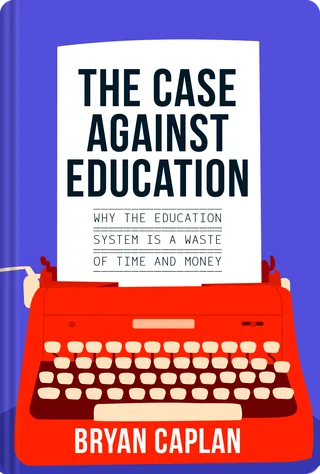
The Case Against Education
Bryan Caplan
Question the true value of education and discover why schooling may signal ability more often than it builds useful skills.
Listen to the intro
 Money & Economics
 Society & Culture
 Education & Creativity
Outline
What's it about?
The Case Against Education (2018) argues that much of what students learn in school is never used in their careers, and that degrees are often valued mainly as a signal to employers. Bryan Caplan examines the costs and benefits of education for individuals and society, and suggests that spending less on formal schooling and more on practical and vocational training could be wiser.
Key ideas
- Much of what students learn in school is never used in their later careers.
- Degrees are often valued by employers mainly as a signal of ability rather than proof of useful skills.
- The book weighs the costs and benefits of education for both individuals and society.
- Caplan suggests spending less on formal schooling and more on practical and vocational training could be wiser.
About the author
Bryan Caplan is an American economist and professor at George Mason University who writes about education, economics, and public policy. He is known for challenging conventional wisdom with data and clear arguments. His books include The Myth of the Rational Voter, Selfish Reasons to Have More Kids, and The Case Against Education.
Questions people ask
What is the main idea of The Case Against Education?
Bryan Caplan argues that schooling works largely as a signal of ability to employers, while much of what students learn is never used at work. He concludes that less spending on formal schooling and more on practical training may be wiser.
Who is The Case Against Education for?
It suits readers curious about the real value of education, including students, parents and anyone interested in economics and society. It asks whether the time and money spent on degrees pay off for individuals and for society.
How long is the Durar summary of The Case Against Education?
The Durar summary takes about 15 minutes to read or listen to, in English or Arabic. It covers the book's central argument about education as a signal and the case for more practical and vocational training.
You May Also Like




More in Money & Economics





Get the key ideas from the world's best books in about 15 minutes
Free account · One free summary every day