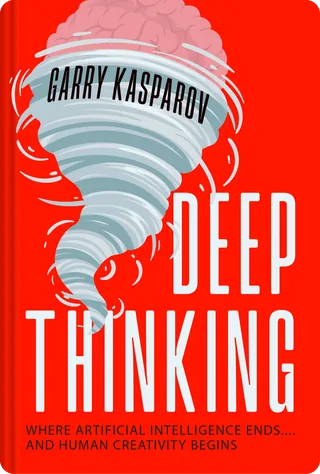
Deep Thinking
Garry Kasparov
Revisit Kasparov’s battle with Deep Blue to discover how humans and machines can collaborate, evolve, and achieve more together.
Listen to the intro
 Philosophy
 Society & Culture
 Science & Technology
 Education & Creativity
Outline
What's it about?
Deep Thinking (2017) tells the story of Garry Kasparov’s famous chess matches against IBM’s supercomputer Deep Blue, including his historic loss in 1997. Kasparov reflects on what he learned about machines and human intelligence, and argues that we should not fear artificial intelligence but learn to work with it. He explains how humans and machines together can achieve more than either can alone.
Key ideas
- Deep Thinking recounts Garry Kasparov's chess matches against IBM's supercomputer Deep Blue, including his historic loss in 1997.
- Kasparov looks back on what facing a machine taught him about both artificial and human intelligence.
- He argues that people should not fear artificial intelligence but should learn to work with it.
- Humans and machines working together can achieve more than either one can manage alone.
About the author
Garry Kasparov is a Russian-born chess grandmaster who became world champion at the age of twenty-two and held the title for fifteen years. Widely considered one of the greatest chess players in history, he later became a writer, speaker, and advocate for human rights. His books include How Life Imitates Chess and Deep Thinking.
Questions people ask
What is Deep Thinking by Garry Kasparov about?
It tells the story of Kasparov's chess matches against IBM's Deep Blue, including his 1997 loss. He uses that experience to reflect on machines and human intelligence.
What is the main idea of Deep Thinking?
Kasparov argues that we should not fear artificial intelligence but learn to work with it. In his view, humans and machines together can achieve more than either can alone.
How long does the Durar summary of Deep Thinking take?
The Durar summary takes about 15 minutes to read or listen to. It covers the story of the Deep Blue matches and Kasparov's argument about working with machines.
You May Also Like






More in Philosophy







Get the key ideas from the world's best books in about 15 minutes
Free account · One free summary every day