Candide
Voltaire
Follow Candide’s darkly comic journey through suffering and hypocrisy as Voltaire dismantles blind optimism and champions realism and practical wisdom.
Listen to the intro
 Philosophy
 Society & Culture
 Fiction
Outline
What's it about?
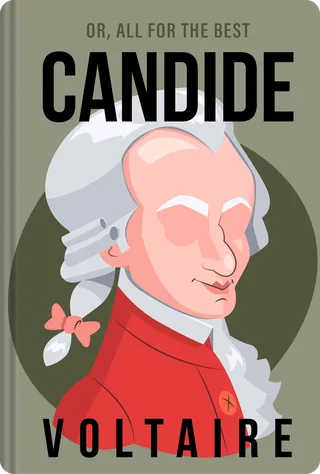
Candide (1759) is a satirical novel that follows the young Candide through a series of disasters, wars, and injustices across the world. Guided by his tutor Pangloss, who insists that all is for the best in the best of all possible worlds, Candide slowly learns to question blind optimism. Voltaire uses humour to criticise war, cruelty, and empty philosophising, and ends with the famous advice that we must cultivate our garden.
Key ideas
- Candide, a young man, passes through a series of disasters, wars, and injustices across the world.
- His tutor Pangloss insists that all is for the best in the best of all possible worlds.
- Through his hardships, Candide slowly learns to question blind optimism instead of accepting it.
- Voltaire uses humour to criticise war, cruelty, and empty philosophising.
- The book ends with its famous advice: we must cultivate our garden.
About the author
Voltaire (1694–1778), born François-Marie Arouet, was a French writer, philosopher, and one of the leading figures of the Enlightenment. He was known for his wit and his defence of freedom of expression, religious tolerance, and reason. His works include Candide, Letters on the English, and the Philosophical Dictionary.
Questions people ask
What is the main idea of Candide by Voltaire?
Candide is a satire that dismantles blind optimism. Through a young man's string of misfortunes, Voltaire argues for realism and practical wisdom over empty philosophising.
What does "we must cultivate our garden" mean in Candide?
It is the book's closing advice, and it comes after Candide has learned to doubt blind optimism. It points toward practical, realistic effort over empty philosophising.
Is Candide worth reading, and how long is the Durar summary?
Candide (1759) is a satirical classic that criticises war, cruelty, and empty philosophising with humour. The Durar summary takes about 15 minutes to read or listen to.
You May Also Like




More in Philosophy





Get the key ideas from the world's best books in about 15 minutes
Free account · One free summary every day