Get started

Author

Noam Chomsky summaries

6 summaries on Durar

Noam Chomsky is a thinker who has reflected deeply on language and the mind, and also one of the most persistent critics of how power is used by states and corporations, and his books are worth reading because they push you to question the stories you are told about both. Start with Who Rules The World, where he examines the foreign policy of the United States and other major powers, the influence of corporations and elites, and dangers like nuclear weapons and climate change, and argues that ordinary citizens have more power to shape events than they often realize, before moving on to Profit Over People for the economic side of his argument and What Kind of Creatures Are We? for his thinking on language, morality and what makes us human. Readers in the region who follow world affairs closely, students of politics, economics or linguistics, and anyone who has wondered why decisions made far away shape daily life here will find him a challenging and clarifying companion.

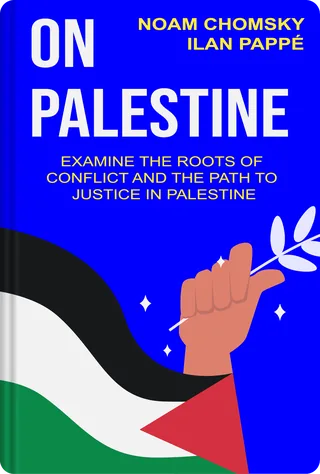
1On Palestine

On Palestine

Examine Palestine’s past, present, and future through a critical dialogue on occupation, displacement, global politics, justice, equality, and peace.

21 min

Listen to the intro

1:12

What is On Palestine about?

On Palestine (2015) brings together conversations and reflections by Noam Chomsky and Ilan Pappé on Palestinian history, rights, and the continuing search for justice and peace. The authors examine the conditions in Gaza and the West Bank, the influence of international powers, and the ways media and political language shape public understanding of the situation. The book also considers how education, international solidarity, and peaceful civic action can contribute to a more just future.

Who should read On Palestine?

  • Readers seeking a deeper understanding of the Palestinian cause
  • Students of history, politics, and international relations
  • Anyone curious how media shapes views on Palestine
2Who Rules The World

Who Rules The World

Expose the hidden power struggles through which governments, corporations, and elites shape democracy, justice, and humanity’s future.

20 min

Listen to the intro

1:56

What is Who Rules The World about?

Who Rules The World (2016) examines how global power is exercised and who truly benefits from it. Noam Chomsky analyses the foreign policy of the United States and other major powers, the influence of corporations and elites, and threats such as nuclear weapons and climate change. He argues that ordinary citizens have more power to shape events than they often realise.

Who should read Who Rules The World?

  • Readers curious about who really holds global power
  • Students of politics, international relations or foreign policy
  • Citizens who want to influence events in their world
3Understanding Power

Understanding Power

Question how political and economic power shape knowledge, belief, and society, and reclaim your role in shaping the future.

17 min

Listen to the intro

1:45

What is Understanding Power about?

Understanding Power (2002) brings together edited transcripts of discussions and talks that Noam Chomsky gave between 1989 and 1999. Chomsky examines how governments, corporations, and the media shape public opinion, and discusses foreign policy, economic power, and the role of ordinary citizens in creating change. Editors Peter R. Mitchell and John Schoeffel added extensive notes and sources to support the arguments.

Who should read Understanding Power?

  • Readers curious about how media shapes public opinion
  • Students of politics, economics, or international relations
  • Citizens who want a greater role in shaping change
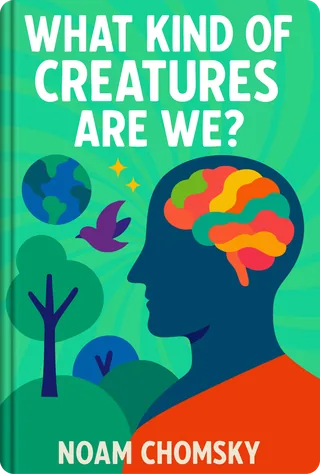
4What Kind of Creatures Are We?

What Kind of Creatures Are We?

Probe the mysteries of cognition, language, morality, and consciousness while confronting the limits of science in explaining what makes us human.

14 min

Listen to the intro

0:47

What is What Kind of Creatures Are We? about?

What Kind of Creatures Are We? (2016) brings together Noam Chomsky’s reflections on some of the deepest questions about human nature. He explains his view that language is first of all an instrument of thought, built on an inborn capacity that all humans share, and explores what science can and cannot tell us about the mind. The book also considers the kind of society that best serves human freedom and the common good.

Who should read What Kind of Creatures Are We??

  • Students of linguistics curious about how language works
  • Anyone fascinated by the mind and human nature
  • Readers questioning what science can truly explain
5Manufacturing Consent

Manufacturing Consent

See how political and economic power shape the news, influence public opinion, and turn propaganda into accepted truth.

13 min

Listen to the intro

0:59

What is Manufacturing Consent about?

Manufacturing Consent (1988) argues that the mass media in democratic societies can shape public opinion in ways that serve powerful interests, even without direct censorship. Edward S. Herman and Noam Chomsky present their propaganda model, describing how ownership, advertising, reliance on official sources, pressure from critics, and prevailing ideology act as filters on the news. The book remains a landmark in media criticism.

Who should read Manufacturing Consent?

  • Journalists and media students examining how news gets shaped
  • Readers who want to question headlines and spot bias
  • Anyone curious how power and money influence public opinion
6Profit Over People

Profit Over People

Examine how global capitalism concentrates power, deepens inequality, and places corporate profit above democracy, human rights, and public welfare.

16 min

Listen to the intro

1:06

What is Profit Over People about?

Profit Over People (1999) is a sharp critique of the free-market economic policies that shaped the global economy in the late twentieth century. Noam Chomsky argues that these policies, often promoted as natural and inevitable, concentrated wealth and power in the hands of large corporations and weakened democracy. Through a series of essays, the book encourages readers to question how economic decisions are made and whom they serve.

Who should read Profit Over People?

  • Readers curious about who really benefits from globalization
  • Students of economics, politics, or international relations
  • Anyone questioning free-market policies and corporate power

About Noam Chomsky

Noam Chomsky is an American linguist, philosopher, and public intellectual, often described as the father of modern linguistics. He spent most of his career at the Massachusetts Institute of Technology, where he developed influential theories about the structure of language and the mind. He has written more than one hundred books, including Syntactic Structures and What Kind of Creatures Are We?

Get the key ideas from the world's best books in about 15 minutes

Free account · One free summary every day