
You have been in the job for a year. You stay late when needed, your manager says good things about you, and your salary has not moved. You have rehearsed the conversation in the car three times and still have not knocked on the door.
You are not alone. Most people under 30 in our region have never negotiated pay. Nobody taught it at school, and at home we learned that respect for elders and managers means not asking.
But asking respectfully and asking clearly are not opposites. Five negotiation books, written by very different people, point to the same few habits. None of them tell you to be aggressive. All of them tell you to be prepared.
Below is a five-step script you can use in a real conversation with your manager. Each step is credited to the book behind it.
Step 1: Prepare your number and your fallback
Before you ask for anything, know what you are asking for. Write down a specific figure, and next to it the reasons: what you have delivered, what you have taken on, what you have learned since you started.
Getting to Yes adds an idea that calms the nerves: know your best alternative if no agreement is reached. It might be staying on at your current pay while you build your case, or having a good second option. When you know your alternative, you walk in less afraid of hearing no.
Negotiation Made Simple supports this with its focus on preparation: identify your interests and understand the other side before you speak. Ask yourself what your manager cares about. Retaining good people, keeping the team stable and staying within budget are all reasonable answers.
Step 2: Open with respect and ask for time
Do not ambush your manager in the corridor or at the end of a busy day. Ask for a short meeting and say what it is about: "I would like to talk about my role and my compensation. When would suit you?"
This fits workplace culture in the Gulf and Jordan well. It honours the manager's position and gives them time to think. The Seven Tensions of Negotiation describes timing as one of the forces shaping every negotiation, and a calm, planned moment is a stronger moment than a rushed one.
Then open warmly. How to Win Friends and Influence People is built on showing genuine interest in the other person, listening well and avoiding criticism. Thank your manager for something real, such as a project they trusted you with. Never open by comparing yourself to a colleague or complaining about your pay.
Step 3: Use calibrated questions instead of demands
This is the most useful idea in Never Split the Difference. Instead of saying "I deserve more," ask questions that invite your manager to help solve the problem, such as "What would I need to show to be considered for an increase?" or "How can we make this work for both of us?"
These are open questions that begin with "what" or "how." They do not corner anyone, and the answers tell you what your manager actually needs to say yes.
Chris Voss also teaches mirroring (repeating the last few words the other person said) and labeling emotions, for example: "It sounds like the budget is tight this year." It feels simple, and it shows the person you are listening. In a culture that values courtesy, that goes a long way.
Step 4: Handle the first no without losing the room
The first answer is often no, or "not now." That is usually the beginning of the conversation, not the end. Do not argue, and do not apologise for asking.
Getting to Yes gives you a way through: focus on interests rather than positions, and ask for objective criteria. Instead of repeating your number louder, ask what the salary range is for your role, or what results would justify a review. Separate the people from the problem. Your manager is not your opponent, and the budget is the obstacle you are both facing.
The Seven Tensions of Negotiation adds a point worth remembering: staying calm is itself a strategy. A quiet pause after a no often does more than a speech. If the answer stays no, ask for a specific date to talk again, or for other things that matter, such as training or a clearer path to promotion.
Step 5: Leave the relationship better than you found it
Whatever the outcome, end well. Thank your manager for their time, summarise what you agreed in one sentence, and follow up with a short message so nothing is left vague.
Getting to Yes is about agreements that last without damaging relationships, and Carnegie's principles of appreciation and making others feel important apply right to the end. You will work with this person tomorrow, and probably next year.
A raise is rarely won in one meeting. A manager who sees you as prepared, respectful and constructive is far more likely to say yes the second time.
Read one of these summaries today
Start with today's free summaryDurar gives you a free summary every day, in Arabic or English, to read or listen to.The five summaries behind this script
Each one takes about fifteen minutes to read or listen to. Start with the first, then pick the step you are most nervous about.
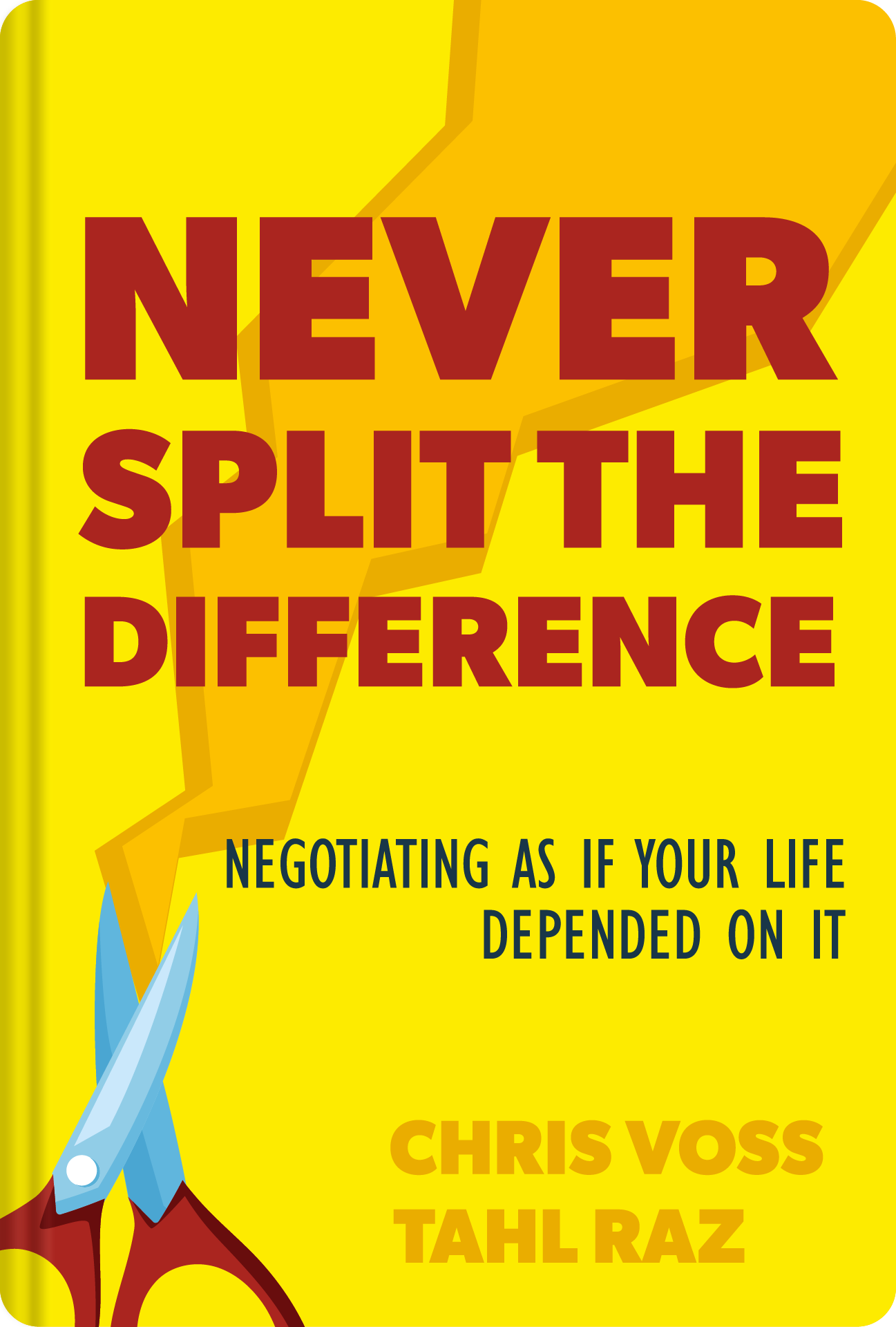 Never Split the DifferenceChris Voss and Tahl RazYou will learn how to ask calibrated questions and use tactical empathy, so your manager feels heard instead of pressured.Listen to the summary →
 Getting to YesRoger Fisher, William Ury, and Bruce PattonYou will learn to focus on interests instead of positions and to know your best alternative before you walk into the room.Listen to the summary →
 Negotiation Made SimpleJohn LowryYou will get a clear framework for preparing, understanding the other side and presenting your proposal without turning it into a confrontation.Listen to the summary →
 The Seven Tensions of NegotiationCash NickersonYou will see how timing, calm and pressure shape a negotiation, and how to manage a difficult conversation without unnecessary conflict.Listen to the summary →
 How to Win Friends & Influence PeopleDale CarnegieYou will take away simple habits of listening well and making others feel valued, which keep the relationship strong whatever the answer is.Listen to the summary →
Try this week
You do not need to ask for the raise this week. You only need to start preparing.
- Write down your number and three specific things you have delivered in the past year.
- Write two calibrated questions in your own words, each beginning with "what" or "how."
- Ask your manager for a short meeting to talk about your role, and choose a calm time.
Most of the work is done before you enter the room. Once the preparation is on paper, the conversation feels much smaller.
Asking for a raise respectfully is not rude. Walking in unprepared is the bigger risk.
Nearly 1,000 summaries, fifteen minutes each
Start your 14 days freeAudio and text in Arabic and English. Try 14 days free on the yearly plan and cancel anytime.Questions people ask
When is the right time to ask for a raise?
Choose a calm moment, ideally after a clear success or when your responsibilities have grown, and not at the end of a stressful day. Ask for a short meeting in advance. The Seven Tensions of Negotiation treats timing as a real force in any negotiation, so a planned moment helps you.
What if my manager says no?
Stay calm and do not argue. Ask what results would justify a review, and ask for a date to talk again. Getting to Yes suggests focusing on interests and objective criteria rather than repeating your position. You can also ask about other things that matter to you, such as training or a path to promotion.
Is it disrespectful to negotiate with a manager in our culture?
Not when it is done with courtesy. Asking for a meeting, thanking your manager, using questions instead of demands and keeping the conversation private all show respect. The books summarised here stress understanding the other side and protecting the relationship, which fits workplace culture in the Gulf and Jordan.