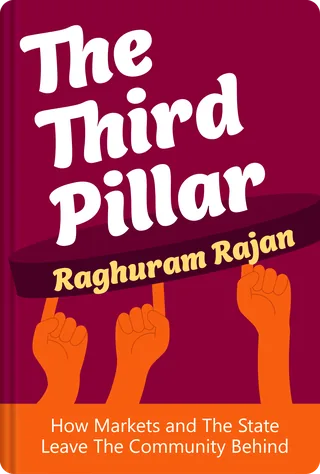
The Third Pillar
Raghuram Rajan
Rebuild strong communities to restore balance between markets, governments, and society while creating a healthier economy.
Listen to the intro
 Money & Economics
 History & Politics
 Society & Culture
Outline
What's it about?
The Third Pillar (2019) argues that healthy societies depend on a balance between three pillars: the state, markets, and local communities. Raghuram Rajan shows how the first two have grown powerful while communities have been left behind, leading to frustration and division. He proposes ways to strengthen local communities so that everyone can benefit from economic progress.
Key ideas
- Healthy societies rest on a balance between three pillars: the state, markets, and local communities.
- The state and markets have grown powerful, while local communities have been left behind.
- This neglect of communities has contributed to frustration and division in society.
- Strengthening local communities is the path to making sure everyone benefits from economic progress.
About the author
Raghuram Rajan is an Indian economist and professor at the University of Chicago Booth School of Business. He served as chief economist of the International Monetary Fund and as governor of the Reserve Bank of India. His books include Fault Lines, which won a major business book award, and The Third Pillar.
Questions people ask
What is The Third Pillar by Raghuram Rajan about?
The book argues that a healthy society needs a balance between the state, markets, and local communities. Rajan shows how communities have been left behind and proposes ways to strengthen them.
What are the three pillars Raghuram Rajan describes?
They are the state, markets, and local communities. The first two have become powerful, while the third has been neglected, which Rajan links to frustration and division.
How long is the Durar summary of The Third Pillar?
The Durar summary takes about 15 minutes to read or listen to. It covers the book's main argument about balancing the state, markets, and communities, in English and Arabic.
You May Also Like



More in Money & Economics


Get the key ideas from the world's best books in about 15 minutes
Free account · One free summary every day