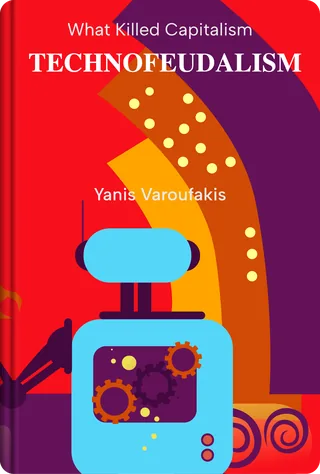
Technofeudalism
Yanis Varoufakis
See how Big Tech is replacing competitive capitalism with a digital order built on platforms, control, and rent extraction.
Listen to the intro
 Money & Economics
 History & Politics
 Science & Technology
Outline
What's it about?
Technofeudalism (2023) argues that capitalism has been quietly replaced by something new. Yanis Varoufakis explains how big technology platforms act like digital landlords, collecting rent from the businesses and users who depend on them, while central banks’ policies after 2008 helped fuel their rise. Written as a letter to his father, the book explores what this shift means for markets, work, democracy, and our freedom.
Key ideas
- Varoufakis argues that capitalism has been quietly replaced by a new order he calls technofeudalism.
- Big technology platforms behave like digital landlords, collecting rent from the businesses and users who depend on them.
- Central banks' policies after 2008 helped fuel the rise of these platforms.
- The book asks what this shift means for markets, work, democracy, and personal freedom.
- It is framed as a letter to the author's father, which gives the argument a personal voice.
About the author
Yanis Varoufakis is a Greek economist, academic, and politician who served as Greece’s finance minister in 2015 during the country’s debt crisis. He has taught economics at universities in Greece, the United Kingdom, Australia, and the United States. His books include Talking to My Daughter About the Economy, Adults in the Room, and Technofeudalism.
Questions people ask
What is the main idea of Technofeudalism?
Yanis Varoufakis argues that capitalism has been replaced by something new, in which big technology platforms act like digital landlords and collect rent from those who depend on them.
Who is Technofeudalism for?
It suits readers curious about how Big Tech affects markets, work, democracy, and freedom, and who want an economic argument written in a personal style.
How long is the Durar summary of Technofeudalism?
The Durar summary takes about 15 minutes to read or listen to, and it covers the book's central argument about platforms, rent, and control.
You May Also Like


More in Money & Economics


Get the key ideas from the world's best books in about 15 minutes
Free account · One free summary every day