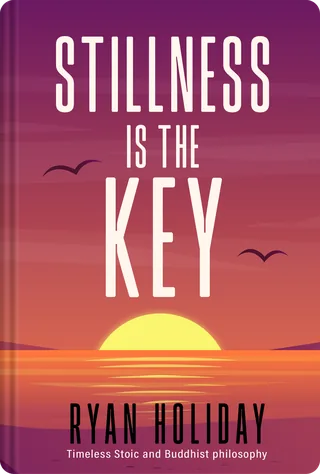
Stillness Is the Key
Ryan Holiday
Find clarity and strength through stillness, and turn calm focus into wiser decisions and a more meaningful life.
Listen to the intro
 Philosophy
 Mindfulness & Happiness
Outline
What's it about?
Stillness Is the Key (2019) argues that inner calm is the foundation of clear thinking, good decisions, and a meaningful life. Ryan Holiday draws on Stoicism, Buddhism, and other traditions, along with stories of figures such as John F. Kennedy, Winston Churchill, and Fred Rogers, to show how stillness of mind, spirit, and body can be cultivated. The book offers practical habits such as journalling, limiting inputs, and taking walks.
Key ideas
- Inner calm is the foundation of clear thinking, good decisions, and a meaningful life.
- Stillness has three parts, mind, spirit, and body, and each one can be cultivated on purpose.
- Holiday draws on Stoicism, Buddhism, and other traditions to show how stillness has been pursued across history.
- Stories of figures such as John F. Kennedy, Winston Churchill, and Fred Rogers illustrate stillness in practice.
- Simple habits like journalling, limiting inputs, and taking walks help build calm focus day to day.
About the author
Ryan Holiday is an American writer and marketer known for bringing Stoic philosophy to a wide modern audience. He is the author of The Obstacle Is the Way, Ego Is the Enemy, and The Daily Stoic, and runs the Daily Stoic newsletter and podcast. He also owns The Painted Porch, a bookstore in Bastrop, Texas.
Questions people ask
What is the main idea of Stillness Is the Key?
Ryan Holiday argues that inner calm is the basis of clear thinking, wise decisions, and a meaningful life. He shows how stillness of mind, spirit, and body can be built.
Who is Stillness Is the Key for?
It suits anyone who feels pulled in too many directions and wants calmer focus and better judgement. It is also a good fit for readers interested in Stoicism, mindfulness, and practical philosophy.
How long is the Durar summary of Stillness Is the Key?
The Durar summary takes about 15 minutes to read or listen to. It covers the book's core argument and the practical habits it recommends, such as journalling, limiting inputs, and walking.
You May Also Like





More in Philosophy









Get the key ideas from the world's best books in about 15 minutes
Free account · One free summary every day