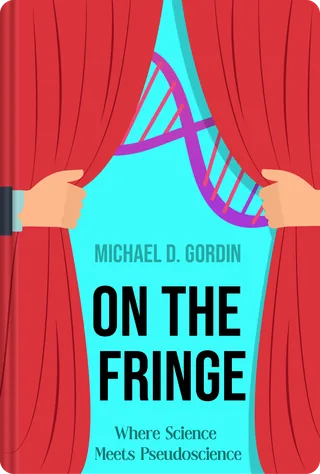
On the Fringe
Michael D. Gordin
See why pseudoscientific beliefs spread and learn to evaluate evidence, question questionable claims, and think more scientifically.
Listen to the intro
 Society & Culture
 Science & Technology
 Psychology
Outline
What's it about?
On the Fringe (2021) explores the blurry line between real science and pseudoscience. Michael D. Gordin explains why it is so hard to define exactly what counts as science, and looks at historical examples of ideas that were once taken seriously but later rejected. The book helps readers think more carefully about scientific claims, expert authority, and how knowledge is tested and accepted.
Key ideas
- The line between real science and pseudoscience is blurry, and it is hard to define exactly what counts as science.
- Some ideas that were once taken seriously were later rejected, and history offers many examples of this.
- Thinking carefully about scientific claims means asking how a claim was tested, not just who is making it.
- Expert authority matters, but readers benefit from understanding how knowledge is tested and then accepted.
- Learning why pseudoscientific beliefs spread helps you evaluate evidence and question doubtful claims more calmly.
About the author
Michael D. Gordin is an American historian of science and professor at Princeton University. He studies the history of modern science, including chemistry, physics, and the ways scientists communicate and define their fields. His books include The Pseudoscience Wars, Scientific Babel, and On the Fringe.
Questions people ask
What is On the Fringe by Michael D. Gordin about?
On the Fringe, published in 2021, explores the blurry line between real science and pseudoscience. It explains why that line is hard to draw and looks at ideas once taken seriously but later rejected.
Who should read On the Fringe?
It suits anyone who wants to think more carefully about scientific claims, expert authority and how knowledge is tested and accepted. No scientific background is needed to follow the main ideas.
How long is the Durar summary of On the Fringe?
The Durar summary takes about 15 minutes to read or listen to. It covers the book's main ideas on science, pseudoscience and evaluating evidence.
You May Also Like





More in Society & Culture





Get the key ideas from the world's best books in about 15 minutes
Free account · One free summary every day