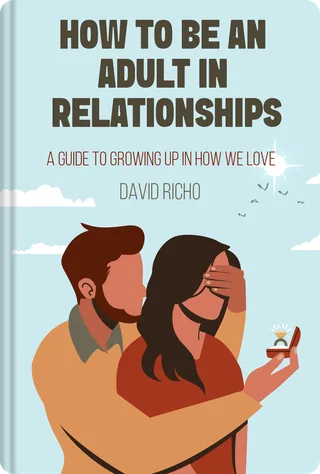
How to Be an Adult in Relationships
David Richo
Build deeper, healthier relationships through five mindful practices that replace fear and control with freedom, acceptance, and love.
Listen to the intro
 Relationships
 Personal Growth & Self-Help
 Mindfulness & Happiness
Outline
What's it about?
How to Be an Adult in Relationships (2002) explains how emotional maturity makes close relationships healthier and more fulfilling. Drawing on psychology and mindfulness, David Richo describes five key needs he calls the five A’s: attention, acceptance, appreciation, affection, and allowing. The book shows how learning to give and receive these can replace fear and control with trust and genuine connection.
Key ideas
- Emotional maturity is what makes close relationships healthier and more fulfilling.
- David Richo names five key needs, the five A's: attention, acceptance, appreciation, affection, and allowing.
- Relationships grow stronger when you learn both to give and to receive these five things.
- Practising the five A's can replace fear and control with trust and genuine connection.
- Richo draws on psychology and mindfulness to show how these practices work in daily relationships.
About the author
David Richo is an American psychotherapist, teacher, and author who combines psychology with insights from contemplative traditions. He leads workshops on relationships and personal growth. His other books include The Five Things We Cannot Change.
Questions people ask
What is How to Be an Adult in Relationships about?
David Richo's 2002 book explains how emotional maturity improves close relationships. It centres on five needs he calls the five A's: attention, acceptance, appreciation, affection, and allowing.
What are the five A's in David Richo's book?
They are attention, acceptance, appreciation, affection, and allowing. Richo says learning to give and receive them replaces fear and control with trust and genuine connection.
How long is the Durar summary of this book, and who is it for?
The Durar summary takes about 15 minutes to read or listen to. It suits anyone who wants healthier, more mindful relationships built on acceptance rather than fear and control.
You May Also Like






More in Relationships


Get the key ideas from the world's best books in about 15 minutes
Free account · One free summary every day