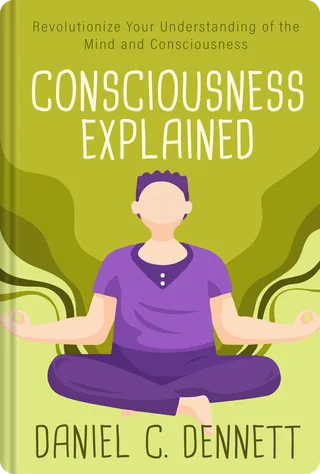
Consciousness Explained
Daniel C. Dennett
Rethink consciousness as the product of parallel brain processes, not a mysterious inner observer controlling the mind.
Listen to the intro
 Philosophy
 Science & Technology
 Psychology
Outline
What's it about?
Consciousness Explained (1991) offers a bold scientific theory of how consciousness arises from the activity of the brain. Daniel C. Dennett rejects the idea of a single place in the mind where experience comes together, which he calls the Cartesian theatre, and proposes instead his multiple drafts model. Drawing on neuroscience, psychology, and philosophy, the book challenges common intuitions about the self and subjective experience.
Key ideas
- Consciousness arises from the activity of the brain, and the book offers a scientific theory of how this happens.
- Dennett rejects the idea of a single place in the mind where experience comes together, which he calls the Cartesian theatre.
- In its place he proposes the multiple drafts model, where consciousness comes from many parallel brain processes rather than one inner observer.
- The book draws on neuroscience, psychology and philosophy to question common intuitions about the self and subjective experience.
About the author
Daniel C. Dennett (1942–2024) was an American philosopher and cognitive scientist who taught at Tufts University, where he co-directed the Center for Cognitive Studies. He was known for his work on consciousness, free will, and evolution. His books include Darwin’s Dangerous Idea, Kinds of Minds, and From Bacteria to Bach and Back.
Questions people ask
What is the main idea of Consciousness Explained?
Daniel C. Dennett argues that consciousness is the product of parallel processes in the brain, not a mysterious inner observer. He replaces the idea of one place where experience comes together with his multiple drafts model.
What is the Cartesian theatre?
It is Dennett's name for the idea that there is a single place in the mind where experience comes together. He rejects this idea throughout the book.
How long does the Durar summary of Consciousness Explained take?
The Durar summary takes about 15 minutes to read or listen to. It covers the book's central theory and its challenge to common ideas about the self.
You May Also Like




More in Philosophy








Get the key ideas from the world's best books in about 15 minutes
Free account · One free summary every day