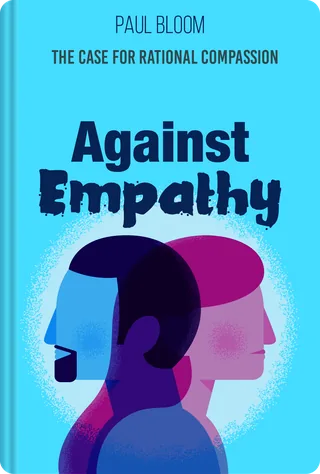
Against Empathy
Paul Bloom
Rethink empathy and discover how rational compassion can reduce bias, improve judgement, and lead to fairer moral choices.
Listen to the intro
 Relationships
 Psychology
Outline
What's it about?
Against Empathy (2016) challenges the popular belief that empathy, feeling what others feel, is always a force for good. Paul Bloom argues that empathy works like a spotlight: it focuses on individuals we can see and identify with, and can make us biased and short-sighted. He makes the case for rational compassion, which combines genuine care for others with clear thinking about how to help them best.
Key ideas
- Empathy, feeling what others feel, is widely seen as always good, but Bloom challenges that belief.
- Empathy works like a spotlight, focusing on individuals we can see and identify with.
- Because of that narrow focus, empathy can make us biased and short-sighted.
- Rational compassion pairs genuine care for others with clear thinking about how to help them best.
About the author
Paul Bloom is a Canadian-American psychologist and professor at the University of Toronto and professor emeritus at Yale University. He studies how children and adults understand the world, with a focus on morality, pleasure, and the imagination. His books include Just Babies, Against Empathy, and The Sweet Spot.
Questions people ask
What is Against Empathy by Paul Bloom about?
The book challenges the popular belief that empathy is always a force for good. Bloom argues that it can make us biased and short-sighted, and he makes the case for rational compassion instead.
What does Paul Bloom mean by rational compassion?
Rational compassion combines genuine care for others with clear thinking about how to help them best. It is his alternative to relying on empathy alone.
How long does the Against Empathy summary take on Durar?
The Durar summary of Against Empathy takes about 15 minutes to read or listen to. It covers the book's central argument against empathy and for rational compassion.
You May Also Like
More in Relationships
Get the key ideas from the world's best books in about 15 minutes
Free account · One free summary every day