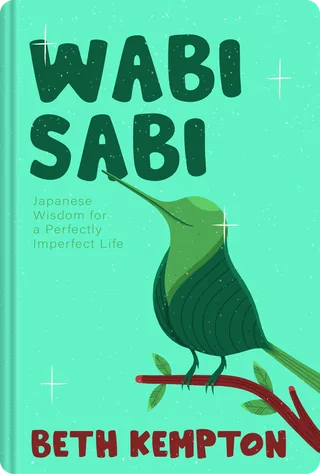
Wabi Sabi
Beth Kempton
Embrace the Japanese philosophy of wabi-sabi to find beauty in imperfection, release perfectionism, and live with greater calm, meaning, and joy.
Listen to the intro
 Personal Growth & Self-Help
 Philosophy
 Society & Culture
 Mindfulness & Happiness
Outline
What's it about?
Wabi Sabi (2018) introduces the Japanese idea of finding beauty in imperfection, simplicity, and the natural cycle of change. Beth Kempton explains how this way of seeing can help readers let go of perfectionism, accept life’s ups and downs, and appreciate the present. She offers practical ideas for applying it to home, work, relationships, and personal growth.
Key ideas
- Wabi-sabi is a Japanese way of seeing that finds beauty in imperfection, simplicity, and the natural cycle of change.
- Letting go of perfectionism is central to the book, and wabi-sabi offers a gentler standard to live by.
- Accepting life's ups and downs, rather than resisting them, is presented as a path to calm and meaning.
- Appreciating the present moment is a core habit that wabi-sabi encourages readers to build.
- Beth Kempton offers practical ways to apply the idea to home, work, relationships, and personal growth.
About the author
Beth Kempton is a British author and coach who has studied Japanese language and culture for many years and lived in Japan. She writes about finding calm, creativity, and meaning in everyday life. Her books include Wabi Sabi, Freedom Seeker, and The Way of the Fearless Writer.
Questions people ask
What is the main idea of Wabi Sabi by Beth Kempton?
The main idea is that beauty can be found in imperfection, simplicity, and change. Seeing life this way helps you release perfectionism and live with more calm, meaning, and joy.
Who is Wabi Sabi for?
It suits readers who feel pressure to get everything right and want a calmer way to handle life's ups and downs. It also fits anyone curious about Japanese philosophy and mindful living.
How long is the Durar summary of Wabi Sabi?
The Durar summary takes about 15 minutes to read or listen to. It covers the book's main ideas on embracing imperfection and applying them to everyday life.
You May Also Like







More in Personal Growth & Self-Help








Get the key ideas from the world's best books in about 15 minutes
Free account · One free summary every day