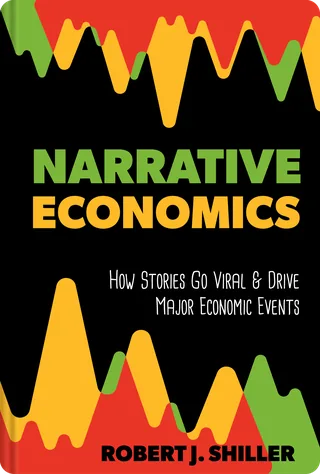
Narrative Economics
Robert Shiller
See how contagious stories drive markets and public behaviour, shaping economic booms and crashes more powerfully than data alone.
Listen to the intro
 Money & Economics
 Society & Culture
 Psychology
Outline
What's it about?
Narrative Economics (2019) argues that popular stories spread like viruses and can drive major economic events, from booms and bubbles to recessions. Robert Shiller shows how narratives about topics such as stock markets, housing, and technology influence how people spend, save, and invest. He calls on economists to study these stories seriously to better understand and predict economic change.
Key ideas
- Popular stories spread from person to person much like viruses, and some of them end up shaping major economic events.
- Narratives help drive booms, bubbles and recessions, sometimes with more force than data alone.
- Stories about the stock market, housing and technology influence how people spend, save and invest.
- Economists should study popular narratives seriously if they want to understand and predict economic change.
About the author
Robert Shiller is an American economist and professor at Yale University who shared the Nobel Prize in Economics in 2013 for his work on asset prices. He is known for warning about the dot-com and housing bubbles before they burst. His books include Irrational Exuberance, Animal Spirits, written with George Akerlof, and Narrative Economics.
Questions people ask
What is the main idea of Narrative Economics?
Robert Shiller argues that contagious stories, not just numbers, push people to spend, save and invest in ways that produce booms, bubbles and recessions.
Who should read Narrative Economics?
It suits anyone curious about money, markets and why people behave the way they do, including readers interested in psychology and social trends. No economics background is needed to follow the core idea.
How long is the Narrative Economics summary on Durar?
The Durar summary takes about 15 minutes to read or listen to. It covers how popular stories shape economic behaviour and why Shiller wants economists to study them.
You May Also Like






More in Money & Economics




Get the key ideas from the world's best books in about 15 minutes
Free account · One free summary every day