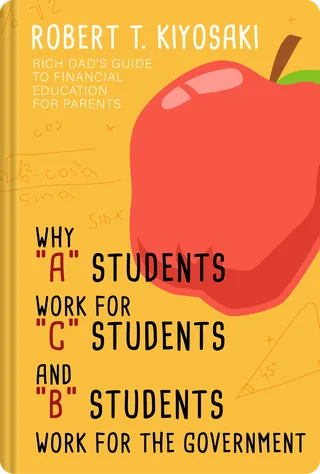
Why “A” Students Work for “C” Students and “B” Students Work for the Government
Robert Kiyosaki
Learn the financial intelligence schools often overlook, from investing and entrepreneurship to building assets beyond a traditional career.
Listen to the intro
 Business & Career
 Money & Economics
 Education & Creativity
Outline
What's it about?
Why “A” Students Work for “C” Students and “B” Students Work for the Government (2013) argues that traditional schooling prepares students to become employees but rarely teaches them how money, business, and investing really work. Robert Kiyosaki explains why top students often end up as employees and professionals, while others become entrepreneurs who build businesses and employ them. He encourages parents to give their children a practical financial education from an early age.
Key ideas
- Traditional schooling prepares students to become employees but rarely teaches how money, business, and investing really work.
- Top students often end up as employees and professionals, while others become entrepreneurs who build businesses and employ them.
- Financial intelligence is a skill schools tend to overlook, and it can be learned outside the classroom.
- Building assets beyond a traditional career is part of the path toward financial independence.
- Parents can give their children a practical financial education from an early age instead of waiting for school.
About the author
Robert Kiyosaki is an American businessman, investor, and author best known for Rich Dad Poor Dad, one of the best-selling personal finance books of all time. Through his books and the Rich Dad company, he promotes financial education, entrepreneurship, and investing.
Questions people ask
What is the main idea of Why "A" Students Work for "C" Students and "B" Students Work for the Government?
Robert Kiyosaki argues that school trains people to be employees but rarely teaches how money, business, and investing work. He says this is why top students often work for others.
Who is this book for?
It suits parents who want to give their children a practical financial education early, and readers curious about investing, entrepreneurship, and building assets beyond a salary.
How long is the Durar summary of this book?
The Durar summary takes about 15 minutes to read or listen to, in English or Arabic. It covers the book's central argument about financial education and the gap between employees and business owners.
You May Also Like






More in Business & Career



Get the key ideas from the world's best books in about 15 minutes
Free account · One free summary every day