Get started

Author

Jonathan Haidt summaries

2 summaries on Durar

Jonathan Haidt is a social psychologist who writes about why people think, feel, and disagree the way they do, and his books are worth your time because he turns careful research into ideas you can use at home, at work, and in everyday conversation. Start with The Anxious Generation, which explains how childhood moved from free play to phones and offers practical steps, such as delaying smartphones and keeping schools phone-free, that families can begin acting on right away. Parents, teachers, and school leaders across the region will find it especially useful, while The Righteous Mind rewards anyone who wants to understand why good people disagree on politics and religion and to talk across those differences with more patience.

1The Anxious Generation

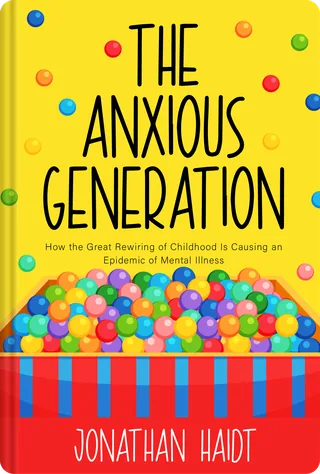
The Anxious Generation

Protect childhood from digital overload by restoring real-world play, genuine connection, independence, and emotional resilience.

16 min

Listen to the intro

1:09

What is The Anxious Generation about?

The Anxious Generation (2024) explains why rates of anxiety and depression among young people rose sharply in the early 2010s. Jonathan Haidt argues that childhood shifted from play-based to phone-based, as smartphones and social media replaced free play and face-to-face time. He proposes four practical reforms, including no smartphones before high school and phone-free schools, to help children grow up healthier.

Who should read The Anxious Generation?

  • Parents worried about their children's screen time and wellbeing
  • Teachers and school leaders considering phone-free classrooms
  • Anyone curious why youth anxiety surged after 2010
2The Righteous Mind

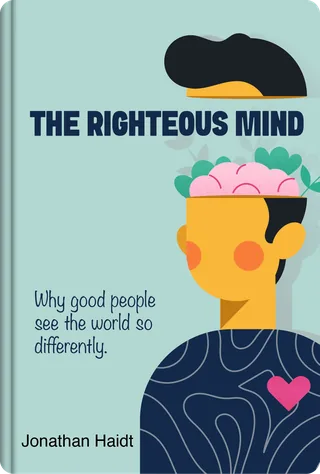
The Righteous Mind

Decode why good people disagree by exploring the moral instincts behind fairness, loyalty, authority, purity, liberty, politics, and religion.

19 min

Listen to the intro

1:27

What is The Righteous Mind about?

The Righteous Mind (2012) explores why good people are divided by politics and religion. Social psychologist Jonathan Haidt argues that moral judgements come mainly from intuition, with reasoning following afterward, and describes several moral foundations, including care, fairness, loyalty, authority, and sanctity, that different groups emphasise in different ways. The book encourages readers to understand opposing views with greater empathy.

Who should read The Righteous Mind?

  • Anyone puzzled by heated disagreements over politics and religion
  • Leaders who want to bridge divides within diverse teams
  • Readers curious about the psychology behind moral judgments

About Jonathan Haidt

Jonathan Haidt is an American social psychologist and professor at New York University’s Stern School of Business. His research focuses on morality, emotion, and how technology affects young people. His books include The Happiness Hypothesis, The Righteous Mind, The Coddling of the American Mind, and The Anxious Generation.

Get the key ideas from the world's best books in about 15 minutes

Free account · One free summary every day