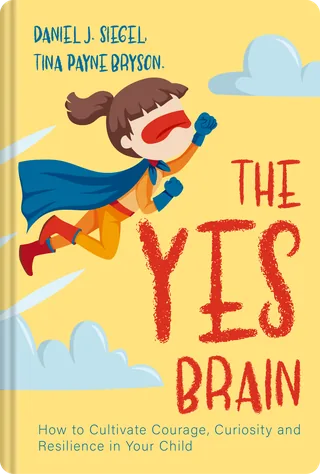
The Yes Brain
Daniel J. Siegel and Tina Payne Bryson
Raise resilient, confident children by nurturing curiosity, emotional balance, and an open mindset toward life’s challenges.
Listen to the intro
 Psychology
 Parenting
Outline
What's it about?
The Yes Brain (2018) helps parents raise children who are open, curious, and resilient rather than rigid and reactive. Daniel J. Siegel and Tina Payne Bryson explain the difference between a yes brain, which is receptive to new experiences, and a no brain, which is defensive. They describe four qualities to nurture, balance, resilience, insight, and empathy, with practical activities for everyday family life.
Key ideas
- A yes brain is open to new experiences, while a no brain is defensive, rigid and reactive.
- The aim is to raise children who are open, curious and resilient rather than rigid and reactive.
- The authors name four qualities parents can nurture in children: balance, resilience, insight and empathy.
- The book offers practical activities that fit into everyday family life, so parents can start with small steps.
About the author
Daniel J. Siegel and Tina Payne Bryson are experts in child development and parenting. Siegel is an American psychiatrist and clinical professor at the University of California, Los Angeles, who founded the Mindsight Institute. Bryson is an American psychotherapist and parenting specialist. Together they wrote The Whole-Brain Child, No-Drama Discipline, The Yes Brain, and The Power of Showing Up.
Questions people ask
What is the main idea of The Yes Brain?
Children do best when their minds are open and receptive to new experiences, not defensive. Daniel J. Siegel and Tina Payne Bryson show parents how to build that openness.
Who is The Yes Brain for?
It is written for parents who want to raise open, curious and resilient children. Anyone interested in child development and family life may also find it useful.
How long is the Durar summary of The Yes Brain?
The Durar summary takes about 15 minutes to read or listen to. It covers the yes brain and no brain, the four qualities to nurture, and the practical activities.
You May Also Like

More in Psychology

Get the key ideas from the world's best books in about 15 minutes
Free account · One free summary every day