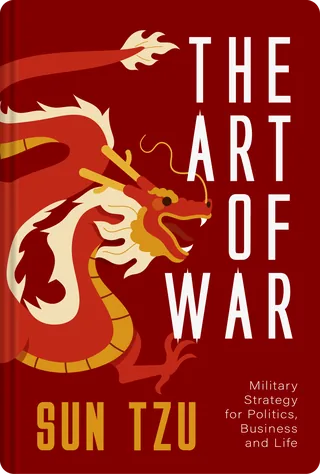
The Art of War
Sun Tzu
Master the strategy, discipline, and foresight needed to outthink opponents, adapt quickly, and win without unnecessary conflict.
Listen to the intro
 Business & Career
 History & Politics
Outline
What's it about?
The Art of War, written more than two thousand years ago, is the world’s most famous book on strategy. In thirteen short chapters, Sun Tzu explains how to plan carefully, know yourself and your opponent, use deception and timing, adapt to changing conditions, and win with the least possible conflict. Its lessons are now studied by leaders in business, sports, and politics around the world.
Key ideas
- Careful planning comes before any action, so the best results are decided long before a conflict begins.
- Knowing yourself and knowing your opponent are both needed to judge where you stand.
- Deception and timing can give you an advantage that raw strength alone does not.
- Conditions keep changing, so a good strategist adapts quickly instead of following a fixed plan.
- The highest goal is to win with the least possible conflict, not to fight for its own sake.
About the author
Sun Tzu was an ancient Chinese general and military strategist who is traditionally believed to have lived around the 5th century BC. He is credited as the author of The Art of War, one of the oldest and most influential works on strategy. His ideas about planning, flexibility, and winning without fighting continue to shape thinking in leadership and competition.
Questions people ask
What is the main idea of The Art of War?
Sun Tzu argues that success comes from careful planning, knowing yourself and your opponent, using deception and timing, and adapting to changing conditions. The aim is to win with as little conflict as possible.
Who should read The Art of War?
It suits anyone interested in strategy, especially people in business, management, leadership, sports or politics. Leaders in these fields around the world still study its lessons.
How long is the Durar summary of The Art of War?
The Durar summary takes about 15 minutes to read or listen to. It covers the main ideas from the book's thirteen short chapters.
You May Also Like



More in Business & Career
Get the key ideas from the world's best books in about 15 minutes
Free account · One free summary every day