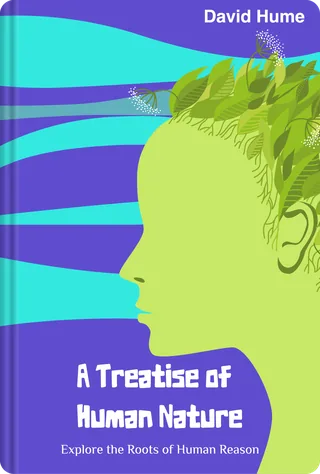
A Treatise of Human Nature
David Hume
Rethink knowledge, identity, and morality through Hume’s bold view that experience and emotion shape us more deeply than reason alone.
Listen to the intro
 Personal Growth & Self-Help
 Philosophy
 Mindfulness & Happiness
Outline
What's it about?
A Treatise of Human Nature (1739) is David Hume’s ambitious attempt to build a science of human nature based on experience and observation. Hume examines how we form ideas, why we believe in cause and effect, what makes up the self, and how passions rather than reason drive our actions and moral judgements. Though little noticed at first, the work became one of the most influential books in the history of philosophy.
Key ideas
- Hume tries to build a science of human nature that rests on experience and observation rather than abstract theory.
- Our ideas come from experience, and the book examines how we form them in the first place.
- Our belief in cause and effect is something Hume questions rather than takes for granted.
- Hume asks what the self is actually made of, and does not assume it is a fixed thing.
- Passions, not reason, drive our actions and our moral judgements, which is the book's boldest claim.
About the author
David Hume (1711–1776) was a Scottish philosopher, historian, and economist and a leading figure of the Scottish Enlightenment. He is known for his empiricism, his scepticism about causation, and his view that reason serves the passions. His works include An Enquiry Concerning Human Understanding, The History of England, and Dialogues Concerning Natural Religion.
Questions people ask
What is A Treatise of Human Nature about?
It is David Hume's attempt, published in 1739, to build a science of human nature from experience and observation. It covers how we form ideas, why we believe in cause and effect, what the self is, and how passions shape our actions and moral judgements.
Who is A Treatise of Human Nature for?
It suits readers curious about how the mind works, how we know things, and where our moral views come from. It is a good starting point if you want the core of Hume's thinking without reading the full original.
How long does the Durar summary of A Treatise of Human Nature take?
The Durar summary takes about 15 minutes to read or listen to. It covers Hume's main arguments on ideas, cause and effect, the self, and the role of passion in morality.
You May Also Like




More in Personal Growth & Self-Help






Get the key ideas from the world's best books in about 15 minutes
Free account · One free summary every day