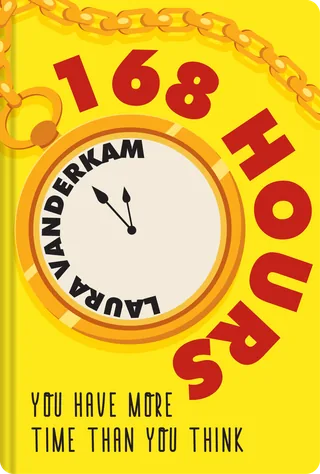
168 Hours
Laura Vanderkam
Reclaim your 168 weekly hours by eliminating time drains, prioritising what matters, and building a more purposeful life.
Listen to the intro
 Business & Career
 Personal Growth & Self-Help
 Mindfulness & Happiness
Outline
What's it about?
168 Hours (2010) challenges the common belief that we are all too busy. Laura Vanderkam points out that everyone has 168 hours each week, and shows that by tracking how we really spend our time, we can find room for what matters most. She explains how to focus on our core strengths, reduce low-value tasks, and plan the week around priorities in work, family, and personal life.
Key ideas
- Everyone has the same 168 hours each week, so feeling too busy is worth questioning rather than simply accepting.
- Tracking how you actually spend your time shows where the hours go and where there is room for what matters.
- Focusing on your core strengths lets you put effort where it counts most in work and life.
- Cutting low-value tasks frees up time without needing a longer week or a different job.
- Planning the week around your priorities in work, family, and personal life keeps those priorities from being squeezed out.
About the author
Laura Vanderkam is an American author, speaker, and podcast host who writes about time management and productivity. Her research on how busy people actually use their time has made her a popular voice on balancing work and life. Her books include 168 Hours, I Know How She Does It, and Off the Clock.
Questions people ask
What is the main idea of 168 Hours?
Laura Vanderkam argues that we are not as short on time as we think, since everyone has 168 hours a week. By tracking where time goes, we can make room for what matters most.
Who is 168 Hours for?
It suits anyone who feels constantly busy and wants to use their week more deliberately. Its focus on work, family, and personal priorities makes it useful for professionals and busy households alike.
How long is the Durar summary of 168 Hours?
The Durar summary takes about 15 minutes to read or listen to. It covers the book's main points on tracking your time, cutting low-value tasks, and planning around your priorities.
You May Also Like



More in Business & Career
Get the key ideas from the world's best books in about 15 minutes
Free account · One free summary every day