
Get started

Author

Edward W. Said summaries

2 summaries on Durar

Edward W. Said was a Palestinian writer and thinker best known for showing how Western writing about the East built a distorted image of the Arab and Islamic world and turned that knowledge into a tool of political and cultural power, and his books remain worth reading because they teach you to ask who is telling a story and why. Start with Out of Place, his memoir of a childhood divided between Jerusalem, Cairo and Lebanon before schooling in the United States, because knowing the boy who never felt fully at home makes the sharp arguments of Orientalism feel personal rather than abstract. Students of literature, history and media in the region will get the most from him, as will anyone who has studied or worked abroad and felt their identity misread or reduced to a stereotype.

1Out of Place: A Memoir

Out of Place: A Memoir

Follow Edward Said’s life across Jerusalem, Cairo, Lebanon, and the United States in a moving reflection on Palestinian identity, exile, belonging, and the search for home.

17 min

Listen to the intro

1:57

What is Out of Place: A Memoir about?

Out of Place: A Memoir (1999) is Edward W. Said’s moving account of his early life. He describes growing up between Jerusalem, Cairo, and Lebanon, attending schools in the Arab world and later in the United States, and the complex identity of being a Palestinian raised in many places. Written after a serious illness, the book is a powerful reflection on exile, family, language, and belonging.

Who should read Out of Place: A Memoir?

  • Anyone raised between countries, languages, or cultures
  • Readers exploring Palestinian history, identity, and exile
  • Memoir lovers drawn to reflective, deeply personal life stories
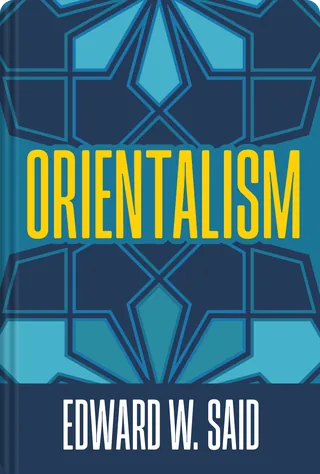
2Orientalism

Orientalism

Uncover how Western portrayals of the East created enduring stereotypes and turned knowledge into an instrument of political and cultural power.

21 min

Listen to the intro

2:30

What is Orientalism about?

Orientalism (1978) is one of the most influential books of the twentieth century. Edward W. Said shows how Western scholars, writers, and politicians created a distorted image of the Arab and Islamic world, presenting it as mysterious, backward, and in need of Western control. He argues that this way of seeing supported colonial power, and his work changed how the world studies culture, history, and the Middle East.

Who should read Orientalism?

  • Students of history, politics, or Middle Eastern studies
  • Readers curious how the West came to see Arabs and Muslims
  • Anyone who questions Western stereotypes about the Muslim world

About Edward W. Said

Edward W. Said (1935–2003) was a Palestinian-American literary scholar, critic, and public intellectual who taught at Columbia University for four decades. He was one of the founders of postcolonial studies and a prominent voice for Palestinian rights. His books include Orientalism, Culture and Imperialism, and his memoir Out of Place.

Get the key ideas from the world's best books in about 15 minutes

Free account · One free summary every day